What Happened During the Battle of Bunker Hill?
TL;DR
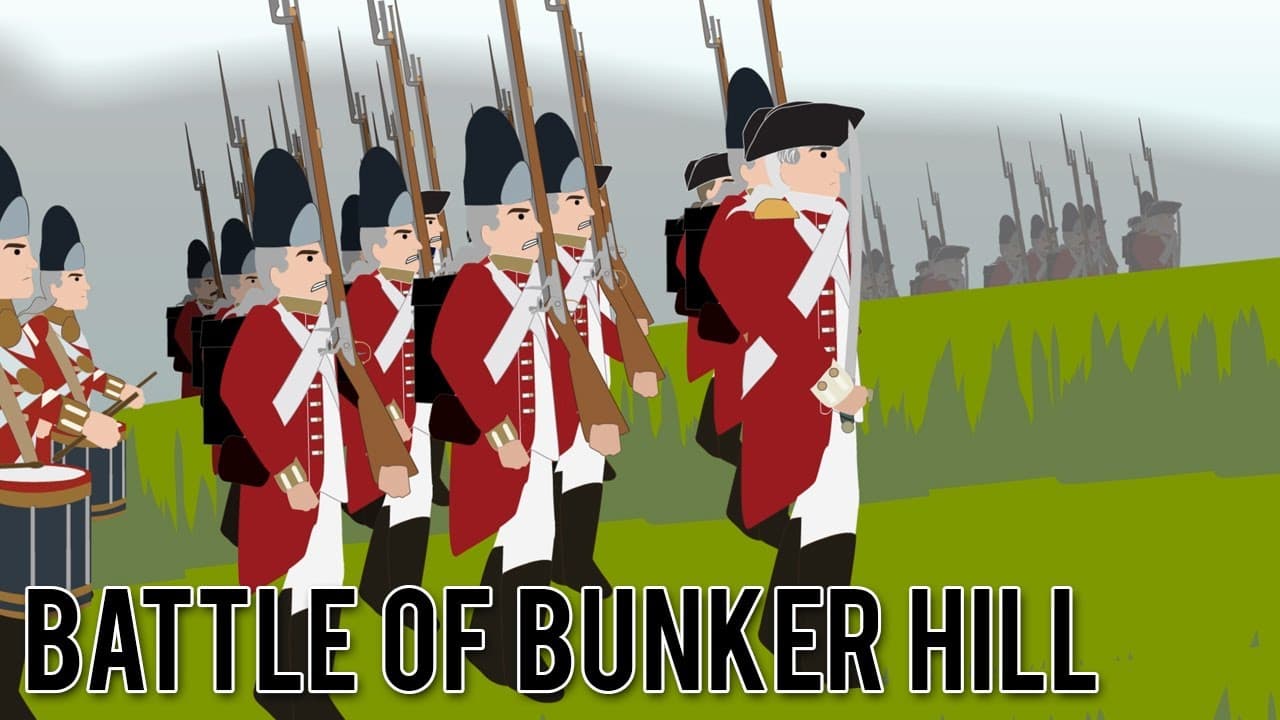
The Battle of Bunker Hill on June 17, 1775, was a pivotal confrontation in the American Revolution. Although the British emerged victorious, they suffered significant casualties, leading to a reassessment of their military strategy. This battle underscored the determination and resilience of colonial forces against a professional army.
Transcript
Battle of Bunker Hill June 17 1775 the Battle of Bunker Hill which took place on June 17 1775 was the first time New England soldiers faced the British Army in a pitched battle during the American Revolution fought outside of Boston on the Charlestown Peninsula the battle itself took place in large part on breeds Hill rather than nearby Bunker Hill... Read More
Key Insights
- 😥 Boston became a significant focal point for both British and colonial forces during the American Revolution.
- 🉐 The colonial forces fortified Breed's Hill and Bunker Hill to gain strategic advantage.
- 📶 The British underestimated the strength and determination of the colonial forces.
- 🙃 The Battle of Bunker Hill resulted in heavy casualties for both sides.
- ✌️ The British victory was considered a Pyrrhic victory due to the heavy losses suffered.
- 🥺 The battle prompted the British to reassess their tactics and led to the proclamation of rebellion by King George III.
- 🫱 The events at Bunker Hill signaled the possibility of a long, drawn-out war against the American colonists.
Install to Summarize YouTube Videos and Get Transcripts
Explore YouTube Video Summarizer or Get YouTube Transcript Extractor
Questions & Answers
Q: What strategic advantage did Bunker Hill and Breed's Hill provide to the colonial forces?
Both hills overlooked Boston Harbor, offering a prime position from which to fire artillery and potentially force the British to evacuate their ships.
Q: Why did the British decide to launch a frontal assault instead of cutting off the enemy forces?
General Thomas Gage chose a swift frontal attack after considering the option of starving out the enemy, as he believed this approach would yield quicker results.
Q: Why were the British initially unsuccessful in their bombardment of colonial emplacements?
Despite their superior naval power, most of the British cannon fire fell short and had little effect on the well-fortified colonial positions on Breed's Hill.
Q: How did the leadership of the colonial forces contribute to their success in repelling British attacks?
Colonel William Prescott, leading the colonial forces, instructed his men to conserve ammunition and not fire until they saw the whites of the British troops' eyes, ensuring every shot counted.
Summary & Key Takeaways
-
The battle took place on the Charlestown Peninsula, outside of Boston, with the primary fighting occurring on Breed's Hill.
-
Boston had become a focal point for both British and colonial forces, with the rebels realizing they lacked sufficient troops to storm the city.
-
The British attempted to occupy the hills around Boston to deny the rebels strategic advantages and artillery placement.
Read in Other Languages (beta)
Share This Summary 📚
Summarize YouTube Videos and Get Video Transcripts with 1-Click
Try YouTube Summary with ChatGPT & Claude or YouTube Transcript Generator
Explore More Summaries from Simple History 📚


Summarize YouTube Videos and Get Video Transcripts with 1-Click
Try YouTube Summary with ChatGPT & Claude or YouTube Transcript Generator