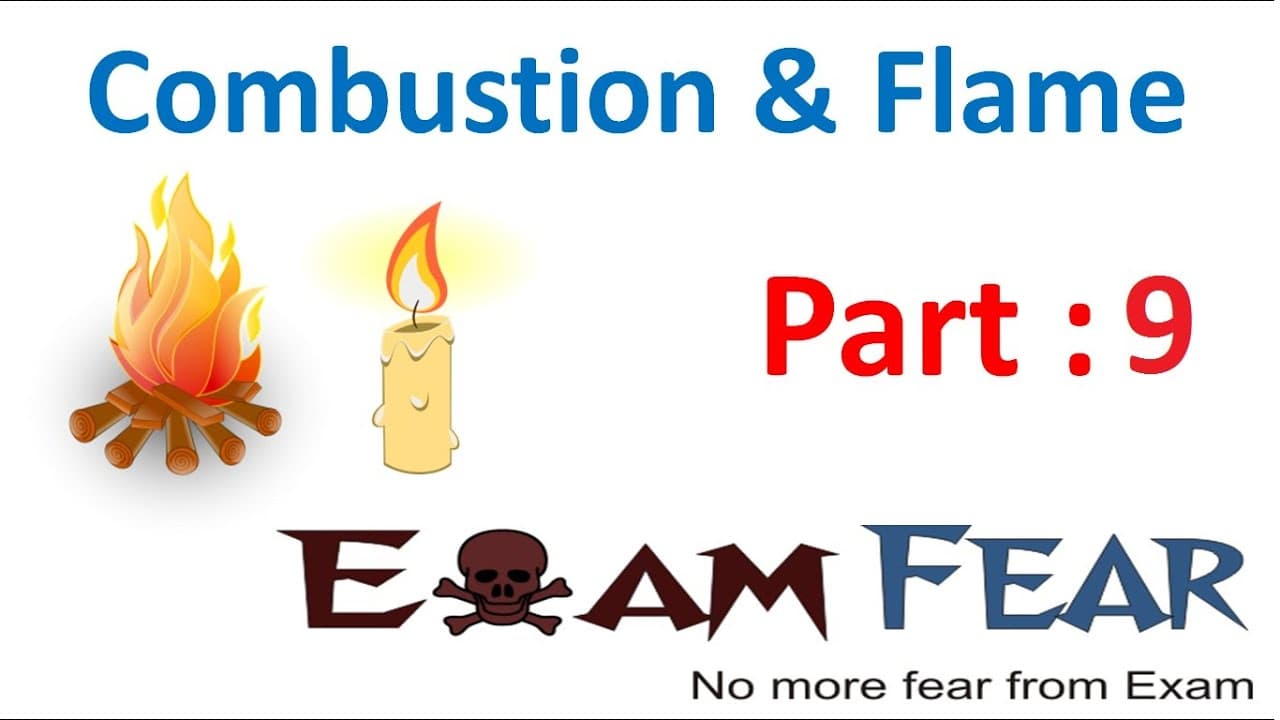
Chemistry Combustion & Flame Part 9 (Types of Combustion) Class 8 VIII
TL;DR
This video explains the three types of combustion: rapid, spontaneous, and explosion, with examples such as gas stoves, firecrackers, phosphorus, coal fires, and forest fires.
Transcript
hello friends this video on combustion and flame part 9 is brought to you by exam for calm no more fear from exam so now that we have understood the concept of combustion let us talk about the different types of combustion so here we are going to discuss about three types of combustion that is a rapid combustion spontaneous combustion and explosion... Read More
Key Insights
- 🙂 Rapid combustion is characterized by fast burning and the production of heat and light.
- 👂 Explosion is similar to rapid combustion but also produces sound.
- ❤️🔥 Spontaneous combustion occurs without an external ignition source and can be seen in examples like phosphorus, coal fires, and forest fires.
- 🙂 An external ignition source is required for rapid combustion, such as a matchstick or gas lighter.
- 🙂 Firecrackers and bombs are examples of explosion, as they produce heat, light, and sound.
- ❓ Phosphorus can spontaneously combust on its own in the presence of oxygen.
- 💀 Coal fires, formed from dead plants under high temperature and pressure, can also spontaneously combust.
Install to Summarize YouTube Videos and Get Transcripts
Explore YouTube Video Summarizer or Get YouTube Transcript Extractor
Questions & Answers
Q: What is rapid combustion?
Rapid combustion is a type of combustion that occurs very quickly, producing heat and light. It often requires an external ignition source, like a matchstick or gas lighter, as in the example of gas stoves.
Q: What is explosion?
Explosion is a type of combustion that is similar to rapid combustion but also produces sound. Firecrackers and bombs are examples of explosion, as they produce heat, light, and sound when ignited.
Q: What is spontaneous combustion?
Spontaneous combustion is a type of combustion that occurs without an external ignition source. Phosphorus is one example of spontaneous combustion, as it can catch fire on its own in the presence of oxygen. Coal fires and forest fires are also examples of spontaneous combustion.
Q: What is the key difference between rapid and spontaneous combustion?
The key difference is that rapid combustion requires an external ignition source, while spontaneous combustion occurs on its own without the need for any external ignition source.
Summary & Key Takeaways
-
Rapid combustion is characterized by fast burning, producing heat and light. Examples include gas stoves and the combustion of petrol.
-
Explosion is similar to rapid combustion but also produces sound, as seen in firecrackers and bombs.
-
Spontaneous combustion occurs without an external ignition source, such as with phosphorus, coal fires, and forest fires.
Read in Other Languages (beta)
Share This Summary 📚
Summarize YouTube Videos and Get Video Transcripts with 1-Click
Try YouTube Summary with ChatGPT & Claude or YouTube Transcript Generator
Explore More Summaries from LearnoHub - Class 11, 12 📚
Summarize YouTube Videos and Get Video Transcripts with 1-Click
Try YouTube Summary with ChatGPT & Claude or YouTube Transcript Generator