U-Boats (World War II)
TL;DR
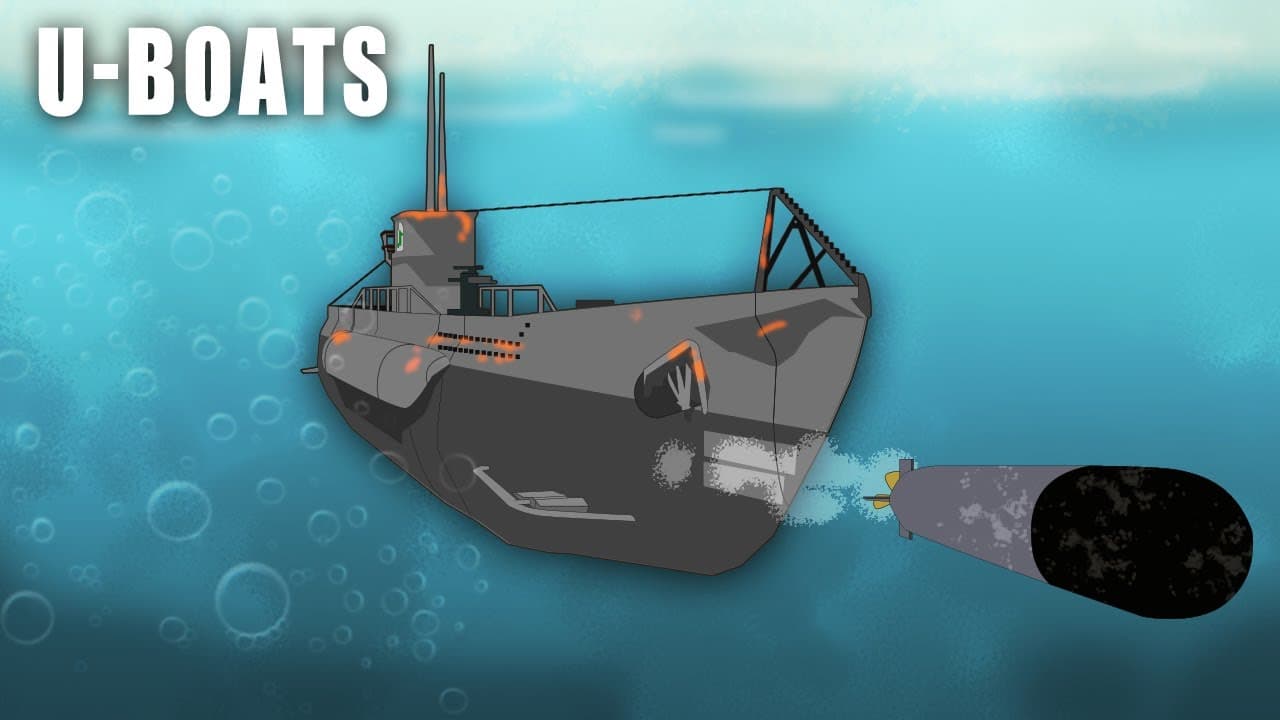
German U-Boats played a significant role in World War II, using innovative tactics and engineering to disrupt supply lines and attack enemy vessels.
Transcript
this episode is brought to you by world of warships the game is free to play with the perfect balance of action and strategy you can command a massive naval fleet featuring some of history's most iconic war vessels in this team-based game you can unlock new ships and dominate the oceans with 30 million players worldwide experience combat in weather... Read More
Key Insights
- ✊ Germany began building U-Boats in 1935 to balance naval power.
- 🦾 Type 7 U-Boats were the backbone of the German submarine fleet, armed with 14 torpedoes.
- 🤳 The "wolf pack" tactic was successful initially but became self-destructive.
- 🥺 Allied countermeasures, including radar-equipped aircraft, led to the decline of German U-Boat success.
- 🎨 The Type 21 U-Boat was designed for extended submerged operations.
- 🫒 Living conditions on U-Boats were cramped, with provisions stored everywhere.
- 🆙 Germans commissioned around 1150 U-Boats, of which 765 were sunk.
Install to Summarize YouTube Videos and Get Transcripts
Explore YouTube Video Summarizer or Get YouTube Transcript Extractor
Questions & Answers
Q: How successful were German U-Boat attacks during World War II?
German U-Boats were initially successful, using tactics like the "wolf pack" to attack merchant convoys. However, Allied countermeasures and advancements in radar technology eventually turned the tide, leading to the decline of German U-Boat success.
Q: What were the limitations and vulnerabilities of the Type 7 and Type 9 U-Boats?
The Type 7 and Type 9 U-Boats had limitations including a short lifespan for their electric engine batteries, which restricted their submersion time. They were vulnerable to air attacks, making them easy targets for Allied bombers.
Q: How did the Germans adapt to the Allied countermeasures against U-Boats?
The Germans developed the Type 21 U-Boat, which was specifically designed for extended periods of submerged operations. It had retractable features, advanced engines, and improved design to enhance stealth and remain underwater for longer periods.
Q: What were the living conditions like for sailors on German U-Boats?
Space was severely limited, with sailors having around one cubic meter of personal space. Provisions were stored everywhere, including the toilet area, and maintaining hygiene was a challenge. Food provisions were good, but water was scarce.
Summary & Key Takeaways
-
Germany began building new submarines in 1935 to balance naval power with Great Britain, and by the start of World War II, their U-Boats became a noticeable force.
-
The Type 7 U-Boat was the pride of the German naval forces, with over 700 made in different versions, armed with 14 torpedoes and various weaponry.
-
Allied countermeasures, such as radar-equipped aircraft, eventually led to the decline of German U-Boat supremacy.
Read in Other Languages (beta)
Share This Summary 📚
Summarize YouTube Videos and Get Video Transcripts with 1-Click
Try YouTube Summary with ChatGPT & Claude or YouTube Transcript Generator
Explore More Summaries from Simple History 📚

Summarize YouTube Videos and Get Video Transcripts with 1-Click
Try YouTube Summary with ChatGPT & Claude or YouTube Transcript Generator