Products
Features
YouTube Video Summarizer
Summarize YouTube videos
Web & PDF Highlighter
Highlight web pages & PDFs
Chat with PDF
Ask any PDF questions with AI
Ask AI Clone
Chat with your highlights & memories
Audio Transcriber
Transcribe audio files to text
Glasp Reader
Read and highlight articles
Kindle Highlight Export
Export your Kindle highlights
Idea Hatch
Hatch ideas from your highlights
Integrations
Obsidian Plugin
Notion Integration
Pocket Integration
Instapaper Integration
Medium Integration
Readwise Integration
Snipd Integration
Hypothesis Integration
Apps & Extensions
Chrome Extension
Safari Extension
Edge Add-ons
Firefox Add-ons
iOS App
Android App
Discover
Discover
Ideas
Discover new ideas and insights
Articles
Curated articles and insights
Books
Book recommendations by great minds
Posts
Essays and notes from readers
Quotes
Inspiring quotes collection
Videos
Curated videos and summaries
Explore Glasp
Glasp Newsletter
Weekly insights and updates
Glasp Talk
Interview series with great minds
Glasp Blog
Latest news and articles
Glasp Use Cases
Learn how others use Glasp
Build & Support
Glasp API
Access Glasp's API for developers
MCP Connector
Connect Glasp to Claude & ChatGPT
Community
Glasp Reddit Community
Students
Student discount and benefits
FAQs
Frequently Asked Questions
AboutPricing
DashboardLog inSign up

Noble Gases

September 22, 2022
by
The Organic Chemistry Tutor
YouTube video player
Noble Gases

TL;DR

Noble gases are non-reactive elements found in Group 8A or Group 18 of the periodic table, with stable outer energy levels and unique properties such as low boiling points and monoatomic states.

Transcript

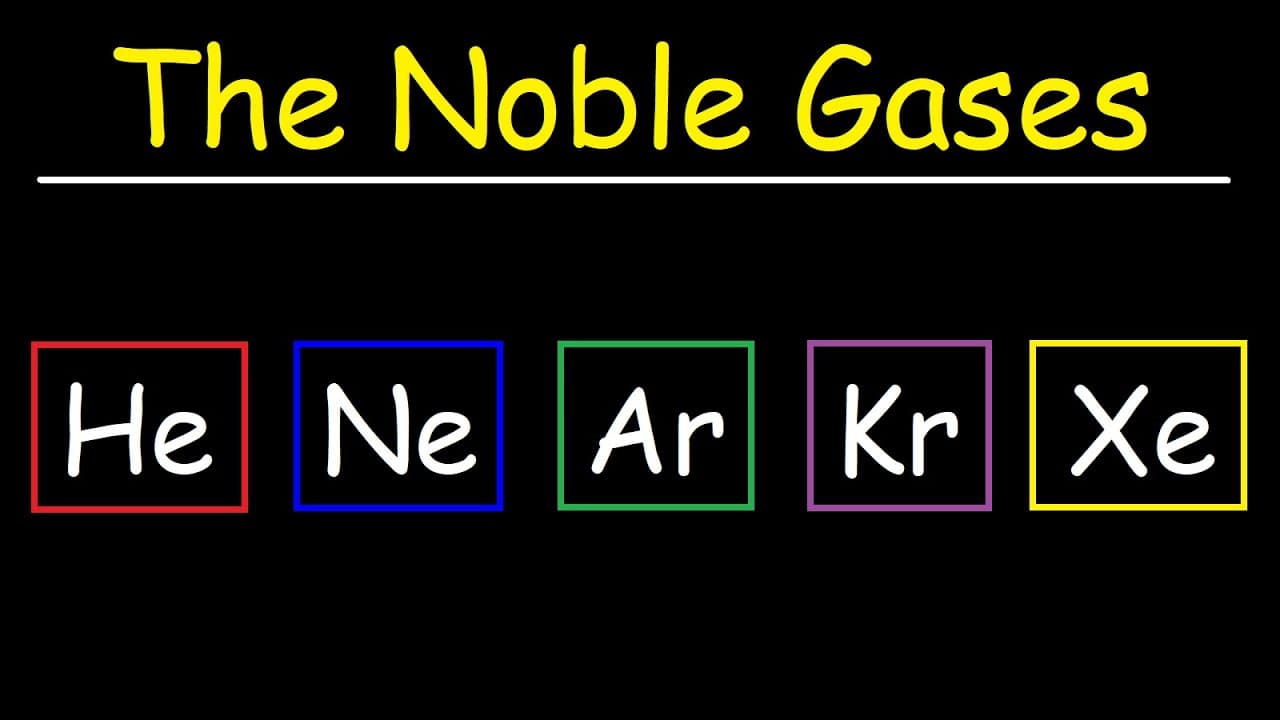
in this video we're going to talk about the noble gases the noble gases are found on the right side of the periodic table and it includes gases like helium Neon Argon Krypton Xenon and radon the gases are found in group 8A or group 18. of the periodic table now these gases are fairly non-reactive they're chemically inert for the most part some of t... Read More

Key Insights

  • 🫢 Noble gases are located on the right side of the periodic table and are chemically inert due to their filled outer energy levels.
  • 🫢 The boiling points of noble gases increase as you move down the group, along with the atomic radius and density.
  • 🫢 Noble gases exist as monoatomic elements, while most other elements, like halogens, are diatomic.
  • 🙂 Noble gases have several practical applications, including helium in balloons, neon in lights, argon in incandescent bulbs, and xenon in reactions with fluorine.
  • 🫢 Radon, a radioactive noble gas, can accumulate in homes and should be ventilated to prevent health hazards.
  • 🫢 The stability and non-reactivity of noble gases are attributed to their electron configurations and the dominance of London dispersion forces.
  • 🫢 Noble gases can react with highly reactive elements like fluorine to form compounds, although most noble gases are relatively unreactive.
  • 🫢 The density of noble gases increases as you move down the group.

Install to Summarize YouTube Videos and Get Transcripts

Explore YouTube Video Summarizer or Get YouTube Transcript Extractor

Questions & Answers

Q: Why are noble gases considered chemically inert?

Noble gases have their outer energy levels filled with electrons, making them stable and unreactive with other elements, except for a few, like fluorine.

Q: What is the relationship between the atomic radius and boiling point of noble gases?

As the atoms become larger and gain more electrons, the boiling point of noble gases increases.

Q: Are noble gases monoatomic or diatomic?

Noble gases exist as single atoms, making them monoatomic, while diatomic elements like fluorine, chlorine, bromine, and iodine consist of two atoms in their molecules.

Q: How can radon be a health hazard?

Radon is a radioactive noble gas that can seep into homes through the ground. Accumulation of radon without proper ventilation can be hazardous to human health.

Summary & Key Takeaways

  • Noble gases, including helium, neon, argon, krypton, xenon, and radon, are located on the right side of the periodic table and are fairly non-reactive.

  • These elements have filled outer energy levels, making them chemically stable and inert in most cases.

  • As you go down the group, the boiling point and density of noble gases increase.


Read in Other Languages (beta)

English

Share This Summary 📚

Summarize YouTube Videos and Get Video Transcripts with 1-Click

Download browser extensions on:

Try YouTube Summary with ChatGPT & Claude or YouTube Transcript Generator

Explore More Summaries from The Organic Chemistry Tutor 📚
Naming Acid Chlorides With IUPAC Nomenclature thumbnail
Naming Acid Chlorides With IUPAC Nomenclature
The Organic Chemistry Tutor
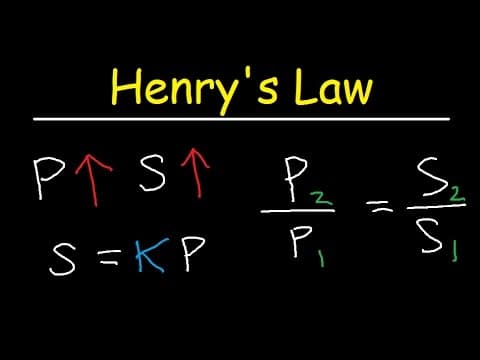
What Is Henry's Law and How Does It Affect Gas Solubility? thumbnail
What Is Henry's Law and How Does It Affect Gas Solubility?
The Organic Chemistry Tutor
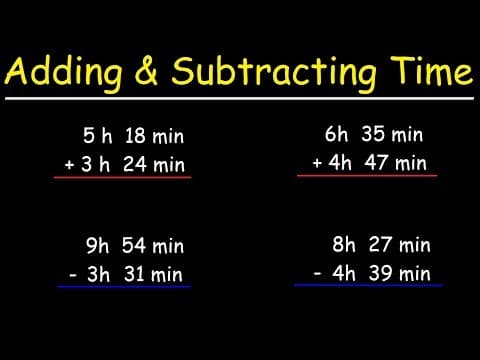
How To Add and Subtract Time in Hours and Minutes thumbnail
How To Add and Subtract Time in Hours and Minutes
The Organic Chemistry Tutor
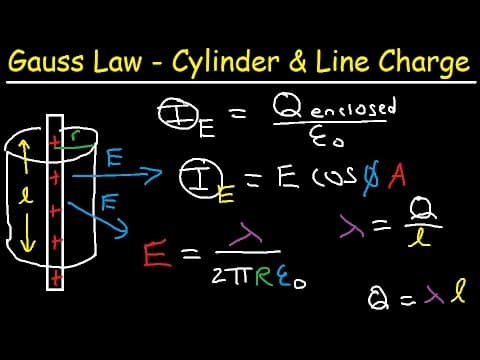
Gauss Law Cylinder, Infinite Line of Charge, Electric Flux & Field, Physics Problems thumbnail
Gauss Law Cylinder, Infinite Line of Charge, Electric Flux & Field, Physics Problems
The Organic Chemistry Tutor
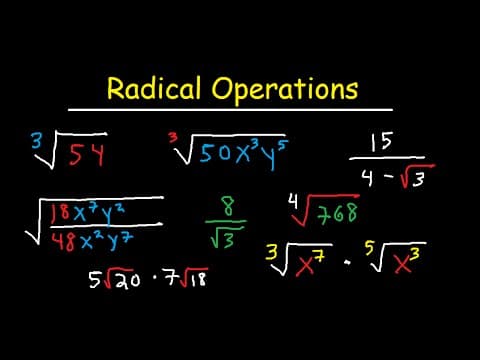
How to Simplify Radical Expressions Easily thumbnail
How to Simplify Radical Expressions Easily
The Organic Chemistry Tutor
How To Create a Calendar In Excel 2016 - VERY EASY! thumbnail
How To Create a Calendar In Excel 2016 - VERY EASY!
The Organic Chemistry Tutor

Summarize YouTube Videos and Get Video Transcripts with 1-Click

Download browser extensions on:

Try YouTube Summary with ChatGPT & Claude or YouTube Transcript Generator

Apps & Extensions

  • Chrome Extension
  • Safari Extension
  • Edge Add-ons
  • Firefox Add-ons
  • iOS App
  • Android App

Key Features

  • YouTube Video Summarizer
  • Web & PDF Summarizer
  • Web & PDF Highlighter
  • Chat with PDF
  • Ask AI Clone
  • Audio Transcriber
  • Glasp Reader
  • Kindle Highlight Export
  • Idea Hatch

Integrations

  • Obsidian Plugin
  • Notion Integration
  • Pocket Integration
  • Instapaper Integration
  • Medium Integration
  • Readwise Integration
  • Snipd Integration
  • Hypothesis Integration

More Features

  • APIs
  • MCP Connector
  • Blog & Post
  • Embed Links
  • Image Highlight
  • Personality Test
  • Quote Shots

Company

  • About us
  • Blog
  • Community
  • FAQs
  • Job Board
  • Newsletter
  • Pricing
Terms

•

Privacy

•

Guidelines

© 2026 Glasp Inc. All rights reserved.