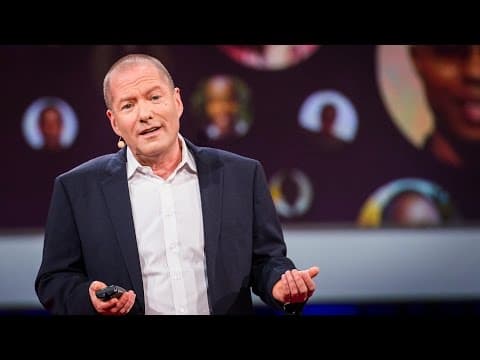
Aaron Huey: America's native prisoners of war

TL;DR
This talk discusses the history of the Lakota tribe, their mistreatment by the US government, and the ongoing social and economic challenges they face today.
Transcript
I'm here today to show my photographs of the Lakota. Many of you may have heard of the Lakota, or at least the larger group of tribes, called the Sioux. The Lakota are one of many tribes that were moved off their land to prisoner-of-war camps, now called reservations. The Pine Ridge Reservation, the subject of today's slide show, is located about 7... Read More
Key Insights
- 📸 The Pine Ridge Reservation in South Dakota is ground zero for Native American issues in the US.
- 💔 The history of the Lakota people is one of broken treaties, massacres disguised as battles, and oppression by the US government.
- 💰 The US has benefited from taking the best part of the "meat" from indigenous lands, while Native American communities suffer from poverty and high rates of disease.
- 🔥 The Wounded Knee Massacre in 1890 marked the US government's open declaration against Native American rights and the end of the Indian wars.
- 🗺️ The Sioux Nation's land, particularly the sacred Black Hills, was illegally taken by the US government, and the Sioux refused reparations for it.
- 🔁 The legacy of colonization, forced migration, and treaty violations continues to impact Native American communities today, with high rates of poverty, disease, and unemployment.
- ✊ There is a call to action to honor the treaties, give back the Black Hills to the Lakota, and take responsibility for the ongoing suffering of indigenous peoples in the US.
- ⚖️ The dominant society's solution to indigenous issues cannot be simple or tokenistic but requires a deep commitment to address the systemic injustices and inequalities faced by Native American communities.
Install to Summarize YouTube Videos and Get Transcripts
Explore YouTube Video Summarizer or Get YouTube Transcript Extractor
Questions & Answers
Q: Why does the speaker refer to himself as "wasichu" and what does it mean?
The term "wasichu" is a Lakota word that means "non-Indian" or "the one who takes the best meat for himself." The speaker uses this term to acknowledge the barriers and privileges he has as a white person on a Native reservation.
Q: What were the impacts of the Dawes Act on Native American reservations?
The Dawes Act, enacted in 1887, ended communal ownership of reservation lands and instead divided them into individual sections. This led to the loss of millions of acres of land for Native tribes and facilitated further division and sale of reservation land over time.
Q: What were the long-term consequences of the Wounded Knee Massacre?
The Wounded Knee Massacre, which took place in 1890, is considered the end of the Indian wars. It resulted in the loss of many Sioux lives and marked a turning point in the US government's position on Native rights, leading to further oppression and mistreatment of indigenous peoples.
Q: What are some of the challenges faced by the Lakota people today?
The Pine Ridge Reservation, where the Lakota live, faces high rates of unemployment, poverty, inadequate housing, lack of access to basic services such as electricity, and health disparities such as high rates of tuberculosis, infant mortality, and chronic diseases like diabetes. These challenges reflect the ongoing impact of historical and systemic injustices.
Summary & Key Takeaways
-
The speaker shares his personal experiences and photographs of the Lakota people living on the Pine Ridge Reservation in South Dakota, highlighting their struggles and resilience.
-
The history of the Lakota is intertwined with broken treaties, massacres, and the loss of their land and resources due to the actions of the US government.
-
The talk calls for honoring the treaties and returning the Black Hills to the Lakota people as a way to acknowledge and address the injustices of the past.
Read in Other Languages (beta)
Share This Summary 📚
Summarize YouTube Videos and Get Video Transcripts with 1-Click
Try YouTube Summary with ChatGPT & Claude or YouTube Transcript Generator
Explore More Summaries from TED 📚
Summarize YouTube Videos and Get Video Transcripts with 1-Click
Try YouTube Summary with ChatGPT & Claude or YouTube Transcript Generator