Shape-shifting tech will change work as we know it | Sean Follmer
TL;DR
This content discusses the evolution of tools, the need for new types of interfaces, and the potential of physical interaction with computers and smart environments.
Transcript
We've evolved with tools, and tools have evolved with us. Our ancestors created these hand axes 1.5 million years ago, shaping them to not only fit the task at hand but also their hand. However, over the years, tools have become more and more specialized. These sculpting tools have evolved through their use, and each one has a different form which ... Read More
Key Insights
- 🔍 Tools have evolved over time and become more specialized, matching their form to their function.
- 🤝 Designers have created interfaces that allow for complex control of tools, enabling users to manipulate parameters while engaged in other tasks.
- 💻 Computers have changed the way we think about tools, as they can perform a wide range of functions but have a static physical form and interface elements.
- 🙌 New types of interfaces that can capture the rich abilities and dexterity of our hands are needed to enhance interactions with computers.
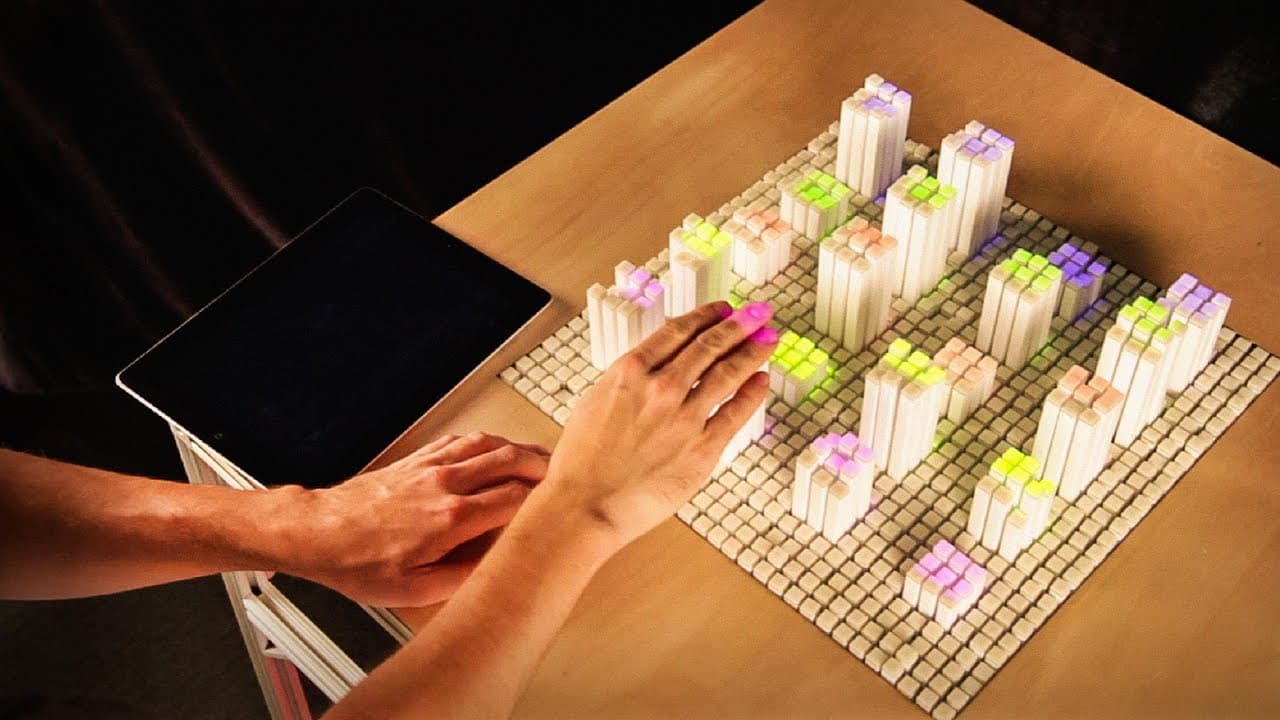
- 🏙️ InFORM, an interface built on a shape display, can be used by urban planners to design and view cities, offering a dynamic and physical experience.
- 🤝 Dynamic shape displays, like inFORM, can revolutionize remote collaboration by allowing users to manipulate objects and interact with 3D data sets at a distance.
- ⚙️ The inFORM interface consists of 900 linear actuators connected to mechanical linkages that translate motion into physical manipulation.
- 📱 The haptic edge display and morphing device bring the same interactive capabilities of inFORM to mobile devices, offering new tactile sensations and adaptable interfaces.
Install to Summarize YouTube Videos and Get Transcripts
Explore YouTube Video Summarizer or Get YouTube Transcript Extractor
Questions & Answers
Q: What is the purpose of creating interfaces that can physically adapt to us?
The purpose of creating interfaces that can physically adapt to us is to capture the rich abilities and dexterity that we have in our bodies. By allowing us to interact with these interfaces in new ways, we can enhance our ability to manipulate and understand information.
Q: How does inFORM allow for new ways of interacting with information?
inFORM allows for new ways of interacting with information by making it physical. With inFORM, the interface can come off the screen, enabling individuals to physically manipulate and touch 3D information. This physical interaction provides a new dimension to understanding and interacting with digital data.
Q: What are some potential applications of inFORM?
inFORM has various potential applications. For example, it can be used by urban planners and architects to design and view entire cities in a dynamic and physical manner. Additionally, it can facilitate remote collaboration by allowing individuals to reach out from the screen and manipulate objects at a distance, making it easier to collaborate on 3D information.
Q: How does the haptic edge display bring the same interactions developed for inFORM to mobile devices?
The haptic edge display, created at Stanford, brings the same interactions developed for inFORM to mobile devices by embedding an array of linear actuators that can change shape. This allows users to feel their position as they interact with the device, experience richer tactile sensations, and have buttons emerge from the side for more intuitive interaction. The haptic edge display adds a physical dimension to mobile interactions.
Q: How can computers physically adapt to us in smart environments?
In smart environments, computers can physically adapt to us by incorporating adaptive furniture, rooms, or cities. This means creating environments where computers are seamlessly integrated and can physically adapt to our needs and desired ways of interacting. By doing so, it enables new forms of collaboration and tasks that enhance the user experience and adapt to individual preferences.
Summary & Key Takeaways
-
Tools have evolved over time to become more specialized and complex, requiring more complex controls to operate them.
-
The computer revolution has changed the way we think about tools, but there is a problem with the static physical form and interface of computers.
-
The speaker has been working on new types of interfaces, such as inFORM and haptic edge display, that can capture rich abilities and physically adapt to users' needs.
Read in Other Languages (beta)
Share This Summary 📚
Summarize YouTube Videos and Get Video Transcripts with 1-Click
Try YouTube Summary with ChatGPT & Claude or YouTube Transcript Generator
Explore More Summaries from TED 📚



Summarize YouTube Videos and Get Video Transcripts with 1-Click
Try YouTube Summary with ChatGPT & Claude or YouTube Transcript Generator