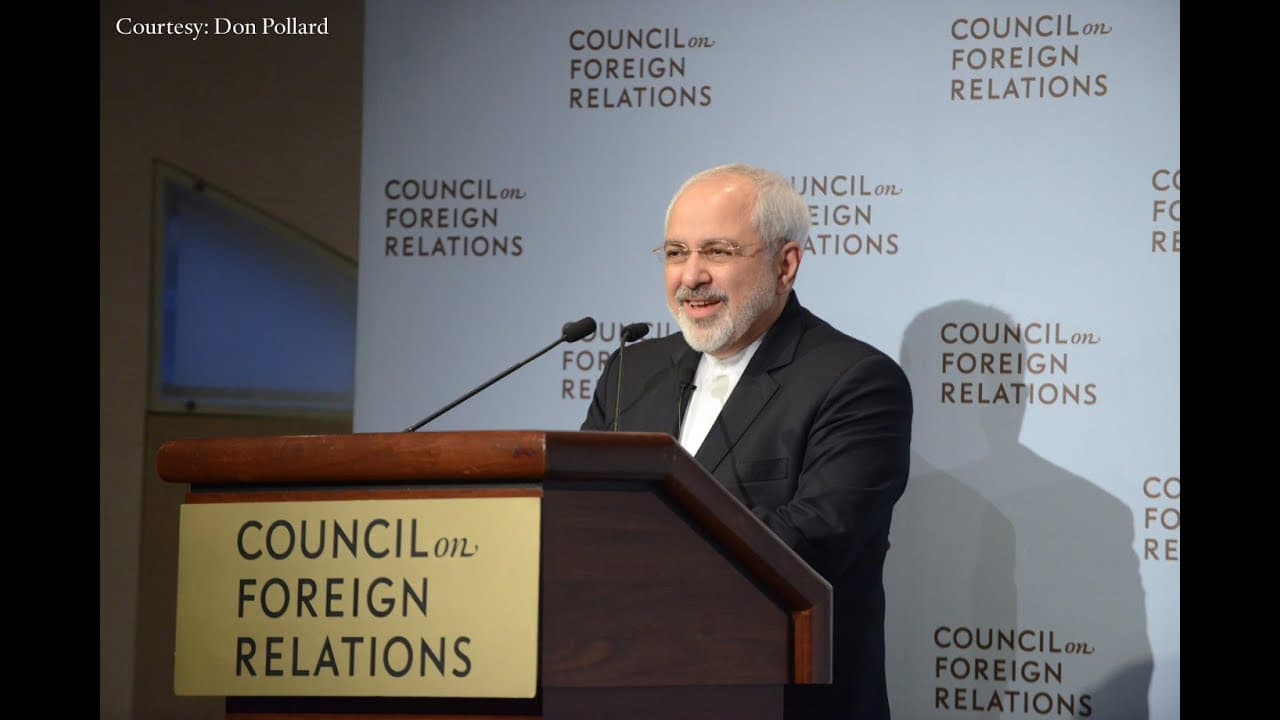
Iranian Foreign Minister Pledges Support for Iraq in Fight Against ISIS
TL;DR
Iran supports Iraq against ISIS, skeptical of U.S. airstrikes.
Transcript
WARNER: Welcome, everyone. Welcome to today's Council on Foreign Relations meeting with Foreign Minister of Iran Javad Zarif. And I'd like to welcome not only the CFR members here, but around the world and throughout this country participating by watching it live stream, and also many of our members in Washington, D.C., who are there and will have ... Read More
Key Insights
- Zarif highlights the need for a new paradigm in international relations, emphasizing global interconnectedness and the impossibility of achieving security at others' expense.
- Iran views ISIS as a global threat and has been proactive in assisting Iraq, even though it was not invited to international coalitions against ISIS.
- Zarif criticizes the effectiveness of airstrikes alone in combating ISIS, advocating for more comprehensive and localized strategies.
- Iran insists on the sovereignty of Iraq and Syria, opposing foreign military intervention unless requested by the governments of these countries.
- Zarif underscores Iran's willingness to ensure its nuclear program remains peaceful, but highlights the challenge posed by U.S. sanctions.
- Iran perceives U.S. sanctions as counterproductive, having led to an increase in Iran's nuclear capabilities rather than curbing them.
- Zarif emphasizes the importance of a negotiated settlement in Syria, suggesting that external preconditions have hindered peace efforts.
- Iran maintains its stance on supporting groups like Hezbollah, viewing them as defenders of territorial integrity rather than aggressors.
Install to Summarize YouTube Videos and Get Transcripts
Explore YouTube Video Summarizer or Get YouTube Transcript Extractor
Questions & Answers
Q: What is Iran's stance on foreign military intervention in Iraq?
Iran opposes foreign military intervention in Iraq, emphasizing that the fight against ISIS should be led by Iraqis. Iran supports Iraq through advisory roles and equipment but refrains from deploying troops. Zarif argues that foreign presence often exacerbates local resentment and instability.
Q: How does Iran perceive the effectiveness of U.S. airstrikes against ISIS?
Zarif is skeptical about the effectiveness of U.S. airstrikes, arguing that they cannot alone defeat ISIS. He stresses the need for comprehensive strategies that address underlying issues such as disenfranchisement and regional support for ISIS. Iran believes in empowering local forces to combat the threat.
Q: What is Iran's position on the Syrian conflict?
Iran advocates for a negotiated settlement in Syria without external preconditions. Zarif criticizes the exclusion of Iran from peace talks and the insistence on Assad's removal as barriers to peace. He calls for a ceasefire, government of national unity, and UN-supervised elections to resolve the conflict.
Q: How does Iran view the role of Hezbollah in the region?
Iran views Hezbollah as a defender of Lebanon's territorial integrity, not as an aggressor. Zarif argues that Hezbollah's actions have been a response to Israeli occupation. Iran supports groups that defend their territory and condemns attacks on civilians, maintaining a clear stance on regional conflicts.
Q: What challenges does Iran face in nuclear negotiations with the U.S.?
Iran faces challenges in nuclear negotiations due to U.S. reluctance to lift sanctions. Zarif criticizes the U.S. obsession with sanctions, which have only increased Iran's nuclear capabilities. He advocates for a confidence-building process to ensure the peaceful nature of Iran's nuclear program.
Q: What is Iran's response to accusations of military-related nuclear activities?
Iran denies accusations of military-related nuclear activities and has allowed IAEA inspections of its facilities. Zarif highlights that inspections have found no evidence of illicit activities. Iran insists on transparency while maintaining that military sites are off-limits to repeated inspections.
Q: How does Iran view its role in the global fight against ISIS?
Iran sees itself as a key player in the fight against ISIS, providing support to Iraq and criticizing the delayed international response. Zarif emphasizes the need for a unified approach to combat ISIS globally, highlighting Iran's early assistance to Iraq and skepticism of the coalition's effectiveness.
Q: What impact would failed nuclear talks have on Iran's foreign policy?
Failed nuclear talks could impact Iran's foreign policy by influencing public opinion and future elections. Zarif warns that rebuffing Iran's efforts for openness could lead to domestic political shifts, as seen in past elections. Iran seeks positive engagement from the international community to resolve the issue.
Summary & Key Takeaways
-
Iranian Foreign Minister Zarif discusses the need for a new paradigm in addressing global issues, criticizing outdated analytical tools. He emphasizes the interconnectedness of the world and the need for collaborative solutions.
-
Zarif outlines Iran's proactive role in combating ISIS in Iraq, criticizing the coalition of countries that previously supported ISIS. He stresses that airstrikes alone cannot defeat ISIS and advocates for more localized efforts.
-
On nuclear negotiations, Zarif insists Iran's program is peaceful and criticizes U.S. sanctions as ineffective. He highlights the need for mutual trust and a realistic approach to resolving the issue.
Read in Other Languages (beta)
Share This Summary 📚
Summarize YouTube Videos and Get Video Transcripts with 1-Click
Try YouTube Summary with ChatGPT & Claude or YouTube Transcript Generator
Explore More Summaries from Council on Foreign Relations 📚

Summarize YouTube Videos and Get Video Transcripts with 1-Click
Try YouTube Summary with ChatGPT & Claude or YouTube Transcript Generator