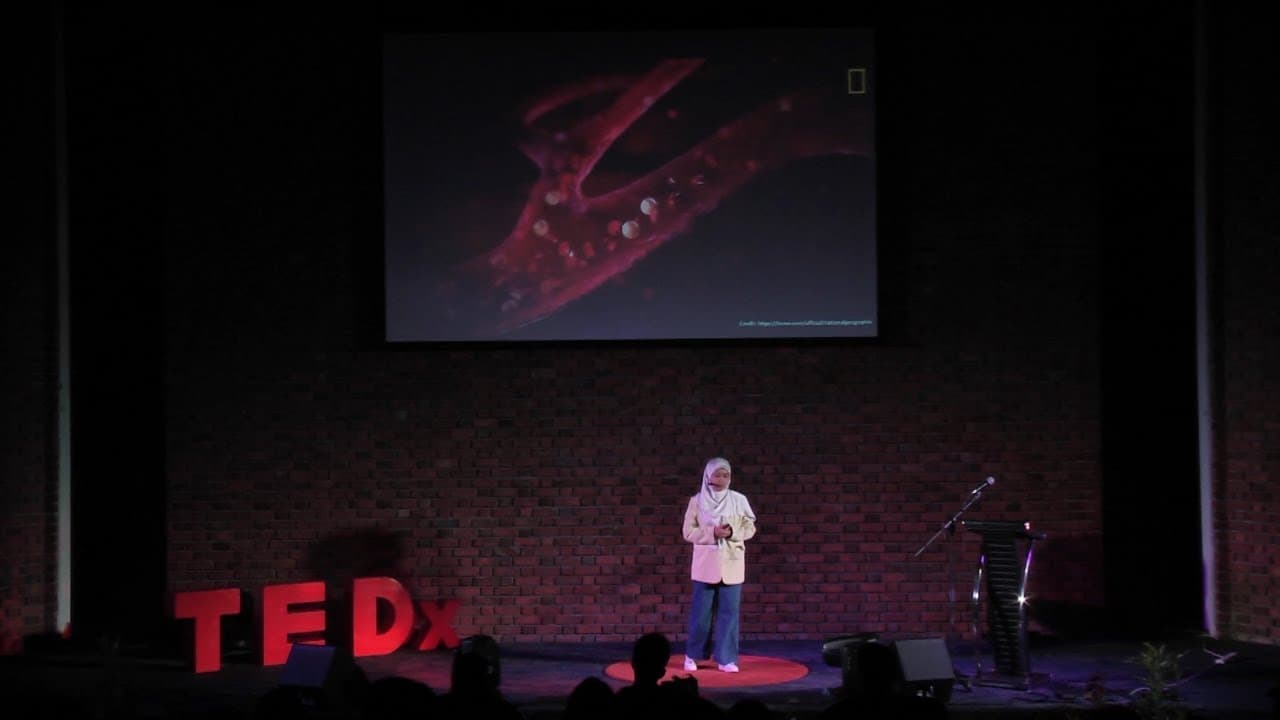
Cellular Postal Services: Unlocking the Secrets to Diseases | Nadiah Abu | TEDxUKM
TL;DR
Extracellular vesicles (EVS) are small nanoparticles released by cells that play a crucial role in cellular communication, including cancer cell communication. They can be used for disease detection, personalized medicine, drug delivery, and even cosmetics.
Transcript
thank you I am pretty sure that each and every one of us here in this room has engaged in online shopping Lazada Zalora so when we purchase an item the seller will back up our stuff and deliver it using a shipping or logistics company you know such as sports schedule or jnt just to name a few and then these shipping companies will then deliver the ... Read More
Key Insights
- 🖐️ EVS play a vital role in cellular communication and have garnered considerable interest in biomedical research.
- ♋ Cancer cells release EVS, influencing the cellular processes of healthy cells and immune cells.
- 🫗 EVS can be isolated from bodily fluids and used as a liquid biopsy for cancer detection.
- ⚾ Precision medicine aims to tailor treatment based on individual characteristics, and EVS can provide molecular and cellular insights for this approach.
- 🚚 EVS can be engineered and loaded with drugs for targeted delivery to cells, with ongoing clinical trials in progress.
- 💊 Stem cell-derived EVS have potential applications in regenerative medicine, anti-inflammation, wound healing, and cosmetics.
- 🏑 EVS are increasingly recognized for their massive potential in disease understanding, diagnostics, therapeutics, and other fields.
Install to Summarize YouTube Videos and Get Transcripts
Explore YouTube Video Summarizer or Get YouTube Transcript Extractor
Questions & Answers
Q: How small are EVS, and why do we need specialized equipment to see them?
EVS are approximately 100 nanometers in size, which is smaller than what the naked eye or conventional microscopy can detect. High-end specialist equipment, like an electron microscope, is required to view EVS due to their minuscule size.
Q: How are EVS used in cancer research and detection?
EVS released by cancer cells are taken up by other cells, altering their cellular processes. Scientists capture and study these EVS to gain insights into how cancer cells communicate. EVS can also be used as a liquid biopsy, allowing for non-invasive detection of cancer in bodily fluids such as blood and urine.
Q: How can EVS contribute to personalized medicine?
EVS can provide valuable information for stratifying patients based on their response to treatment. By isolating EVS and identifying specific patterns or signals, scientists can tailor treatment plans based on an individual's genetic makeup and other factors, moving towards a more personalized approach to healthcare.
Q: Are EVS being used for drug delivery and regenerative medicine?
Yes, EVS are being loaded with drugs, chemicals, and therapies to be delivered directly to cells. Clinical trials are ongoing to explore the use of EVS for delivering drugs in diseases like cancer and COVID-19. Additionally, stem cell-derived EVS are being used for tissue regeneration, anti-inflammation, wound healing, and even cosmetics.
Summary & Key Takeaways
-
EVS are tiny nanoparticles released by cells for intercellular communication, similar to how we use postal services for communication.
-
Initially disregarded as cellular waste, EVS were later found to play a pivotal role in cellular processes and communication.
-
EVS, including those released by cancer cells, can transfer bioactive molecules to other cells, influencing cellular processes and having implications for disease progression.
Read in Other Languages (beta)
Share This Summary 📚
Summarize YouTube Videos and Get Video Transcripts with 1-Click
Try YouTube Summary with ChatGPT & Claude or YouTube Transcript Generator
Explore More Summaries from TEDx Talks 📚






Summarize YouTube Videos and Get Video Transcripts with 1-Click
Try YouTube Summary with ChatGPT & Claude or YouTube Transcript Generator