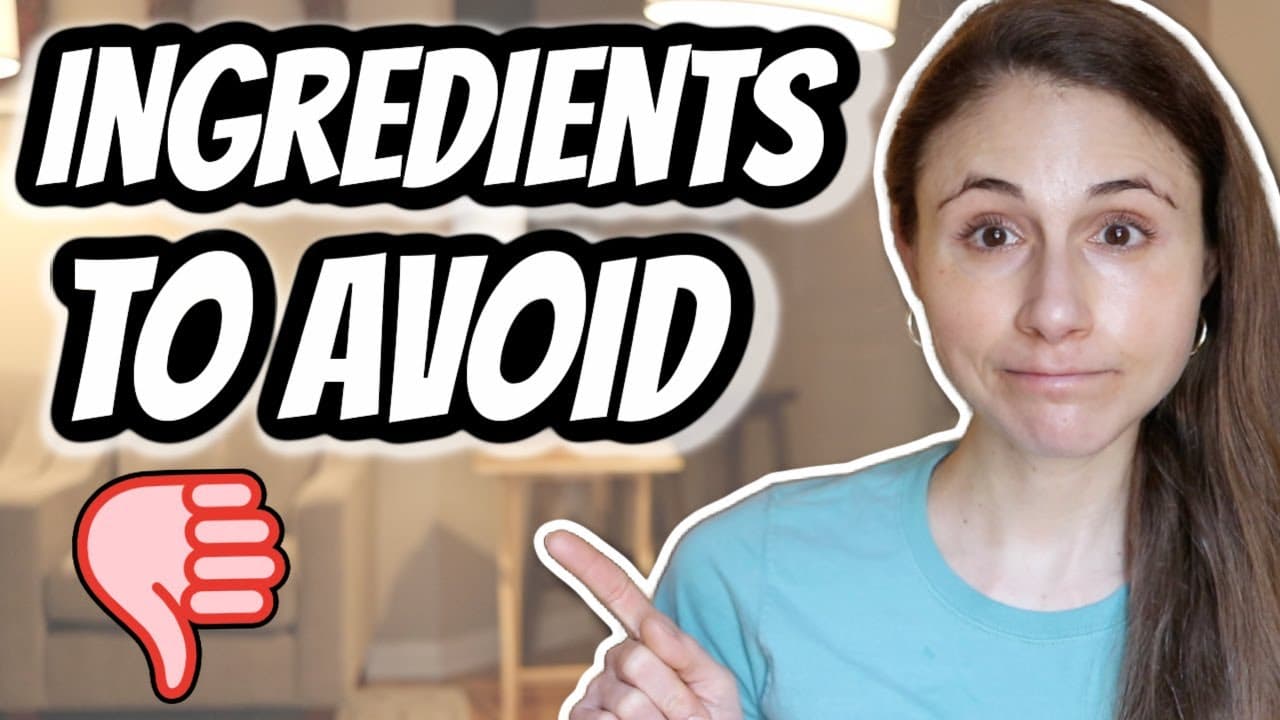
What Ingredients Should You Avoid in Skincare Products?
TL;DR
To maintain healthy skin, avoid ingredients like methyl isothiazolinone, which can cause contact dermatitis, and fragrance, which may lead to allergies and hyperpigmentation. Also, steer clear of essential oils, synthetic dyes, and tanning products with low SPF, as these can irritate the skin or exacerbate conditions like acne.
Transcript
well hey guys in today's video i'm going to share with you 10 things to try and avoid in your skin care products if you're new here welcome my name is andrea i am a board certified dermatologist i would love it if you would subscribe to my youtube channel and hit the thumbs up it really helps my videos out a lot all right you guys this list of 10 t... Read More
Key Insights
- 💦 Methyl isothiazolinone is a preservative commonly found in water-based skincare products that can cause contact dermatitis.
- 😎 Fragrance in skincare products is a common cause of skin allergies and can lead to hyperpigmentation and increased sun sensitivity.
- 🛢️ Citrus oils, such as lime peel oil and lemon oil, can increase sensitivity to sunlight and cause irritation and allergies.
- 🪼 Neomycin, found in products like Neosporin, is a problematic ingredient that can cause contact dermatitis and is not superior for wound healing compared to plain petroleum jelly.
- 🥺 Balsam of Peru, often found in diaper rash creams, is highly sensitizing and can lead to restricted diets and difficulty finding compatible products for those with allergies.
- 🛢️ Essential oils contain sensitizing compounds that can cause irritation and are commonly used in skincare products.
- 🤩 Certain synthetic dyes derived from coal tar can aggravate acne, so it's best to avoid them if acne worsens with these ingredients.
- 🥥 Coconut oil, although not problematic for everyone, can be comedogenic and worsen acne in some individuals.
- 😂 Facial scrubs can cause tiny tears in the skin's barrier, leading to dryness, irritation, and increased vulnerability to acne and other skin issues.
Install to Summarize YouTube Videos and Get Transcripts
Explore YouTube Video Summarizer or Get YouTube Transcript Extractor
Questions & Answers
Q: Can I still use products with methyl isothiazolinone if I don't have allergies or skin irritation?
While it's generally safe to use products with this preservative, it's best to minimize exposure as it commonly causes problems and there are alternative preservatives available.
Q: Are all fragrance ingredients sensitizing?
Not all fragrance ingredients are sensitizing, but they can oxidize into more irritating compounds and cause contact allergy, hyperpigmentation, and sensitivity to the sun.
Q: Can citrus oils be used in rinse-off products?
Yes, citrus oils are less likely to cause problems in rinse-off products, but they can still irritate and sensitize the skin if used in leave-on products.
Q: Is there any benefit to using Neosporin with neomycin?
Plain petrolatum (Vaseline) is just as effective as Neosporin for wound healing and infection prevention, without the risk of contact dermatitis associated with neomycin.
Q: Why should I avoid synthetic dyes if I have acne?
Synthetic dyes derived from coal tar can exacerbate acne in some individuals; if you notice acne worsening with red dye-containing products, it's best to avoid them.
Q: Can coconut oil be used in other skincare products without causing acne?
Some people with acne report that coconut oil aggravates their acne, while others don't experience any issues. If you notice acne worsening with coconut oil-containing products, it's best to avoid them.
Q: Are facial scrubs safe to use on other parts of the body?
Facial scrubs can be used on areas with thicker skin, like the feet, but they should be used with caution as they can still cause dryness and irritation.
Q: Can tanning products with low SPF provide any sun protection?
Tanning products with low SPF only block some burning rays but not UVA rays, which are more damaging; they should be avoided as they encourage prolonged sun exposure without adequate protection.
Summary & Key Takeaways
-
Methyl isothiazolinone: A preservative commonly found in water-based products that can cause contact dermatitis; alternatives are available.
-
Fragrance: Common cause of skin allergy and can lead to hyperpigmentation and sensitization to the sun; avoid in leave-on products.
-
Citrus oils: Increase sensitivity to sunlight and can cause irritation and allergies; minimize exposure in leave-on products.
-
Neomycin: Useless antibiotic found in products like Neosporin that can cause contact dermatitis; plain petroleum jelly is just as effective for wound healing.
-
Balsam of Peru: Highly sensitizing fragrance ingredient found in diaper rash creams, causing allergies and restricted diets; avoid in skincare products.
-
Essential oils: Similar to fragrance, essential oils contain sensitizing compounds that can cause irritation, especially in leave-on products.
-
Synthetic dyes: Certain dyes derived from coal tar can aggravate acne; avoid if you notice acne worsening with red dye-containing products.
-
Coconut oil: Can be comedogenic and aggravate acne, but not everyone experiences issues; be mindful if acne worsens with coconut oil-containing products.
-
Facial scrubs: Mechanical scrubs can create tiny tears in the skin's barrier, leading to dryness, irritation, and more acne flares; be cautious, especially on the face.
-
Tanning products with low SPF: These products block some burning rays but not UVA, leading to excessive sun exposure and skin damage; opt for broad-spectrum sunscreens or sunless tanners instead.
Read in Other Languages (beta)
Share This Summary 📚
Summarize YouTube Videos and Get Video Transcripts with 1-Click
Try YouTube Summary with ChatGPT & Claude or YouTube Transcript Generator
Explore More Summaries from Dr Dray 📚

Summarize YouTube Videos and Get Video Transcripts with 1-Click
Try YouTube Summary with ChatGPT & Claude or YouTube Transcript Generator