What Are RFCs and Why Are They Important?
TL;DR
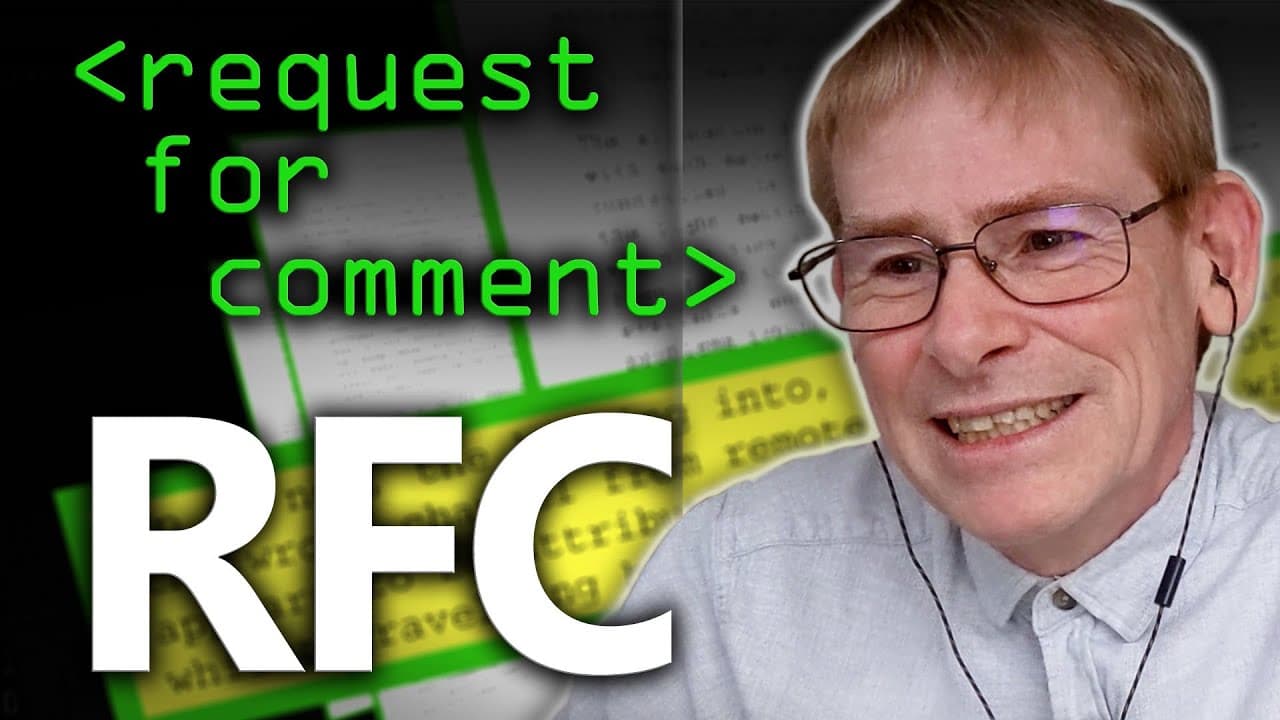
RFCs, or Requests for Comments, are crucial documents that shape internet standards by gathering feedback on proposed protocols and practices. They originated as a way for early developers to solicit opinions, and all major internet standards, including TCP/IP, are built upon them. The process involves drafts and revisions from working groups, resulting in both serious and humorous RFCs over the years.
Transcript
today i thought we'd talk about uh internet standards and in particularly uh the uh request for comments the famous rfs yes he referred here in there yeah so they started out exactly what they said on the tin as a request for comments so the very first one rfc number one was by uh steve crocker who was one of the very early movers in uh t... Read More
Key Insights
- 💨 RFCs originated as a way to gather comments and feedback on internet standards proposals.
- ❓ TCP/IP and other important internet protocols rely on RFCs for their development and standardization.
- 🤑 There are serious, informative RFCs, but also humorous ones, sometimes published on April Fools' Day.
- 👥 The RFC process involves working groups, drafts, and iterations before finalizing a standard.
- #️⃣ RFC numbers are generally sequential, but exceptions can be made for specific reasons.
- 🥺 The issue of running out of IPv4 addresses led to discussions and proposals, including IPv6.
- 😒 Implementing humorous RFCs, like transmitting TCP over pigeons, is not recommended for practical use.
Install to Summarize YouTube Videos and Get Transcripts
Explore YouTube Video Summarizer or Get YouTube Transcript Extractor
Questions & Answers
Q: What was the purpose of the first RFC?
The first RFC, published by Steve Crocker, sought feedback on proposed internet protocols and standards.
Q: How do comments on RFC drafts work today?
Comments on RFC drafts are typically submitted by working groups, who suggest revisions, add features, and engage in discussions.
Q: Are all RFCs serious and standard-setting?
No, some RFCs are humorous or even satirical. Examples include RFC 1149 on transmitting IP datagrams over avian carriers (pigeons).
Q: How are RFC numbers assigned?
Most RFCs follow a sequential numbering system, but some receive special numbers for specific reasons, such as replacing an entire standard.
Summary & Key Takeaways
-
RFCs (Request for Comments) started as a way for early internet pioneers to gather feedback on proposed standards.
-
All internet standards rely on RFCs; examples include TCP/IP, RFC 793 and 791.
-
RFCs are published as drafts, with comments and revisions made by working groups before finalization.
Read in Other Languages (beta)
Share This Summary 📚
Summarize YouTube Videos and Get Video Transcripts with 1-Click
Try YouTube Summary with ChatGPT & Claude or YouTube Transcript Generator
Explore More Summaries from Computerphile 📚




Summarize YouTube Videos and Get Video Transcripts with 1-Click
Try YouTube Summary with ChatGPT & Claude or YouTube Transcript Generator