How Many Startups Will Survive OpenAI's Disruption?
TL;DR
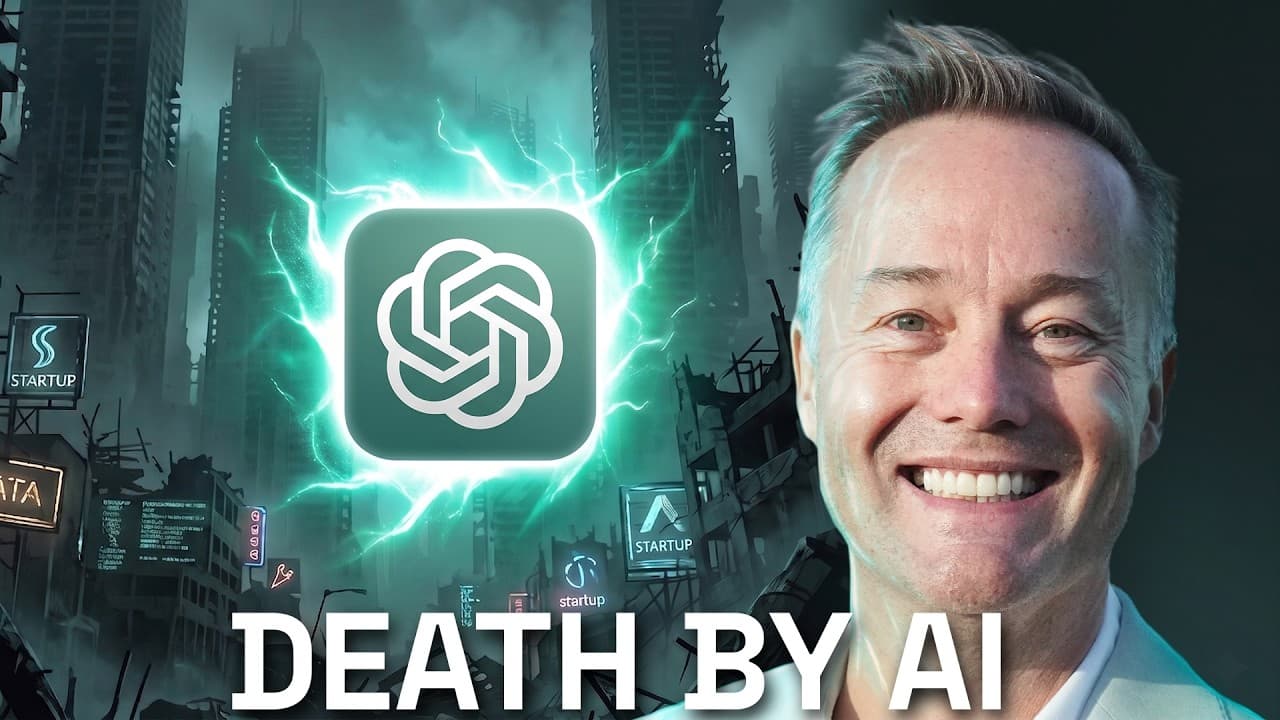
The startup landscape is undergoing significant changes due to advancements in AI, particularly from companies like OpenAI. Some startups are returning investor funds, anticipating their business models will be disrupted by AI developments. This shift is prompting discussions on the sustainability of traditional business models and the need for adaptation in the AI era.
Transcript
People don't want to talk about it because it's scary to admit that this is happening. >> A founder that closed a $15 million series A from a top tier VC and then a half year later they plan to return the cash to investors. You add that Clyde will displace the product and erode the value. This is really happening. Most people are not talking about ... Read More
Key Insights
- OpenAI's advancements are causing startups to reconsider their business models.
- Some startups are returning investor funds, predicting AI will erode their product value.
- The transition from SaaS to AI is challenging for many late-stage companies.
- AI is creating a divide between traditional business models and new agentic models.
- The secondary market provides liquidity options for startup employees and founders.
- Founders are facing tough decisions about staying independent or joining larger AI firms.
- The valuation of companies is increasingly driven by AI capabilities rather than traditional metrics.
- Investors are debating the long-term impact of AI on business sustainability and profitability.
Install to Summarize YouTube Videos and Get Transcripts
Explore YouTube Video Summarizer or Get YouTube Transcript Extractor
Questions & Answers
Q: How is AI impacting startups today?
AI is significantly impacting startups by challenging existing business models and creating new opportunities. Companies like OpenAI are advancing AI technologies that can replace or enhance traditional solutions, prompting startups to adapt or face obsolescence. This has led to some startups returning investor funds, anticipating that AI will disrupt their core products.
Q: What are the challenges of transitioning from SaaS to AI?
Transitioning from SaaS to AI involves rethinking business models, pricing structures, and team compositions. Companies must integrate AI capabilities into their products, which often requires new technical expertise and can disrupt existing revenue streams. The challenge is to pivot quickly while maintaining investor and customer confidence.
Q: Why are some startups returning investor funds?
Some startups are returning investor funds because they foresee AI advancements rendering their products obsolete. These startups, often led by experienced founders, are proactively acknowledging that their business models may not sustain in the AI-driven future and are opting to return capital rather than pursue a potentially unviable path.
Q: What role does the secondary market play for startups?
The secondary market plays a crucial role in providing liquidity for startup employees and founders, allowing them to sell shares before an IPO. This is important as IPO timelines can extend over a decade, and employees may need to exercise stock options or access funds for personal reasons. However, the market is under scrutiny for unauthorized trading practices.
Q: How are investors responding to AI-driven market changes?
Investors are closely monitoring AI-driven changes, balancing the potential for high returns with the risks of disruption. Some are focusing on AI-native companies, while others encourage their portfolio companies to integrate AI capabilities. The challenge is assessing long-term sustainability and profitability in an increasingly AI-dominated landscape.
Q: What is the impact of AI on company valuations?
AI is shifting company valuations from traditional financial metrics to AI capabilities and potential market impact. Investors are increasingly valuing companies based on their AI integration and future growth prospects rather than current revenue or profit margins. This has led to higher valuations for AI-focused companies, though it also introduces volatility.
Q: How should startups approach AI integration?
Startups should approach AI integration by evaluating how AI can enhance or replace their current offerings. This involves investing in AI expertise, rethinking product strategies, and potentially restructuring teams. Successful integration requires balancing innovation with maintaining operational stability and customer relationships.
Q: What are the long-term implications of AI for the startup ecosystem?
Long-term, AI is expected to reshape the startup ecosystem by creating new industries and transforming existing ones. Startups that successfully integrate AI may gain competitive advantages, while those that fail to adapt could become obsolete. The ecosystem will likely see increased collaboration between AI giants and smaller startups, driving innovation and market evolution.
Summary & Key Takeaways
-
AI advancements, particularly from OpenAI, are prompting startups to reevaluate their business models. Some are returning funds, anticipating that AI will disrupt their value propositions. This shift highlights the challenges of transitioning from traditional SaaS models to AI-driven solutions.
-
The secondary market remains vital for providing liquidity to startup employees and founders, especially as IPO timelines extend. However, the market is under scrutiny due to concerns about unauthorized trading and layered fees.
-
Investors and founders are navigating the complexities of AI's impact on business models, with a focus on sustainability and long-term profitability. The discussion emphasizes the need for adaptability and strategic pivots in the face of AI disruption.
Read in Other Languages (beta)
Share This Summary 📚
Summarize YouTube Videos and Get Video Transcripts with 1-Click
Try YouTube Summary with ChatGPT & Claude or YouTube Transcript Generator
Explore More Summaries from This Week in Startups 📚





Summarize YouTube Videos and Get Video Transcripts with 1-Click
Try YouTube Summary with ChatGPT & Claude or YouTube Transcript Generator