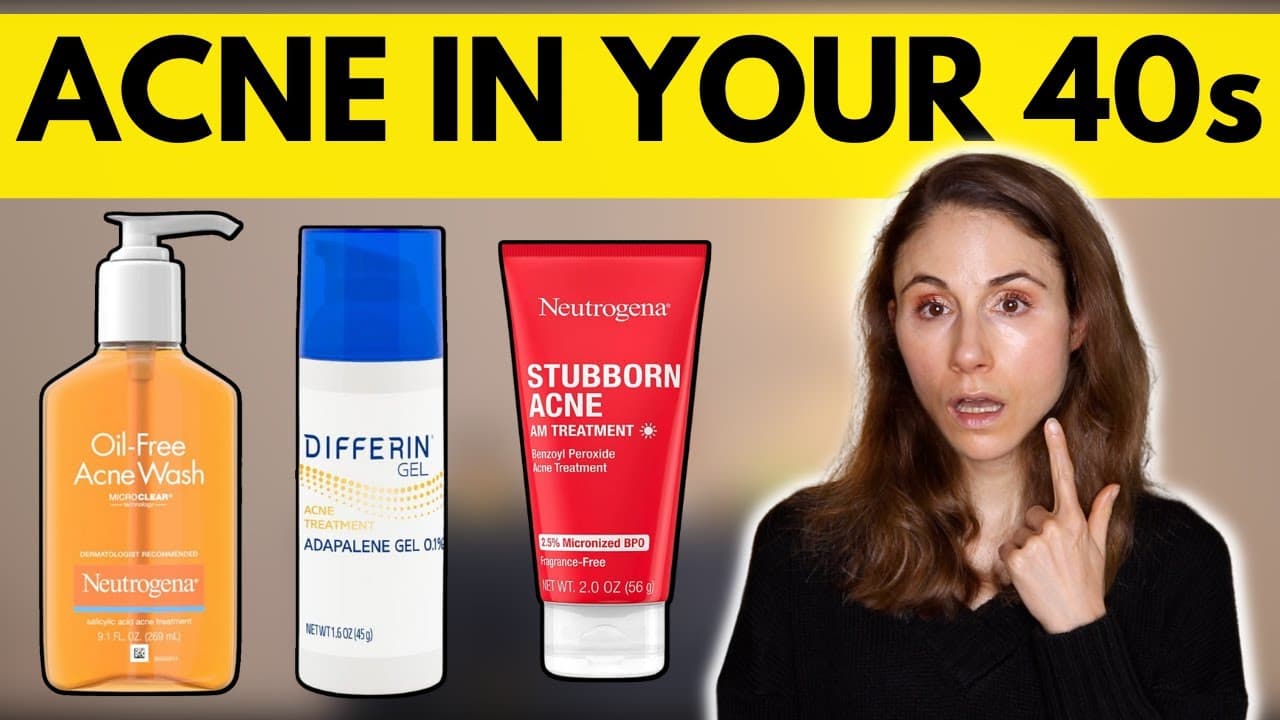
WHY YOU ARE GETTING ACNE IN YOUR 40s 😳 Dermatologist @DrDrayzday
TL;DR
Adult acne in your 40s can be caused by hormonal changes related to perimenopause and menopause, and it is important to address concerns with a healthcare professional.
Transcript
well hey guys in today's video I want to talk about acne in your 40s as you all know I recently went to the American Academy of Dermatology meeting in New Orleans I attended a lot of lectures and one of them was related to acne in adults and it got me thinking I know a lot of you all struggle with this and it's time for an update in this video I'm ... Read More
Key Insights
- 🧑🏭 Acne in adulthood is a result of multiple factors, including clogged pores, excessive sebum production, and inflammation caused by bacteria.
- 🧑 Hormonal changes during perimenopause and menopause can contribute to adult acne by increasing sebum production.
- 👩🦰 Other symptoms such as hair loss and hirsutism can accompany acne in women experiencing hormonal changes.
- 👶 It is essential to have a healthcare professional assess any new or worsening acne in adulthood to determine the underlying cause and provide appropriate treatment.
- 🔄 Over-the-counter treatments for acne may be effective, but prescription medications may be necessary for hormonal acne or underlying endocrinologic diseases.
- 👋 A good doctor-patient relationship is crucial during perimenopause and menopause to ensure concerns are addressed and appropriate treatment is provided.
Install to Summarize YouTube Videos and Get Transcripts
Explore YouTube Video Summarizer or Get YouTube Transcript Extractor
Questions & Answers
Q: What factors contribute to the development of adult acne?
Adult acne is caused by sticky skin cells that clog pores, excessive sebum production, and the presence of bacteria that triggers inflammation. Hormonal changes play a significant role, especially in women during perimenopause and menopause.
Q: How do hormonal changes during menopause impact acne?
Hormonal changes during menopause lead to a decline in estrogen hormones and an increase in androgen hormones. Androgens stimulate sebum production, which can contribute to acne. These hormonal changes can also lead to other symptoms such as hair loss and hirsutism.
Q: Should adult acne be treated differently than acne in teenagers?
The treatment for adult acne may include over-the-counter options such as salicylic acid and benzoyl peroxide. However, if there are underlying hormonal issues such as PCOS or adrenal disorders, specific interventions and prescription medications may be necessary.
Q: How important is it to have a good doctor-patient relationship during perimenopause and menopause?
It is crucial to have a doctor who listens to your concerns and takes them seriously during perimenopause and menopause. Some symptoms may be more than just normal aging, and a thorough history and physical exam are needed to determine the cause and provide appropriate treatment.
Summary & Key Takeaways
-
Acne in adulthood is caused by factors such as sticky skin cells lining the pores, excessive sebum production, and the presence of bacteria that feeds off sebum and triggers inflammation.
-
Hormonal changes during perimenopause and menopause can lead to increased acne due to a decline in estrogen hormones and an increase in androgen hormones.
-
Acne in women during perimenopause and menopause can also be associated with other symptoms such as hair loss and hirsutism, which are known as Androgen-mediated cutaneous disorders.
Read in Other Languages (beta)
Share This Summary 📚
Summarize YouTube Videos and Get Video Transcripts with 1-Click
Try YouTube Summary with ChatGPT & Claude or YouTube Transcript Generator
Explore More Summaries from Dr Dray 📚
Summarize YouTube Videos and Get Video Transcripts with 1-Click
Try YouTube Summary with ChatGPT & Claude or YouTube Transcript Generator