Is Air Travel Bad for the Environment and Ethical?
TL;DR
Air travel contributes about 5% to global warming, raising ethical concerns as its impact is expected to increase with rising passenger numbers. While the 'flight shame' movement encourages reduced flying for sustainability, advancements like electric planes could eventually offer greener alternatives if battery technology improves.
Transcript
This is me in China in 1996, on a trip to see where my family came from. That trip was the first time that I rode in an airplane, and the first time that I got stuck in an airport. We've been waiting here for 9 hours now! Air travel is one of the great privileges of living in this century. And the number of air passengers is expected to double in ... Read More
Key Insights
- Air travel is a major contributor to climate change, responsible for about 5% of man-made global warming annually. This impact is expected to increase as more people in Asia begin flying.
- The 'flight shame' movement, particularly popular in Europe, encourages individuals to reconsider their air travel due to its environmental impact, with some opting for trains instead.
- Individual carbon footprints from flying can be significant, with first-class passengers causing up to five times more emissions than economy passengers due to the space they occupy.
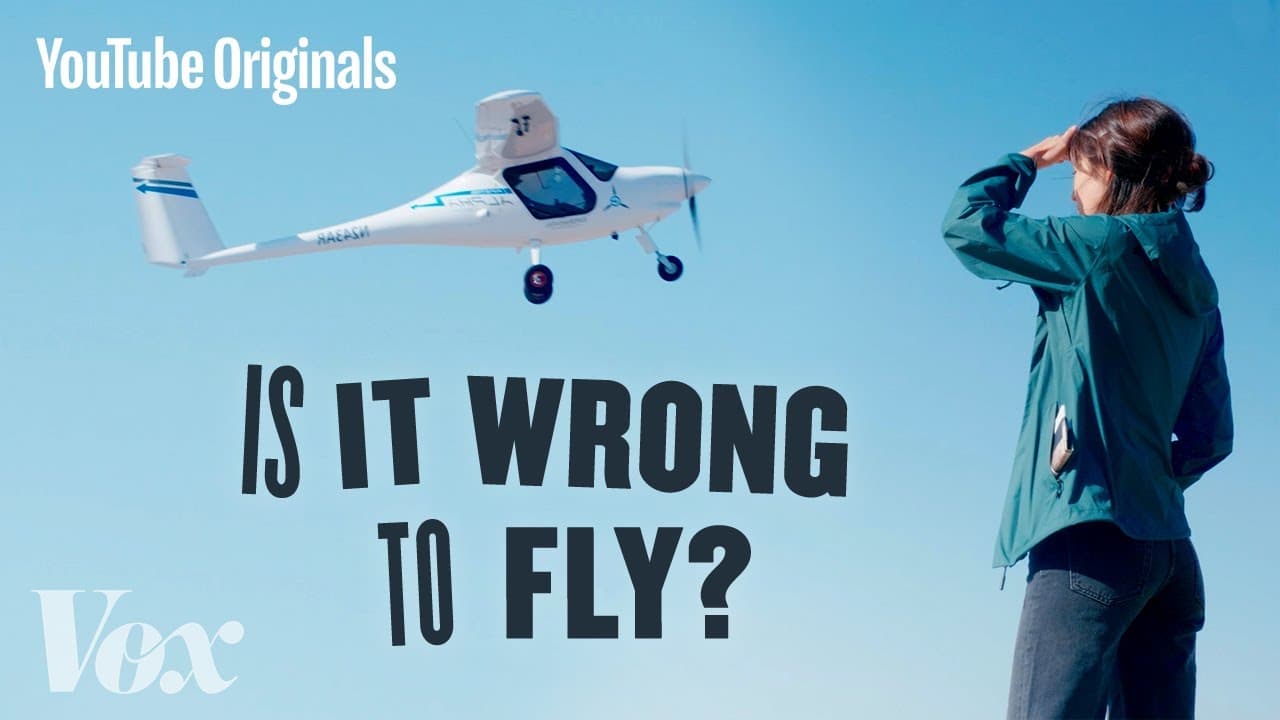
- The introduction of electric airplanes, like the Pipistrel ALPHA Electro, offers a glimpse into a future with lower emissions, though current battery technology limits their range and capacity.
- Carbon offset programs, such as those offered by myclimate.org, attempt to mitigate the environmental impact of flights by funding projects that reduce emissions elsewhere.
- Only a minority of the global population flies regularly, with about 20% of humans having ever flown and 12% of U.S. adults taking 70% of the flights.
- The ethical dilemma of flying is compounded by the fact that those who contribute most to emissions often have the resources to cope with climate change, while the world's poor, who fly less, are most vulnerable.
- Future advancements in battery technology and alternative fuels are essential to reducing aviation's carbon footprint, but widespread implementation is still decades away.
Install to Summarize YouTube Videos and Get Transcripts
Explore YouTube Video Summarizer or Get YouTube Transcript Extractor
Questions & Answers
Q: What is the main environmental concern associated with air travel?
The main environmental concern with air travel is its contribution to climate change. Aviation is responsible for about 5% of man-made global warming annually. This impact is expected to increase as more people, particularly in Asia, begin flying. The reliance on fossil fuels for air travel results in significant carbon emissions, which contribute to global warming and climate change.
Q: How does the 'flight shame' movement influence air travel habits?
The 'flight shame' movement, particularly popular in Europe, encourages individuals to reconsider their air travel due to its environmental impact. This movement has led to people bragging about using trains instead of planes on social media. The movement has been effective in some areas, with Swedish airports reporting a decrease in passenger counts as people opt for more sustainable travel options.
Q: What role do electric airplanes play in reducing aviation emissions?
Electric airplanes, like the Pipistrel ALPHA Electro, represent a potential solution for reducing aviation emissions. These planes operate on batteries, significantly lowering emissions compared to traditional fuel-powered aircraft. However, current technology limits their range and capacity, making them suitable only for short flights. Significant advancements in battery technology are needed for electric planes to be viable for longer flights.
Q: What is the significance of carbon offset programs in aviation?
Carbon offset programs aim to mitigate the environmental impact of flights by funding projects that reduce emissions elsewhere. For example, organizations like myclimate.org allow individuals to calculate their carbon footprint and contribute to initiatives like providing efficient cook stoves in Kenya. While offsets are not a complete solution to climate change, they acknowledge the impact of consumer choices and offer a way to invest in global emission reduction efforts.
Q: How does air travel contribute to global inequality in climate change impacts?
Air travel contributes to global inequality in climate change impacts because those who fly the most, often from wealthier countries, are generally more equipped to deal with climate change consequences. In contrast, the world's poor, who contribute less to emissions and fly less frequently, are more vulnerable to the impacts of climate change, such as stronger storms, floods, and heatwaves. This disparity raises ethical concerns about the responsibility of frequent flyers in addressing climate change.
Q: What are the challenges in developing electric planes for long-distance travel?
The main challenge in developing electric planes for long-distance travel is the current limitations of battery technology. Batteries are less energy-dense than fossil fuels, meaning they weigh significantly more and take up more space for the same energy output. This makes them impractical for larger planes and longer flights. While battery technology is improving, significant advancements are needed before electric planes can replace traditional aircraft for long-distance travel.
Q: What percentage of global and U.S. populations regularly engage in air travel?
Globally, only about 20% of humans have ever flown on an airplane. In the United States, approximately 12% of adults are responsible for 70% of flights. This indicates that a minority of the population accounts for a significant portion of air travel, highlighting the ethical implications of frequent flying given its environmental impact.
Q: What are some suggested ways to reduce the carbon footprint of flying?
To reduce the carbon footprint of flying, individuals can take several steps: opt for more direct flights to minimize stopovers, choose economy class over first class to reduce emissions per passenger, consider alternatives like trains for shorter distances, and use carbon offset programs to mitigate the environmental impact of necessary flights. Additionally, supporting policies and infrastructure that promote sustainable travel options can contribute to long-term reductions in aviation emissions.
Summary & Key Takeaways
-
Air travel significantly contributes to climate change, accounting for about 5% of global warming annually. With the number of air passengers expected to double in the next 20 years, the environmental impact of flying will increase, raising ethical concerns about individual responsibility.
-
The 'flight shame' movement, initiated by figures like Greta Thunberg, encourages people to reconsider their air travel due to its environmental impact. This has led to a decrease in passenger counts in some European airports as people opt for more sustainable travel options like trains.
-
Electric airplanes, such as the Pipistrel ALPHA Electro, offer a potential solution to aviation emissions. However, current battery technology limits their range and capacity, indicating that significant advancements are needed before they can replace traditional fuel-powered planes for longer flights.
Read in Other Languages (beta)
Share This Summary 📚
Summarize YouTube Videos and Get Video Transcripts with 1-Click
Try YouTube Summary with ChatGPT & Claude or YouTube Transcript Generator
Explore More Summaries from Vox 📚



Summarize YouTube Videos and Get Video Transcripts with 1-Click
Try YouTube Summary with ChatGPT & Claude or YouTube Transcript Generator