How stop motion animation began
TL;DR
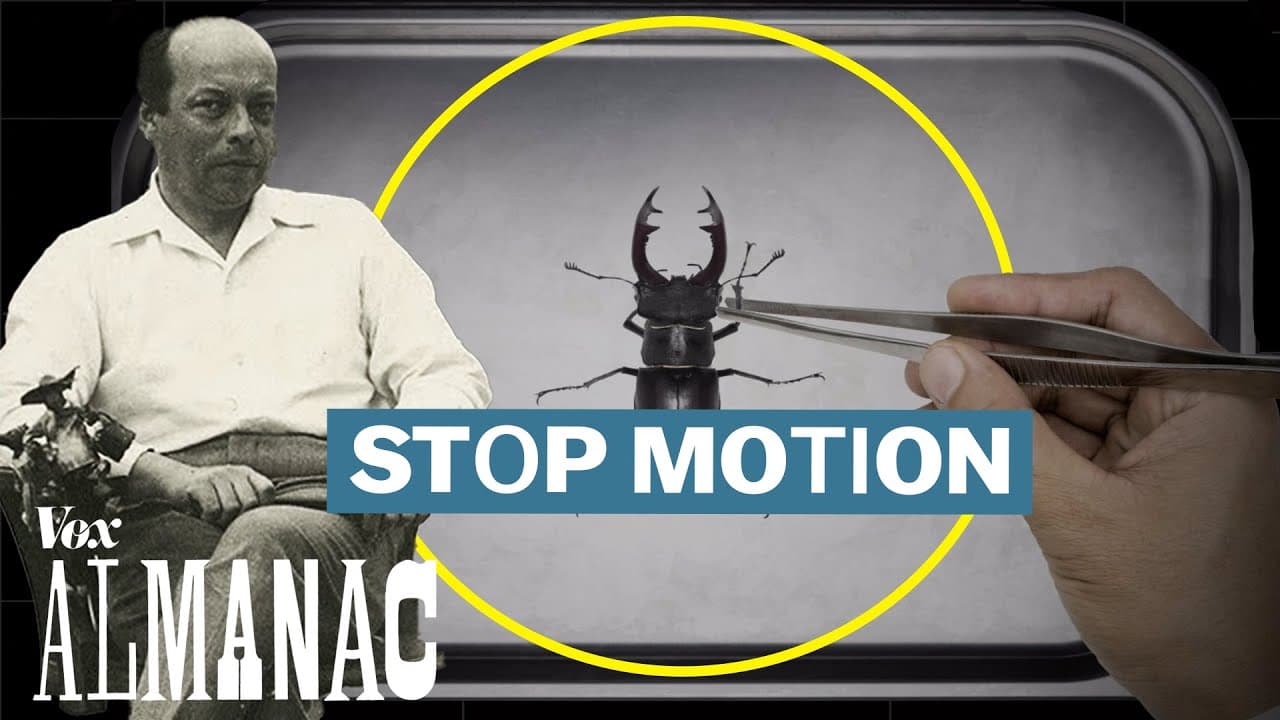
Stop motion animation began with an insect collector's innovative film in 1912.
Transcript
This beetle is going into the city to see his lover. She’s a dancer. But this 1912 film is not just a staggeringly weird tale of insect infidelity. It’s the true kickoff to a stop motion tradition that has given us a ton of wildly different movies. But this invention didn’t come from Hollywood. It was made by an obsessive insect collector in Lithua... Read More
Key Insights
- The 1912 film 'The Cameraman's Revenge' marked the beginning of stop motion animation, created by Wladyslaw Starewicz, an insect collector from Lithuania.
- Starewicz's work involved intricate technical innovations, including using strings and replacing insect parts with mechanical components to simulate movement.
- Stop motion animation is a labor-intensive process where objects are slightly adjusted and photographed frame by frame to create the illusion of motion.
- Starewicz's films, such as 'The Cameraman's Revenge,' depicted fictional narratives using insects, showcasing his creative storytelling and technical skills.
- Starewicz's influence extended to notable filmmakers like Terry Gilliam and Wes Anderson, who drew inspiration from his innovative techniques.
- The success of Starewicz's films demonstrated the potential of stop motion as a medium for artistic expression and storytelling.
- Starewicz's work was initially mistaken for real insect training, highlighting the convincing nature of his stop motion techniques.
- Stop motion animation's global impact is evident in its adoption and adaptation by filmmakers outside Hollywood, contributing to its evolution as an art form.
Install to Summarize YouTube Videos and Get Transcripts
Explore YouTube Video Summarizer or Get YouTube Transcript Extractor
Questions & Answers
Q: What was the significance of 'The Cameraman's Revenge' in the history of stop motion animation?
'The Cameraman's Revenge,' created by Wladyslaw Starewicz in 1912, is significant as it marks the true beginning of stop motion animation. The film showcased Starewicz's innovative techniques, using insects as characters and employing mechanical components to simulate movement. It demonstrated the potential of stop motion as a medium for storytelling and artistic expression, influencing future filmmakers.
Q: How did Wladyslaw Starewicz create movement in his stop motion films?
Wladyslaw Starewicz created movement in his stop motion films by using intricate technical methods. He manipulated insect parts with strings and occasionally replaced them with plastic or metal components. By photographing these slight adjustments frame by frame, he simulated lifelike motion, creating the illusion of movement in his films, such as 'The Cameraman's Revenge.'
Q: What challenges did Starewicz face while making his stop motion films?
Starewicz faced challenges in making his stop motion films, particularly in animating insects. Initially, he struggled to capture real insect behavior under bright lights, leading him to experiment with mechanical components and strings to simulate movement. This labor-intensive process required meticulous attention to detail and innovation to achieve convincing animation.
Q: How did Starewicz's work influence other filmmakers?
Starewicz's work significantly influenced other filmmakers by showcasing the creative potential of stop motion animation. His innovative techniques and storytelling inspired filmmakers like Terry Gilliam and Wes Anderson. Starewicz's films demonstrated the medium's ability to convey imaginative narratives, encouraging others to explore and expand upon stop motion animation in their works.
Q: What role did technical innovation play in Starewicz's stop motion films?
Technical innovation played a crucial role in Starewicz's stop motion films. He employed methods such as using strings and replacing insect parts with mechanical components to create lifelike movement. These innovations allowed him to simulate motion convincingly, transforming stop motion into a respected art form and setting a foundation for future advancements in animation techniques.
Q: Why was Starewicz's work initially mistaken for real insect training?
Starewicz's work was initially mistaken for real insect training due to the convincing nature of his stop motion techniques. His meticulous attention to detail and innovative use of strings and mechanical components created lifelike insect movements. This realism led some early viewers to believe he had trained the insects, highlighting the effectiveness of his animation methods.
Q: What impact did Starewicz's stop motion films have on the animation industry?
Starewicz's stop motion films had a profound impact on the animation industry by establishing stop motion as a viable and respected art form. His innovative techniques and storytelling demonstrated the medium's potential for artistic expression, influencing filmmakers and contributing to the global evolution of stop motion animation. His work paved the way for future advancements in the field.
Q: How did Starewicz's background influence his work in stop motion animation?
Starewicz's background as an insect collector and museum director influenced his work in stop motion animation. His fascination with insects led him to experiment with animating them, resulting in innovative techniques that simulated lifelike movement. This unique perspective and expertise in entomology contributed to his pioneering work in stop motion, shaping the art form's development.
Summary & Key Takeaways
-
Stop motion animation originated in 1912 with Wladyslaw Starewicz's film 'The Cameraman's Revenge,' which used insects as characters. Starewicz, an insect collector, innovatively manipulated insect parts with strings and mechanical components to simulate movement, creating a new art form that influenced future filmmakers.
-
Starewicz's pioneering work in stop motion animation involved intricate technical methods, such as using black threads and replacing insect parts with plastic or metal. His films, including 'The Cameraman's Revenge,' depicted imaginative narratives, showcasing his creative storytelling and technical prowess, which inspired many filmmakers.
-
The impact of Starewicz's stop motion animation is evident in its influence on filmmakers like Terry Gilliam and Wes Anderson. His innovative techniques and storytelling transformed stop motion into a respected art form, demonstrating its potential for artistic expression and contributing to its global evolution.
Read in Other Languages (beta)
Share This Summary 📚
Summarize YouTube Videos and Get Video Transcripts with 1-Click
Try YouTube Summary with ChatGPT & Claude or YouTube Transcript Generator
Explore More Summaries from Vox 📚

Summarize YouTube Videos and Get Video Transcripts with 1-Click
Try YouTube Summary with ChatGPT & Claude or YouTube Transcript Generator