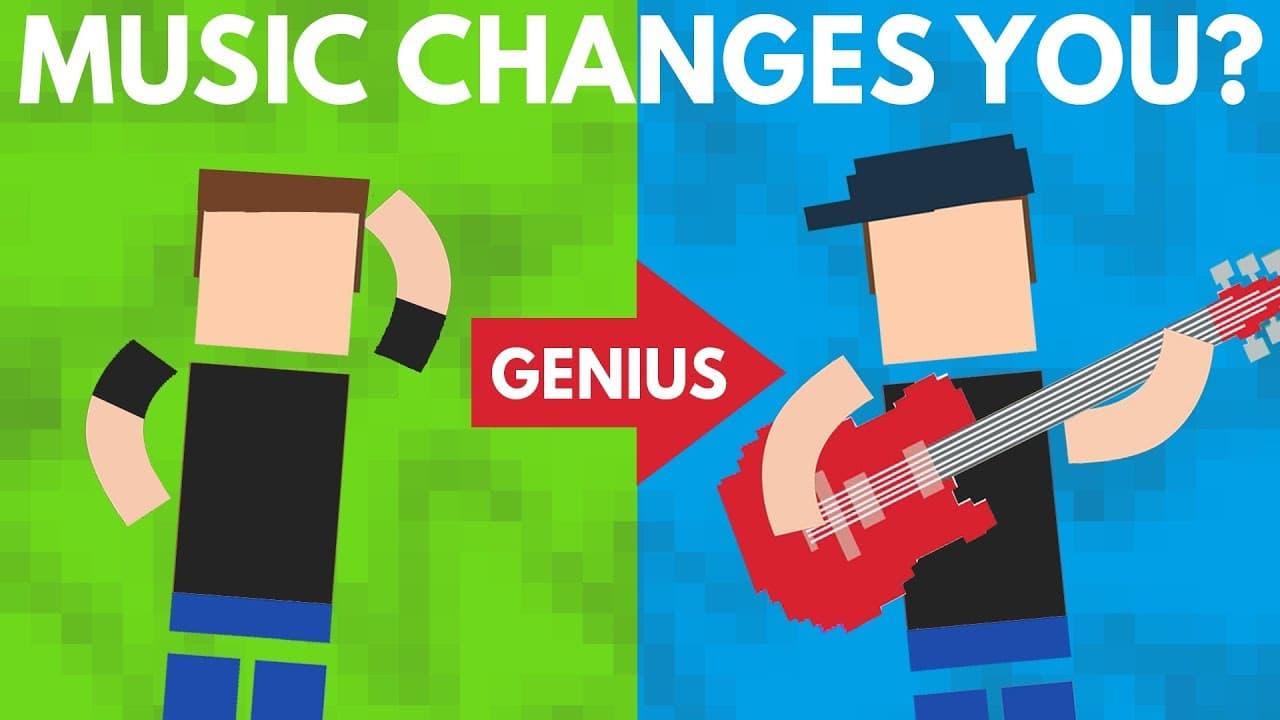
Could Playing Music DRASTICALLY Change Your Brain?
TL;DR
Playing an instrument has numerous benefits for intelligence, physical well-being, and brain health, including improved memory, increased IQ, enhanced problem-solving skills, better communication between brain hemispheres, and reduced risk of dementia.
Transcript
Hey there! Welcome to Life Noggin! Triangle Bob is learning how to play the guitar! He’s able to look at a sheet of music and have his brain translate that into instructions for his fingers, hands, and arms to create this beautiful song! Or not so beautiful, he’s learning. But still, what does playing an instrument do to your brain? Could these ski... Read More
Key Insights
- 🖐️ Playing an instrument has positive effects on intelligence, memory, and motor function.
- ❓ Musicians exhibit better problem-solving skills and emotional processing abilities.
- 🎴 Playing an instrument boosts immune system function, aids in stroke recovery, and lowers the risk of dementia.
- ❔ Brain differences between musicians and non-musicians include more grey matter, greater neuroplasticity, altered white matter, and symmetrical firing patterns.
Install to Summarize YouTube Videos and Get Transcripts
Explore YouTube Video Summarizer or Get YouTube Transcript Extractor
Questions & Answers
Q: How does playing an instrument affect brain function?
Playing an instrument requires the coordination of multiple brain systems, leading to increased activity and growth in brain regions responsible for memory, hearing, and motor function. It can even increase IQ by 7 points or more.
Q: Are musicians better at problem-solving?
Yes, musicians often exhibit better problem-solving skills due to enhanced communication between the left and right brain hemispheres. The larger corpus callosum in musicians facilitates effective communication and out-of-the-box thinking.
Q: What are the health benefits of playing an instrument?
Playing an instrument boosts immune system function, aids in stroke recovery, and lowers the risk of developing dementia and other cognitive impairments by 64%. Additionally, listening to music can prompt the repair and regeneration of damaged nerves in the brain.
Q: How does playing an instrument improve response times?
Learning to play an instrument strengthens the myelin coating around nerves, allowing signals to be sent through the body faster. This leads to faster response times and improved reflexes.
Summary & Key Takeaways
-
Playing an instrument requires the cooperation of multiple systems in the brain, leading to positive outcomes in various areas of life.
-
Minimal practice can cause growth and increased activity in brain regions responsible for memory, hearing, and motor function.
-
Musicians have better communication between their brain hemispheres and are better at processing emotions and learning new tasks.
Read in Other Languages (beta)
Share This Summary 📚
Summarize YouTube Videos and Get Video Transcripts with 1-Click
Try YouTube Summary with ChatGPT & Claude or YouTube Transcript Generator
Explore More Summaries from Life Noggin 📚




Summarize YouTube Videos and Get Video Transcripts with 1-Click
Try YouTube Summary with ChatGPT & Claude or YouTube Transcript Generator