Just How Fast Does A Virus Spread?
TL;DR
Viruses are crafty pathogens that exploit cells to spread and survive, causing illnesses and influencing our bodies.
Transcript
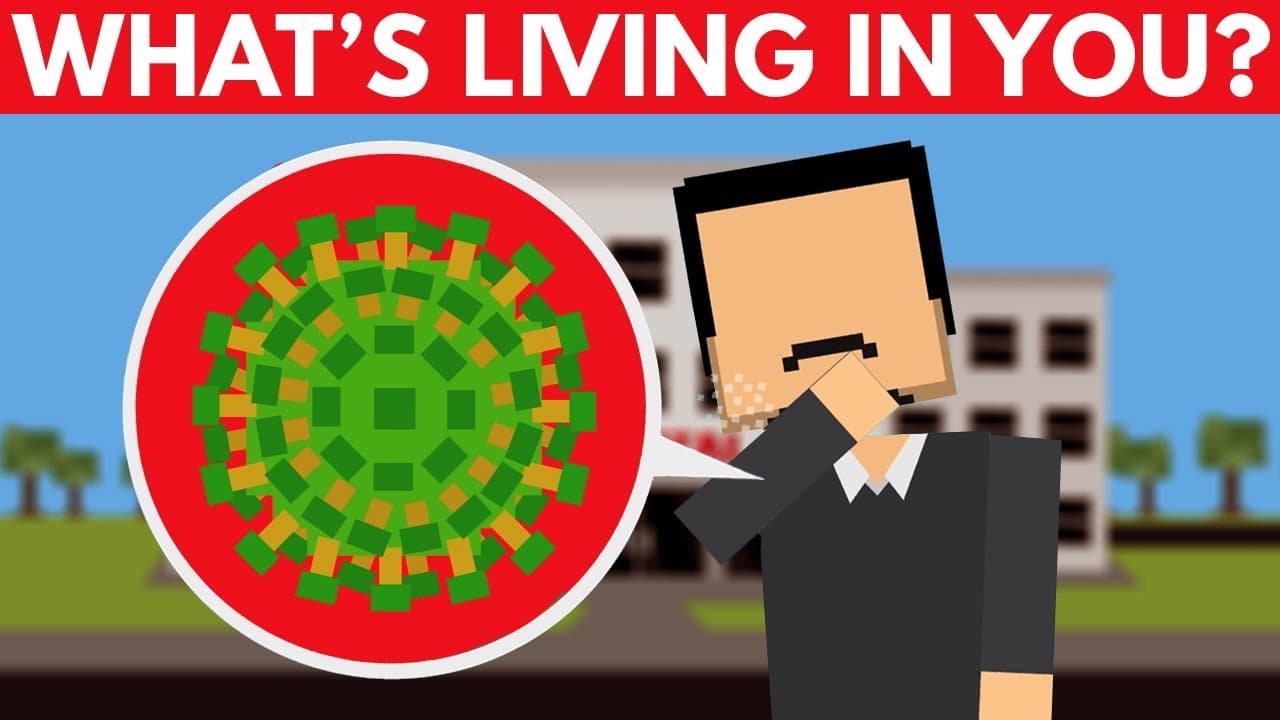
Hey there and welcome to LifeNoggin. Viruses are one of the earliest forms of life as we know it. They're little strings of genetic material (called RNA) coated in a protein jacket. They've evolved to make people sick in very specific ways. They hijack cells and use the cells to produce more viruses. Once the virus is ready, can force its host to s... Read More
Key Insights
- 😒 Viruses use cells to replicate and spread, causing illnesses in humans.
- 👻 The incubation period allows viruses to multiply undetected before symptoms appear.
- 👊 The immune system responds to viral infections by attacking infected cells and circulating viruses.
- 👨 Symptoms like fever and aches are side effects of the immune system's response to infections.
- ❓ Viruses are not inherently harmful but seek to survive and reproduce.
- ❓ Understanding viral mechanisms provides insight into human biology and evolution.
- ☠️ Different viruses have varying incubation periods that affect their transmission rates.
Install to Summarize YouTube Videos and Get Transcripts
Explore YouTube Video Summarizer or Get YouTube Transcript Extractor
Questions & Answers
Q: How do viruses like the flu spread so quickly through a population?
Viruses like the flu spread rapidly due to their ability to make hosts cough and sneeze, expelling droplets that contain the virus and are easily transmitted to others.
Q: What role does the immune system play in fighting off a viral infection?
The immune system fights viruses by identifying infected cells and attacking the virus in the bloodstream, causing symptoms like fever and aches as the body tries to overcome the infection.
Q: Why do some viruses have longer incubation periods than others?
The incubation period of a virus varies depending on its ability to invade cells and replicate before causing symptoms, with some viruses like chickenpox remaining dormant for weeks.
Q: How do viruses manipulate cells to produce more of themselves?
Viruses trick cells into producing more virus particles by using receptors on their jackets to enter cells, replicating their genetic material and proteins to create new viruses that spread throughout the body.
Summary & Key Takeaways
-
Viruses are genetic material enclosed in a protein coat, evolving to make people sick by hijacking cells.
-
Incubation period allows viruses to invade cells unnoticed before spreading, with flu having a shorter period for rapid transmission.
-
Immune system battles viruses, causing symptoms like fever and aches, leading to virus spread despite eventual victory.
Read in Other Languages (beta)
Share This Summary 📚
Summarize YouTube Videos and Get Video Transcripts with 1-Click
Try YouTube Summary with ChatGPT & Claude or YouTube Transcript Generator
Explore More Summaries from Life Noggin 📚




Summarize YouTube Videos and Get Video Transcripts with 1-Click
Try YouTube Summary with ChatGPT & Claude or YouTube Transcript Generator