The Problem With Trying to Run Government Like a Business
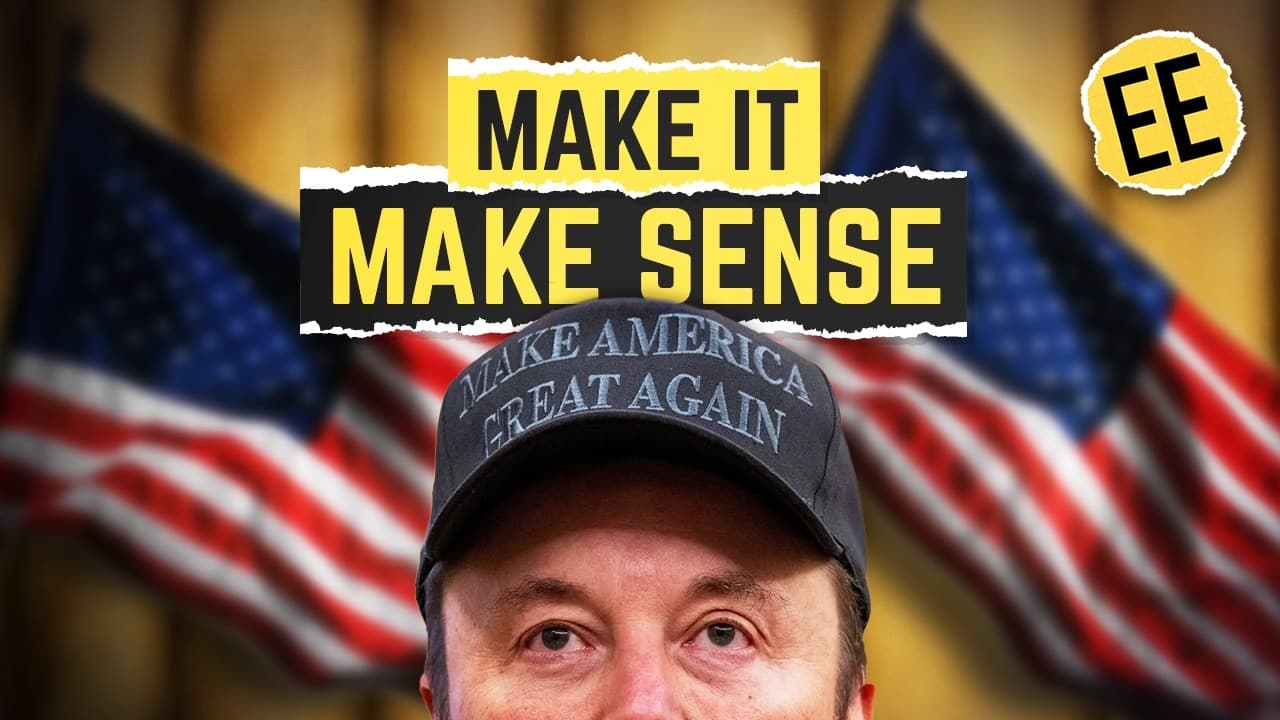
TL;DR
Exploring the complexities of running government like a business.
Transcript
So like most economists, we try really really hard to pretend we're better than politics, but inevitably the two are intertwined and it's honestly naive to look at either in complete isolation. Political agendas have ruined many good intentioned economic plans and bad economic conditions have ruined many political initiatives. The new Department of... Read More
Key Insights
- Political agendas often interfere with economic plans, and economic conditions can undermine political initiatives, highlighting the intertwined nature of economics and politics.
- The Department of Government Efficiency aims to cut U.S. government spending by $2 trillion annually, a controversial move with mixed political reactions.
- U.S. debt is over $36 trillion, exceeding 117% of GDP, raising questions about sustainability and the need for strategic debt management.
- Ground News offers a platform to compare diverse perspectives on news, helping readers understand the political biases and factual accuracy of different sources.
- Historical budget cuts in 1993 led to a surplus, suggesting that significant spending reductions could be possible, but today's economic conditions are different.
- Government spending now accounts for 35% of GDP, making the economy more dependent on government activity and complicating efforts to reduce spending.
- Mandatory spending, such as welfare programs, is difficult to control due to eligibility rules, posing challenges for achieving large budget cuts.
- Tax policy changes, such as lowering taxes, may stimulate economic activity but could counteract efforts to reduce the budget deficit.
Install to Summarize YouTube Videos and Get Transcripts
Explore YouTube Video Summarizer or Get YouTube Transcript Extractor
Questions & Answers
Q: What are the main challenges of running a government like a business?
Running a government like a business presents challenges such as balancing political agendas with economic plans, managing national debt, and addressing the dependency of the economy on government spending. The intertwined nature of politics and economics complicates decision-making, and efforts to cut spending can face political backlash and economic repercussions.
Q: How does Ground News help readers understand news coverage?
Ground News provides a platform for readers to compare news coverage from different sources, highlighting political biases, factual accuracy, and ownership. It gathers related articles globally, offering diverse perspectives and helping readers form informed opinions without being overwhelmed by misinformation. Its blind spot feature identifies stories circulating in specific media bubbles.
Q: What historical precedent exists for significant U.S. budget cuts?
In 1993, the U.S. government implemented the Omnibus Budget Reconciliation Act, which significantly reduced government spending and raised taxes, resulting in a budget surplus. This historical precedent suggests that substantial spending cuts are possible, but today's economic conditions, such as higher dependency on government spending, present new challenges.
Q: Why is the U.S. economy more dependent on government spending today?
Today, government spending accounts for 35% of GDP, almost double the level in the early 1990s. This increase means the economy relies more on government activity, making spending cuts potentially more disruptive. Reducing spending without a plan to replace economic activity could lead to economic shocks and worsen fiscal situations.
Q: What are the difficulties in controlling mandatory spending?
Mandatory spending involves programs with set rules for spending, such as welfare programs, where expenditures depend on eligibility. This makes it challenging to control costs, as spending isn't predetermined and can fluctuate based on variables like unemployment. Altering eligibility or payment amounts requires legislative approval, adding complexity to budget management.
Q: How might tax policy changes impact the budget deficit?
Tax policy changes, such as lowering taxes, aim to stimulate economic activity by increasing disposable income. However, they can reduce government revenue, counteracting efforts to reduce the budget deficit. The effectiveness of tax cuts depends on their distribution and the economic response, particularly in stimulating consumption and investment.
Q: What lessons can be learned from Argentina's economic policies?
Argentina's radical cost-cutting and tax changes offer cautionary lessons rather than direct inspiration. While such measures have improved some economic indicators, Argentina's history of instability and frequent policy shifts highlights the importance of stability and confidence in economic planning. U.S. policymakers should focus on methodical, long-term planning to avoid similar pitfalls.
Q: What role does industry adaptation play in government spending cuts?
Industry adaptation is crucial when implementing government spending cuts to prevent economic shocks. Objectives should be laid out well in advance, allowing industries to adjust to reduced government spending. Coordinated fiscal policy and careful consideration of economic impacts can help mitigate negative effects and ensure a smoother transition.
Summary & Key Takeaways
-
The video discusses the challenges of running a government like a business, particularly focusing on the U.S. Department of Government Efficiency's goal to cut spending by $2 trillion annually. It highlights the intertwined nature of politics and economics and the complexities of managing national debt.
-
Ground News is presented as a tool to compare news coverage and understand political biases, emphasizing the importance of diverse perspectives. The video also reviews historical budget cuts in 1993, noting differences in today's economic landscape and the increased dependency on government spending.
-
The complexities of mandatory spending, such as welfare programs, are explored, noting the difficulty in controlling such expenses. The video also touches on the potential impact of tax policy changes, economic activity, and the need for strategic planning to achieve fiscal goals.
Read in Other Languages (beta)
Share This Summary 📚
Summarize YouTube Videos and Get Video Transcripts with 1-Click
Try YouTube Summary with ChatGPT & Claude or YouTube Transcript Generator
Explore More Summaries from Economics Explained 📚
Summarize YouTube Videos and Get Video Transcripts with 1-Click
Try YouTube Summary with ChatGPT & Claude or YouTube Transcript Generator