Stanford Seminar - Failure is Not an Option: Our Techniques at the DARPA Subterranean Challenge
TL;DR
This video discusses the lessons learned from participating in the DARPA Sub Training Challenge, including the importance of personnel and project management, the challenges of navigating visually degraded environments with radar, and the future of autonomous systems.
Transcript
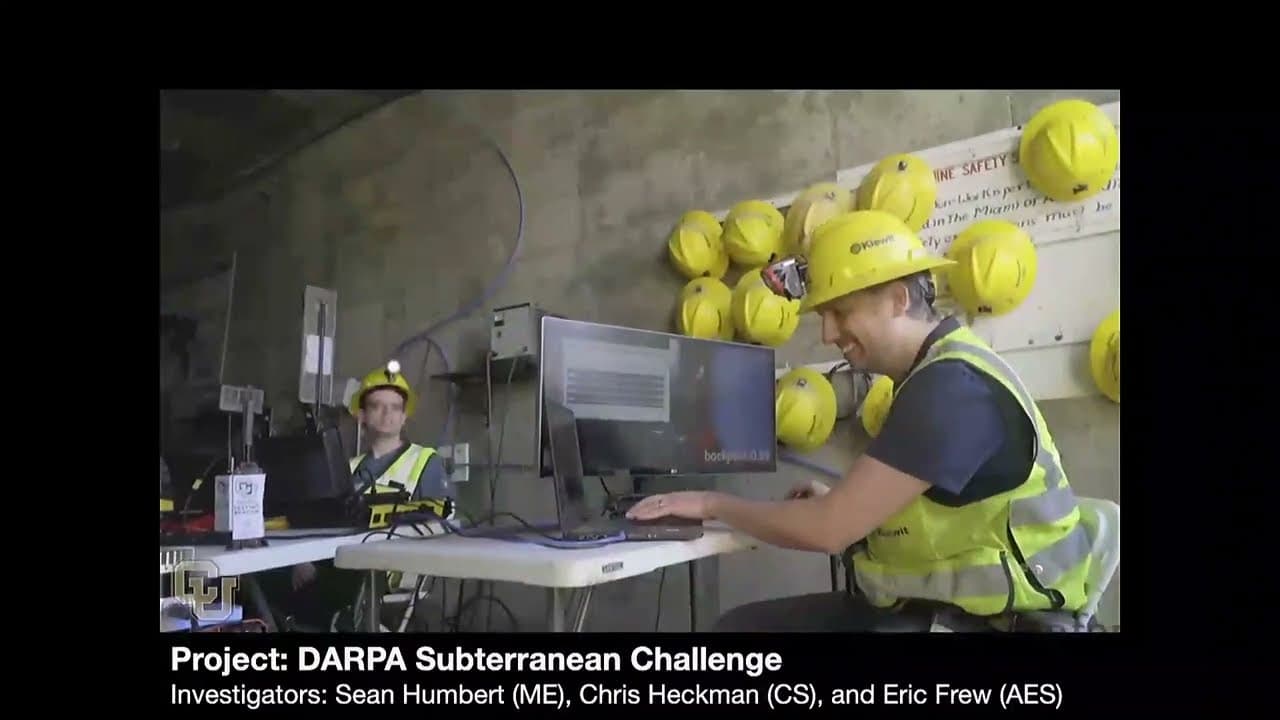
I want to share some footage from a recent project of ours the DARPA sub training challenge that Marco just referred to the goal of the challenge was to develop robotic teams that could explore natural and built underground environments such as tunnels caves mines Urban settings like subway systems in order to find objects of Interest known as arti... Read More
Key Insights
- 📽️ Personnel and project management are critical for success in robotic deployments.
- ♻️ Reliable and robust autonomy is crucial in challenging environments.
- 🎁 Navigating visually degraded environments with radar presents unique challenges.
- 👨🔬 The development of a foundation for autonomy is an ongoing research area.
- ❓ The DARPA Sub Training Challenge provided valuable insights for future autonomous systems.
- ❓ Challenges in platform selection and decision-making were important aspects of the competition.
- 🚂 The team leveraged lidar supervision to train a machine learning model for radar-based perception.
Install to Summarize YouTube Videos and Get Transcripts
Explore YouTube Video Summarizer or Get YouTube Transcript Extractor
Questions & Answers
Q: How did the team handle the human-robot interaction aspect of the challenge?
The team had a single human supervisor who wore an orange helmet and was the only individual allowed to interact with the robots. The interface for interacting with the robots was determined by the supervisor, and they had to make real-time decisions during the competition.
Q: What were the key challenges faced by the team during the competition?
The team faced challenges in platform selection, particularly with the use of track vehicles in narrow corridors. They also encountered difficulties in navigating visually degraded environments, such as fog and smoke. Additionally, decision-making and coordination among team members were crucial for success.
Q: How did the team address the issue of unreliable sensor data in radar-based perception?
The team used a combination of radar and lidar sensors for perception. They developed algorithms to filter out dynamic objects and outliers in radar data, and they trained a machine learning model using lidar supervision to reject false radar returns.
Q: What insights did the team gain from participating in the DARPA Sub Training Challenge?
Some key insights include the importance of personnel and project management in ensuring success, the need for reliable and robust autonomy in robot deployments, the challenges of navigating visually degraded environments with radar, and the ongoing development of a foundation for autonomy.
Summary & Key Takeaways
-
This video presents the lessons learned from participating in the DARPA Sub Training Challenge, which aimed to develop robotic teams that could explore underground environments and find artifacts.
-
The challenge involved multi-robot coordination and human-robot interaction, and the team had to quickly set up a fully staffed operation to meet the project requirements.
-
The team faced challenges in platform selection, navigation in visually degraded environments, and decision-making during the competition.
Read in Other Languages (beta)
Share This Summary 📚
Summarize YouTube Videos and Get Video Transcripts with 1-Click
Try YouTube Summary with ChatGPT & Claude or YouTube Transcript Generator
Explore More Summaries from Stanford Online 📚


Summarize YouTube Videos and Get Video Transcripts with 1-Click
Try YouTube Summary with ChatGPT & Claude or YouTube Transcript Generator