Detergent and its Types - Chemistry In Everyday Life - Chemistry Class 12
TL;DR
Detergents are cleaning agents divided into three types - anionic, cationic, and non-ionic - each serving different purposes.
Transcript
click the bell icon to get latest videos from equator reference in the previous topic we have discussed about soups and the preparation of it and now in this topic be able to talk about detergents and this type so now let us understand this topic so friends just like so even detergents are a basically a good cleaning agent and that's the reason tha... Read More
Key Insights
- 🗂️ Detergents are divided into anionic, cationic, and non-ionic types, each with its own cleaning properties.
- 👚 Anionic detergents, like sodium lauryl sulfate, are negatively charged and commonly used for cleaning clothes.
- 🈂️ Cationic detergents, such as CTL trimethyl ammonium chloride, are positively charged and effective at removing dirt from fabrics and surfaces.
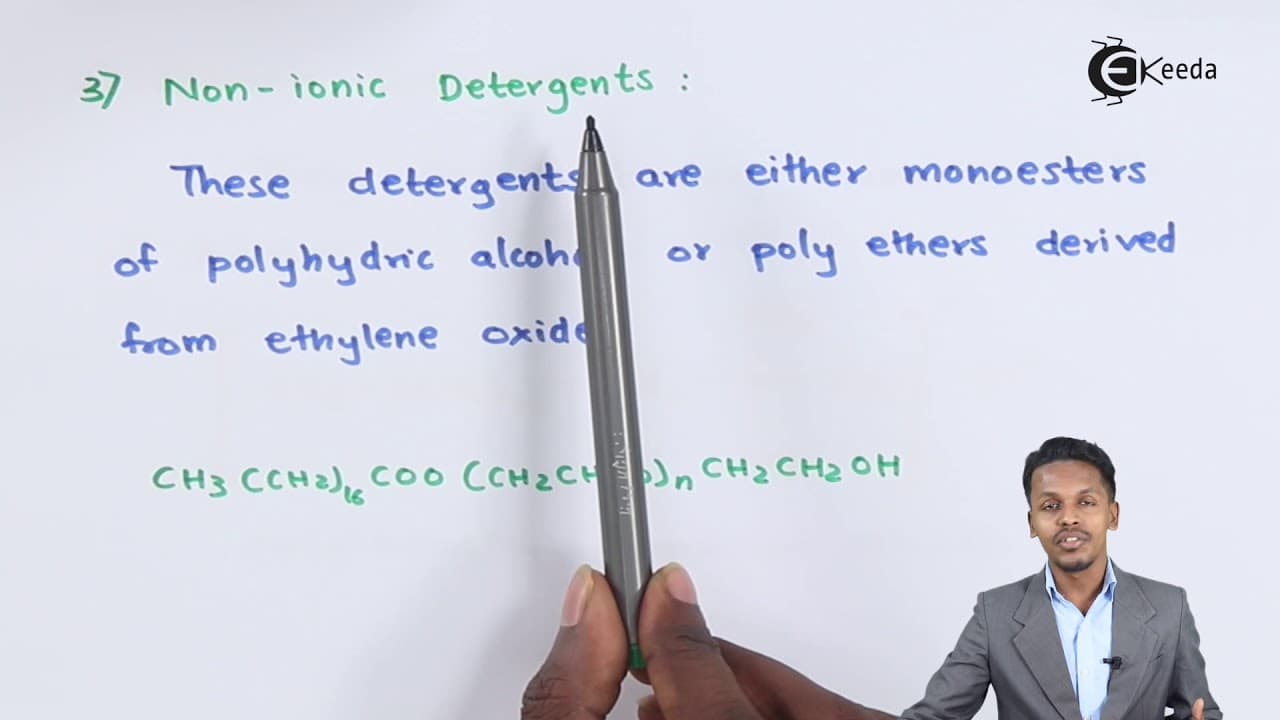
- 🚱 Non-ionic detergents, derived from esters or poly hydric alcohols, are versatile and widely used due to their solubility in different water conditions.
- 🚱 Non-ionic detergents are preferred over soaps in areas with hard water to avoid the formation of white precipitates.
- 🧑🏭 Detergents act as effective cleaning agents, helping to remove dirt and impurities from clothes and surfaces.
- 💦 The use of detergents reduces water pollution compared to soaps, which form precipitates in hard water.
Install to Summarize YouTube Videos and Get Transcripts
Explore YouTube Video Summarizer or Get YouTube Transcript Extractor
Questions & Answers
Q: What are the different types of detergents?
Detergents can be categorized into anionic, cationic, and non-ionic types. Anionic detergents have a negative charge, while cationic detergents have a positive charge. Non-ionic detergents are not charged and are widely used due to their versatility.
Q: Why are non-ionic detergents more widely used?
Non-ionic detergents are soluble in various types of water, including hard water. Unlike soaps, which form a white precipitate in hard water, non-ionic detergents can effectively clean in any water condition.
Q: What is the purpose of anionic detergents?
Anionic detergents, like sodium lauryl sulfate, are negatively charged and can effectively clean clothes. They remove dirt and impurities from fabrics, acting as a cleaning agent.
Q: How do cationic detergents work?
Cationic detergents, such as CTL trimethyl ammonium chloride, have a positive charge. They are effective at removing dirt and impurities from fabrics and surfaces by binding to the negative charges of dirt particles.
Summary & Key Takeaways
-
Detergents are effective cleaning agents that can remove dirt and impurities from clothes and surfaces.
-
Anionic detergents, such as sodium lauryl sulfate, are negatively charged and can effectively clean clothes.
-
Cationic detergents, like CTL trimethyl ammonium chloride, are positively charged and are efficient at removing dirt from fabrics.
-
Non-ionic detergents, derived from esters or poly hydric alcohols, are widely used due to their solubility in both hard and soft water.
Read in Other Languages (beta)
Share This Summary 📚
Summarize YouTube Videos and Get Video Transcripts with 1-Click
Try YouTube Summary with ChatGPT & Claude or YouTube Transcript Generator
Explore More Summaries from Ekeeda 📚




Summarize YouTube Videos and Get Video Transcripts with 1-Click
Try YouTube Summary with ChatGPT & Claude or YouTube Transcript Generator