Session 1: The Financial Statements - An Overview
TL;DR
This video provides an overview of accounting principles and the three primary financial statements: balance sheet, income statement, and statement of cash flows.
Transcript
hi welcome to this first session in my class on accounting now when i look at accounting from the outside and many accountants will disagree with me i think it's a role of accounting to first check transactions and make sure that the transactions that are being recorded actually happened to record those transactions in a consistent manner and then ... Read More
Key Insights
- 💼 Accounting's role is to check and record transactions, not predict the future or value assets. Accountants are historians.
- 💰 Three key questions accounting statements should answer: What do you own? What do you owe? How much money did you make last year?
- ⚖️ The three primary accounting statements are the balance sheet, income statement, and statement of cash flows.
- 🏢 The balance sheet shows assets, categorized as fixed assets, current assets, financial assets, and intangible assets, as well as liabilities and equity.
- 💸 The income statement details revenue, cost of goods sold, operating expenses, financial expenses, and net income, answering the question of how much money was made.
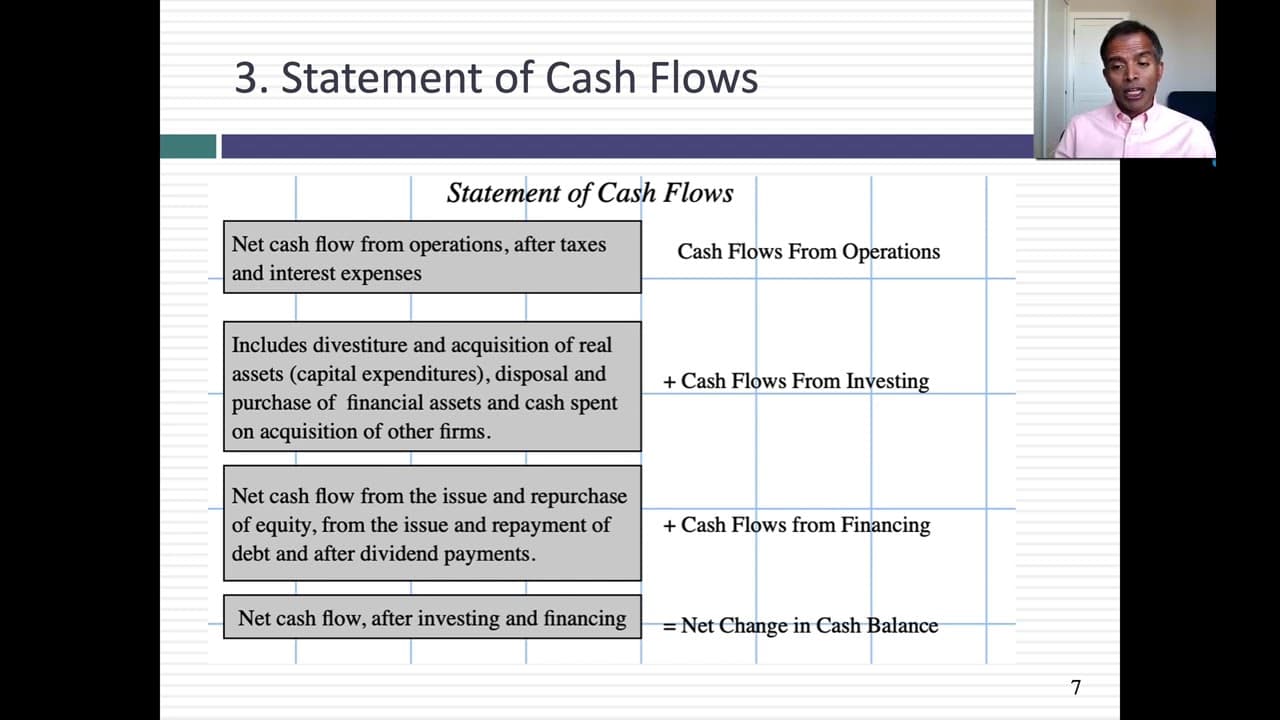
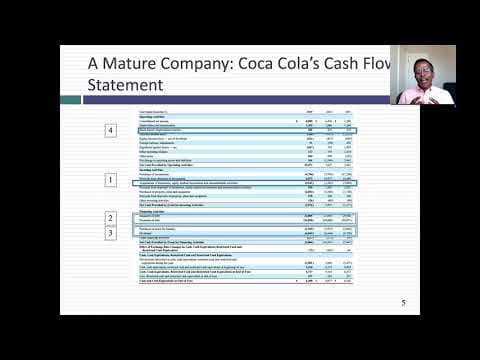
- 📊 The statement of cash flows explains changes in cash balance through cash flows from operations, investing, and financing.
- 🔗 The three accounting statements are interconnected and must be analyzed together for a complete understanding of a company.
- 💡 Accounting standards include GAAP for US companies and IFRS for international companies, though there is increasing convergence between the two.
Install to Summarize YouTube Videos and Get Transcripts
Explore YouTube Video Summarizer or Get YouTube Transcript Extractor
Questions & Answers
Q: What are the three fundamental questions that accounting statements should answer?
The three fundamental questions that accounting statements should answer are: What do you own (assets)? What do you owe (liabilities)? How much money did you make last year (income)?
Q: How are the balance sheet, income statement, and statement of cash flows different from each other?
The balance sheet provides a snapshot of a company's assets, liabilities, and equity at a specific point in time. The income statement shows the revenue, expenses, and profitability of a company over a period of time. The statement of cash flows explains the changes in a company's cash balance by analyzing cash flows from operations, investing, and financing activities.
Q: What is the main purpose of the balance sheet?
The main purpose of the balance sheet is to show what a company owns (assets), what it owes (liabilities), and the resulting equity at a specific point in time.
Q: How does the income statement measure a company's profitability?
The income statement measures a company's profitability by showcasing its revenue, subtracting the cost of goods sold and operating expenses, and arriving at the net income or loss over a specific period.
Q: How does the statement of cash flows provide insights into a company's cash position?
The statement of cash flows explains the changes in a company's cash balance by analyzing cash flows from operations, investing, and financing activities. It shows how much cash is generated or used by the business during a given period.
Q: Why are accounting rules important in preparing financial statements?
Accounting rules are important in preparing financial statements to standardize the process and enable meaningful comparisons between companies. They ensure compliance with accounting principles and help maintain consistency in reporting.
Q: What are the two main sets of accounting rules used by companies?
The two main sets of accounting rules used by companies are Generally Accepted Accounting Principles (GAAP) in the United States and International Financial Reporting Standards (IFRS) globally. While there are some differences, these standards have largely converged over time.
Summary & Key Takeaways
-
Accounting is the role of recording and reporting past transactions, not predicting the future or valuing assets.
-
The three key questions accounting statements should answer are: What do you own (assets)? What do you owe (liabilities)? How much money did you make last year (income)?
-
The three primary financial statements are the balance sheet, income statement, and statement of cash flows, each serving a different purpose.
Read in Other Languages (beta)
Share This Summary 📚
Summarize YouTube Videos and Get Video Transcripts with 1-Click
Try YouTube Summary with ChatGPT & Claude or YouTube Transcript Generator
Explore More Summaries from Aswath Damodaran 📚
Summarize YouTube Videos and Get Video Transcripts with 1-Click
Try YouTube Summary with ChatGPT & Claude or YouTube Transcript Generator