What Is an Income Statement and How Is It Structured?
TL;DR
An income statement summarizes a company's revenue and expenses over a specific period, leading to net income. It is structured to include revenues, cost of goods sold, operating expenses, financing expenses, and extraordinary items, offering a clear view of financial performance. The two main accounting methods used for reporting income are accrual accounting, which records transactions when they occur, and cash accounting, which records transactions when cash is exchanged.
Transcript
in this the second session of my course in accounting i'd like to talk about income statements and before we delve into the details of income statements there's a broader process that i want to talk about there are two ways you can record income one is through what's called accrual accounting the other is through what's called cash accounting let's... Read More
Key Insights
- 🪈 There are two methods of recording income: accrual accounting and cash accounting.
- 🔠 Expenses are classified into operating expenses, financing expenses, and capital expenses.
- 🪈 Revenues are recorded in the year they occur, even if the cash is not received yet.
- 👋 Cost of goods sold and other operating expenses are subtracted from revenues to arrive at gross profit.
- ❓ Financing expenses, primarily interest expense, are subtracted from operating income to arrive at taxable income.
- ⌛ Extraordinary items are one-time income or expenses that are separated from regular operating activities in an income statement.
- 😊 Pro forma income statements can be used to adjust accounting rules and provide a different perspective on a company's earnings.
Install to Summarize YouTube Videos and Get Transcripts
Explore YouTube Video Summarizer or Get YouTube Transcript Extractor
Questions & Answers
Q: What is the difference between accrual accounting and cash accounting?
Accrual accounting records transactions as they occur, regardless of when the cash is received or paid. Cash accounting, on the other hand, records income and expenses when the cash is received or paid.
Q: How are expenses classified in accounting?
Expenses are classified into operating expenses, financing expenses, and capital expenses. Operating expenses are associated with generating revenues, financing expenses relate to non-equity capital, and capital expenses are items that create benefits over many years.
Q: How are expenses shown in an income statement?
Operating expenses are subtracted from revenues to arrive at operating income. Capital expenses are not shown as expenses in the year they are made, but are written off over the lifetime of the asset. Financing expenses are subtracted from operating income to arrive at taxable income.
Q: What are some examples of extraordinary items in an income statement?
Extraordinary items are one-time income or expenses that are not expected to repeat. Examples include one-time gains or losses from selling assets, one-time lawsuit charges, or charges associated with mistakes made in the past.
Key Insights:
- There are two methods of recording income: accrual accounting and cash accounting.
- Expenses are classified into operating expenses, financing expenses, and capital expenses.
- Revenues are recorded in the year they occur, even if the cash is not received yet.
- Cost of goods sold and other operating expenses are subtracted from revenues to arrive at gross profit.
- Financing expenses, primarily interest expense, are subtracted from operating income to arrive at taxable income.
- Extraordinary items are one-time income or expenses that are separated from regular operating activities in an income statement.
- Pro forma income statements can be used to adjust accounting rules and provide a different perspective on a company's earnings.
- The end goal of an income statement is to report the company's earnings, which can be reported as gross income, operating income, or net income.
Summary & Key Takeaways
-
The content discusses the two methods of recording income: accrual accounting and cash accounting. Accrual accounting requires recording transactions as they happen, while cash accounting records income and expenses when they are received or paid.
-
Expenses are classified into operating expenses, financing expenses, and capital expenses. Operating expenses are associated with generating revenues, financing expenses are related to non-equity capital, and capital expenses are items that create benefits over many years.
-
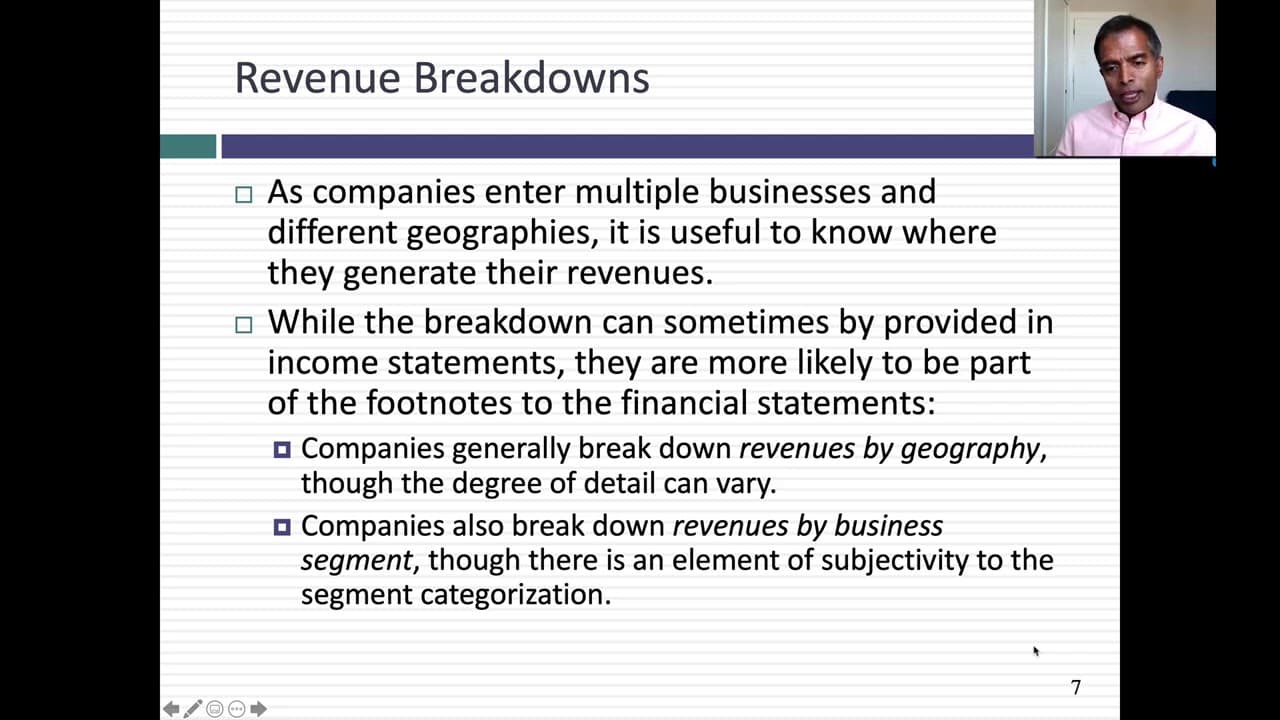
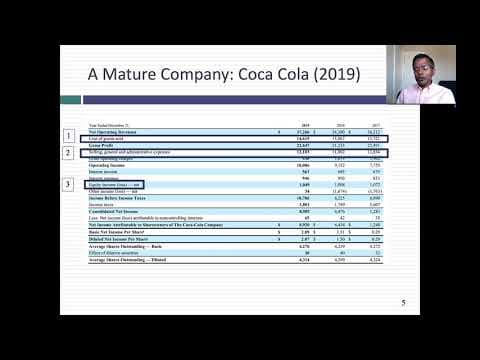
The content also explains the layout of an income statement, starting with revenues and subtracting cost of goods sold, operating expenses, and financing expenses to arrive at net income.
Read in Other Languages (beta)
Share This Summary 📚
Summarize YouTube Videos and Get Video Transcripts with 1-Click
Try YouTube Summary with ChatGPT & Claude or YouTube Transcript Generator
Explore More Summaries from Aswath Damodaran 📚

Summarize YouTube Videos and Get Video Transcripts with 1-Click
Try YouTube Summary with ChatGPT & Claude or YouTube Transcript Generator