「Who Owns History?」 | Herman Salton | TEDxICU
TL;DR
The issue of restitution for historical cultural objects, such as the Parthenon Marbles and Benin bronzes, raises complex debates surrounding ownership and cultural significance.
Transcript
hello everyone and uh thank you for coming as a professor of international relations here in Tokyo at ICU I'm often very often asked questions for which I cannot provide a precise answer and maybe this is just a very polite way to say that I'm often asked questions for which I have no idea what the answer is and there are two possibilities possible... Read More
Key Insights
- 🌍 International relations struggles to provide clear and precise answers due to the complex nature of the field.
- ❓ Historical cultural objects are objects that are important and significant because they relate to a specific culture or civilization.
- 🤨 Ownership and restitution of historical cultural objects raise questions about cultural nationalism vs. cultural internationalism.
Install to Summarize YouTube Videos and Get Transcripts
Explore YouTube Video Summarizer or Get YouTube Transcript Extractor
Questions & Answers
Q: Why do students in the natural sciences often get frustrated with the social sciences' inability to provide clear, simple answers?
Students in the natural sciences are accustomed to the objective nature of their field, where precise answers can be determined. The social sciences, however, deal with broader and more complex topics, leading to ambiguity and frustration.
Q: What factors determine whether restitution of historical cultural objects is warranted?
Restitution should consider the specific circumstances of each case, including the object in question and the cultural and historical context. Factors like ease of access and number of visitors may also be considered.
Q: Who should historical cultural objects be returned to?
The question of ownership and rightful place is complicated. It depends on factors such as the existence of the culture or civilization that produced the object, the region it was taken from, and whether it represents a specific culture, Africa as a whole, or humanity in general.
Q: How does nationalism affect discussions of restitution?
The rise of nationalism adds complexity to discussions of restitution, as it often connects to postcolonialism. Nationalist sentiments and claims of cultural heritage can influence debates about where objects should be returned.
Summary & Key Takeaways
-
The professor discusses the frustration students feel when faced with broad, ambiguous questions in the field of international relations.
-
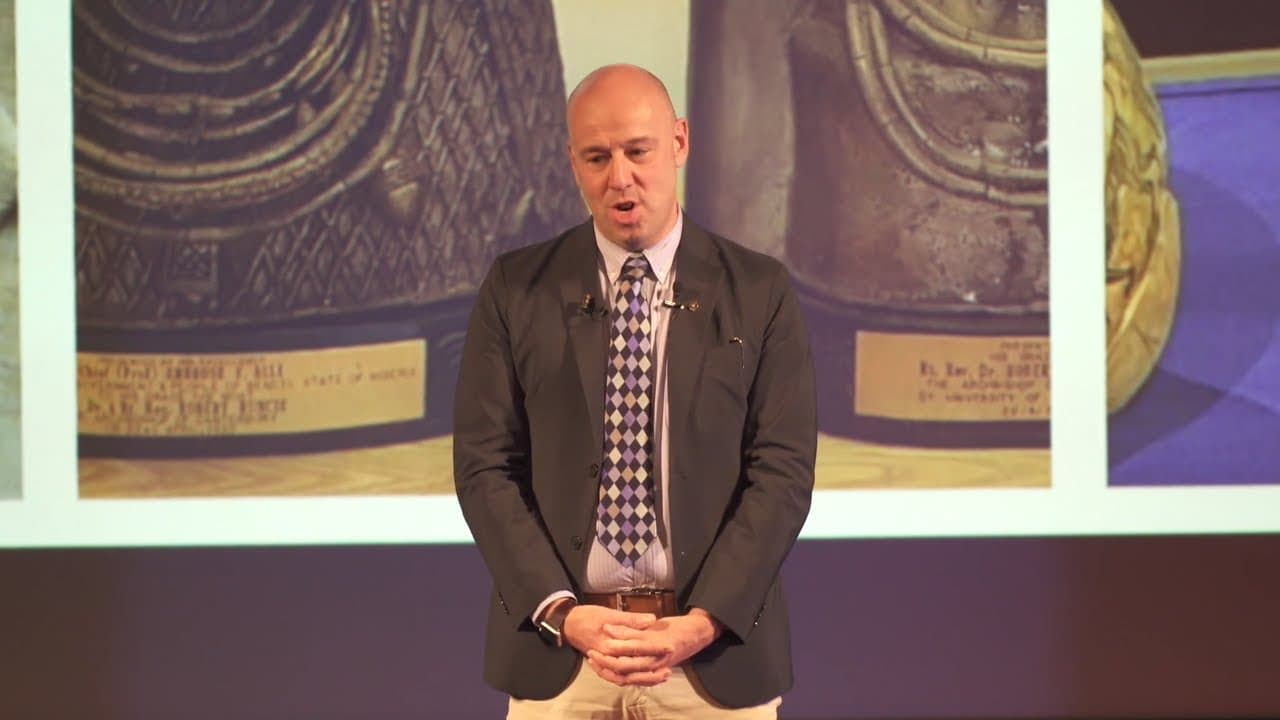
He explores the concept of historical cultural objects and their significance, using examples like the Parthenon Marbles and Benin bronzes, whose ownership is contested.
-
The professor highlights the complexity of determining ownership and argues against simplistic approaches to restitution.
Read in Other Languages (beta)
Share This Summary 📚
Summarize YouTube Videos and Get Video Transcripts with 1-Click
Try YouTube Summary with ChatGPT & Claude or YouTube Transcript Generator
Explore More Summaries from TEDx Talks 📚






Summarize YouTube Videos and Get Video Transcripts with 1-Click
Try YouTube Summary with ChatGPT & Claude or YouTube Transcript Generator