Factors Affecting Hydration of Cement
TL;DR
The hydration of cement, which is the chemical reaction between cement and water, is responsible for its properties. Factors such as temperature, fineness of cement particles, ingredients of cement, and the presence of alkali can affect the hydration process.
Transcript
hello friends in this video we will talk about the hydration of cement as we all know hydration is the process of reaction of chemical compound between cement and water and the hydration of cement is responsible for the properties of cement so let's start the chemical reaction between cement and water is known as hydration of cement and the extent ... Read More
Key Insights
- 📢 Hydration is the chemical reaction between cement and water, crucial for cement properties.
- 📢 Temperature, fineness of cement particles, ingredients, and alkali content affect the hydration process.
- 💆 Temperature control is vital for mass concreting, while finer cement particles promote early hydration.
- 🐎 Ingredients like lime, alumina, and silica determine the properties of cement, including hydration speed.
- 😫 Alkali impurities can cause lumpiness in stored cement and contribute to flash or false set.
- 📢 Addition of gypsum helps reduce the negative effects of C3A on cement hydration.
- 😫 Flash set is rapid development of rigidity due to high heat evolution, while false set is premature stiffening without strength development.
Install to Summarize YouTube Videos and Get Transcripts
Explore YouTube Video Summarizer or Get YouTube Transcript Extractor
Questions & Answers
Q: What is hydration in the context of cement?
Hydration is the chemical reaction between cement and water, responsible for the properties of cement.
Q: How does temperature affect the hydration of cement?
Temperature determines the speed of hydration, with higher temperatures leading to faster hydration. In mass concreting, temperature control is crucial. Heating up aggregates in cold regions can enhance hydration.
Q: How does the fineness of cement particles affect hydration?
Finer cement particles have a larger surface area, promoting early hydration. However, excessive fineness can result in deterioration and early hydration.
Q: What role do ingredients play in cement hydration?
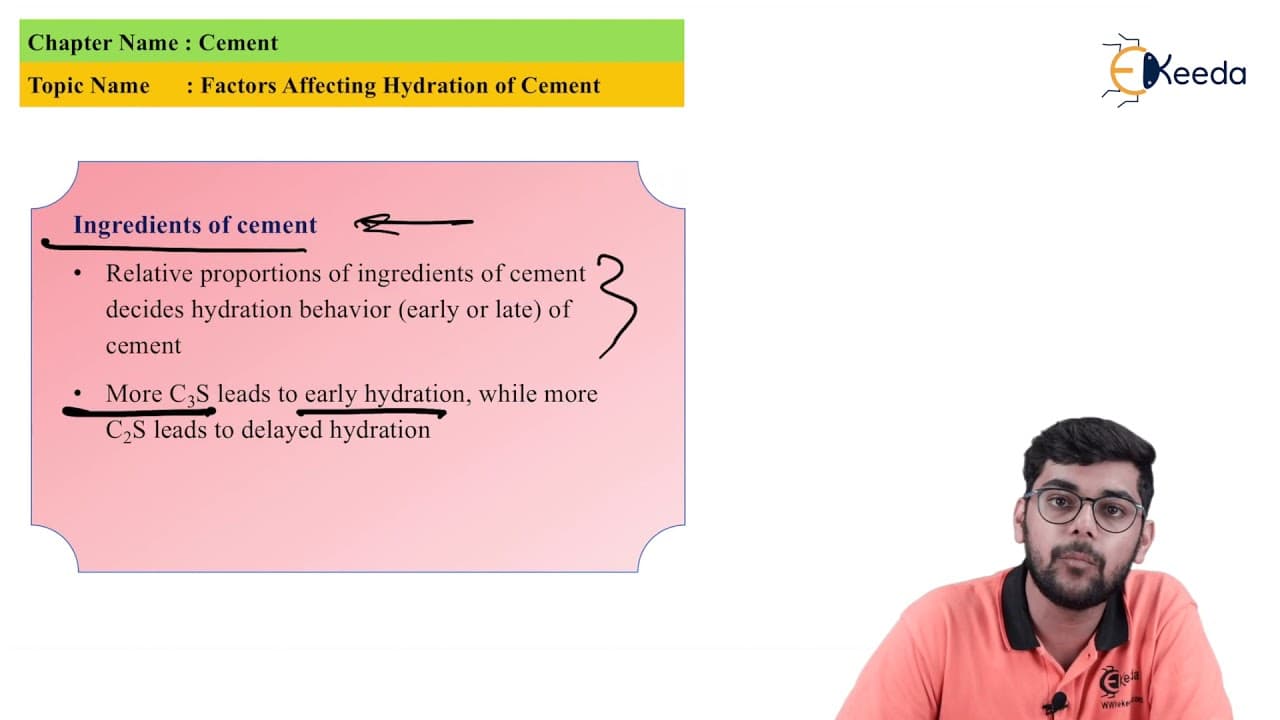
Ingredients like lime, alumina, and silica define the properties of cement. Higher amounts of C3S result in early hydration, while C2S causes delayed hydration. The presence of C3A can lead to flash set, requiring the addition of gypsum.
Q: How does alkali affect the hydration of cement?
Alkali, usually present in the form of sodium or potassium, can be impurities from shale, clay, or fuel used in cement manufacturing. Alkali can cause lumpiness in stored cement and contribute to fall set if present in significant amounts.
Summary & Key Takeaways
-
Hydration is the process of the chemical reaction between cement and water, defining the properties of cement.
-
Factors affecting the hydration of cement include temperature, fineness of cement particles, ingredients of cement, and the presence of alkali.
-
Temperature determines the speed of hydration, with higher temperatures leading to early hydration. Finer cement particles increase surface area, promoting early hydration. Ingredient ratios influence the properties of cement. Alkali present in the cement can cause flash set or false set.
Read in Other Languages (beta)
Share This Summary 📚
Summarize YouTube Videos and Get Video Transcripts with 1-Click
Try YouTube Summary with ChatGPT & Claude or YouTube Transcript Generator
Explore More Summaries from Ekeeda 📚






Summarize YouTube Videos and Get Video Transcripts with 1-Click
Try YouTube Summary with ChatGPT & Claude or YouTube Transcript Generator