Rolling and Rolling Parameters - Forming Process - Production Process 1
TL;DR
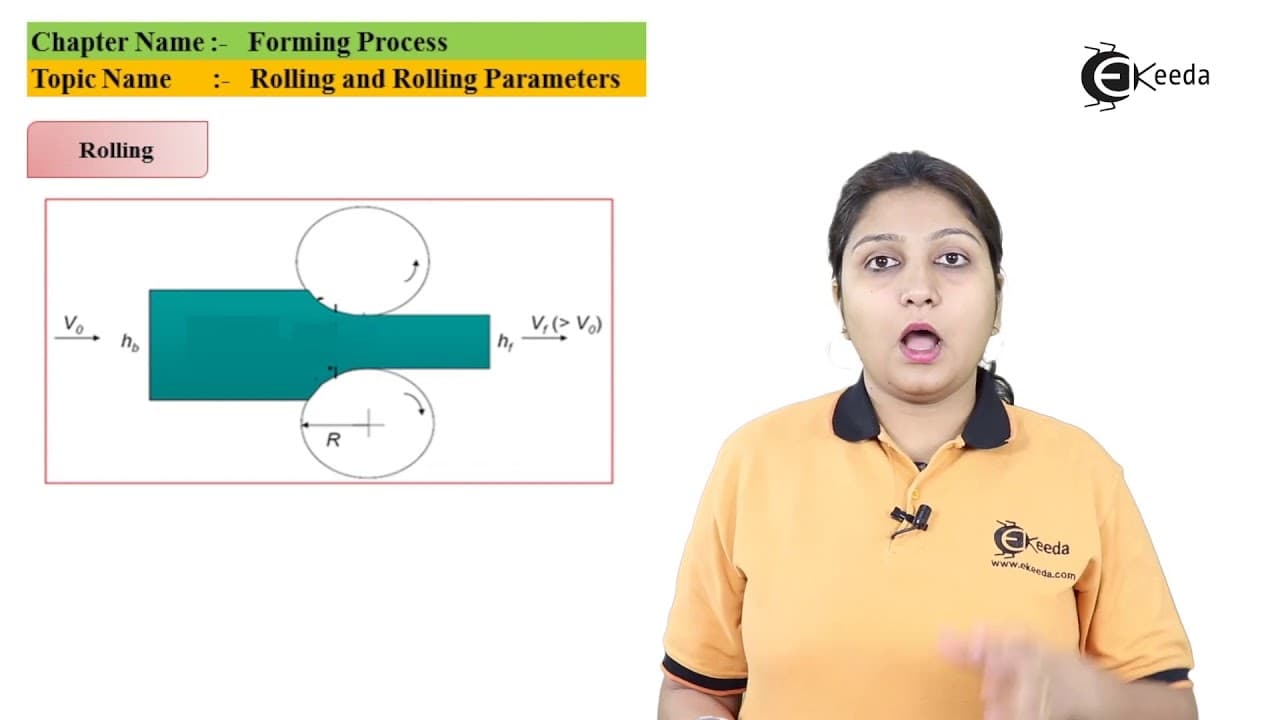
This video explains the process of rolling and its parameters, including roll gaps, velocity, and the position of the neutral axis.
Transcript
click the bell icon to get latest videos from ekeeda hello friends what you're going to see today is what is rolling and what are the different parameters while rolling is carried out they are different but easy and what are they we're gonna see in this video so first we will talk about what is rolling in this a normal ingot or a normal slab is con... Read More
Key Insights
- 🤣 Rolling is a process used to convert larger objects into smaller parts, such as blooms, billets, or rods.
- 🤣 Various types of sheets and finished products can be created through rolling, depending on the type of roll and material used.
- 🤣 Roll gaps and velocity differences play crucial roles in determining the thickness and movement of the material in the rolling process.
- 🤣 The neutral axis is an important parameter that changes its position as the rolling process progresses.
Install to Summarize YouTube Videos and Get Transcripts
Explore YouTube Video Summarizer or Get YouTube Transcript Extractor
Questions & Answers
Q: What is the purpose of rolling in manufacturing?
Rolling is used in manufacturing to convert larger objects into smaller parts such as blooms, billets, or rods. It allows for the creation of thinner sheets and finished products.
Q: What are roll gaps in the rolling process?
Roll gaps are spaces formed between two rollers through which the material passes. They determine the thickness of the rolled product and can be adjusted to achieve the desired outcome.
Q: How does velocity impact the rolling process?
Velocity plays a significant role in rolling. The entrance velocity is lower than the roll velocity, while the exit velocity is higher. This velocity difference facilitates the movement of the material through the rolls.
Q: What is the position of the neutral axis in rolling?
The neutral axis is the point between the entry and exit zones of the rolling process. It is where the roller skids and the material passes through. The position of the neutral axis changes as the rolling progresses.
Summary & Key Takeaways
-
Rolling is the process of converting a larger object, like a slab, into smaller blooms, billets, or rods by passing it through different rolls.
-
Different types of sheets and finished products can be made using the rolling process, depending on the type of roll and material used.
-
Rolling can be done through cold or hot rolling, where the material is pulled, crushed, and joined to transform thicker parts into thinner ones.
Read in Other Languages (beta)
Share This Summary 📚
Summarize YouTube Videos and Get Video Transcripts with 1-Click
Try YouTube Summary with ChatGPT & Claude or YouTube Transcript Generator
Explore More Summaries from Ekeeda 📚





Summarize YouTube Videos and Get Video Transcripts with 1-Click
Try YouTube Summary with ChatGPT & Claude or YouTube Transcript Generator