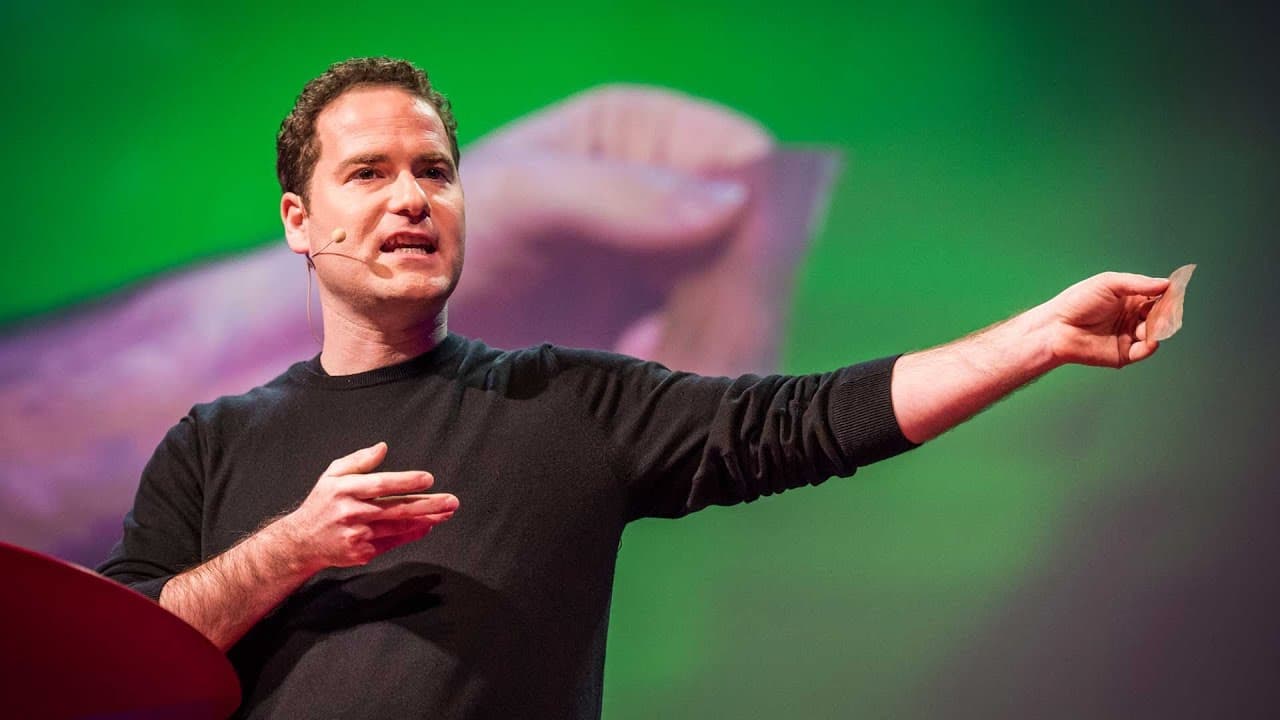
Leather and meat without killing animals | Andras Forgacs
TL;DR
In this content, the speaker discusses the potential of biofabrication to grow animal products like meat and leather in a humane and sustainable way.
Transcript
When my father and I started a company to 3D print human tissues and organs, some people initially thought we were a little crazy. But since then, much progress has been made, both in our lab and other labs around the world. And given this, we started getting questions like, "If you can grow human body parts, can you also grow animal products like ... Read More
Key Insights
- 🌍 Progress in biofabrication: Significant advancements have been made in the field of biofabrication, with the ability to grow human body parts, tissues, and organs using cell cultures.
- 🐄 Unsustainable animal agriculture: Maintaining a global herd of 60 billion animals for meat, dairy, eggs, and leather goods is environmentally detrimental. As the population grows, the number of animals required could double to 100 billion, putting further strain on our resources.
- 🚫 Negative impact of animal agriculture: Animal agriculture is a major contributor to land degradation, water scarcity, greenhouse gas emissions, and disease outbreaks. It poses risks to public health, food security, and the environment.
- 💡 Biofabrication as an alternative: Biofabrication offers a sustainable and scalable solution to produce animal products, such as leather, without the need for raising and slaughtering complex animals. Cells can be used to grow tissues and organs for various applications.
- 💼 Leather as a starting point: Leather can serve as a "gateway material" for biofabrication due to its technical simplicity and wide acceptance among consumers. It can be grown from isolated skin cells and layered to create thicker sheets, resulting in genuine leather without sacrificing animals.
- 🔬 Controlled properties: Biofabricated leather allows for precise control of its characteristics, including transparency, thickness, softness, breathability, durability, elasticity, and pattern. It can mimic and even surpass the qualities of conventional leather.
- 🏭 Potential of biofabrication facilities: Biofabrication facilities could resemble modern breweries or sterile environments for cultured food production. These facilities would offer transparency, education, and a more humane and environmentally responsible approach to manufacturing animal products.
- 🌱 A cultural shift: Biofabrication represents a more evolved and civilized approach to the production of animal products. It encourages creativity, design, and the development of new materials, products, and manufacturing facilities that move beyond the killing of animals as resources.
Install to Summarize YouTube Videos and Get Transcripts
Explore YouTube Video Summarizer or Get YouTube Transcript Extractor
Questions & Answers
Q: Why did people initially think the idea of 3D printing human tissues and organs was crazy?
People initially thought the idea of 3D printing human tissues and organs was crazy because it was a relatively new concept and seemed far-fetched at the time. The idea of being able to create complex body parts using a printer was unconventional and not widely understood.
Q: Can animal products like meat and leather be grown using biofabrication techniques?
Yes, animal products like meat and leather can be grown using biofabrication techniques. Biofabrication involves using cells to grow biological products, and this approach can be applied to create animal products like meat and leather. By starting with the cells themselves, it becomes possible to grow these products without the need for raising and slaughtering animals.
Q: What are the problems associated with maintaining a global herd to produce animal products?
Maintaining a global herd of animals to produce animal products poses several problems. Firstly, it puts a significant strain on the environment, as livestock is one of the largest users of land and freshwater resources. Additionally, the production of animal products contributes to greenhouse gas emissions, exacerbating climate change. Furthermore, keeping a large number of animals in close proximity creates health risks, such as the spread of diseases and opportunities for harm and abuse.
Q: How is biofabrication different from conventional methods used to produce animal products?
Biofabrication is different from conventional methods used to produce animal products because it starts with the basic unit of life, the cell, rather than raising and slaughtering complex animals. By focusing on growing tissues and organs from cells, it offers a more humane and sustainable approach. Additionally, biofabrication allows for greater control over the properties of the final product, enabling customization and improvement of desired qualities.
Summary & Key Takeaways
-
The speaker's company focuses on 3D printing human tissues and organs, but has also explored the possibility of growing animal products like meat and leather.
-
Maintaining the current global herd of 60 billion animals for meat, dairy, eggs, and leather is environmentally unsustainable and poses risks to public health and food security.
-
Biofabrication, using cells to grow biological products, including leather, provides a more humane, sustainable, and scalable alternative to traditional animal agriculture.
Read in Other Languages (beta)
Share This Summary 📚
Summarize YouTube Videos and Get Video Transcripts with 1-Click
Try YouTube Summary with ChatGPT & Claude or YouTube Transcript Generator
Explore More Summaries from TED 📚


Summarize YouTube Videos and Get Video Transcripts with 1-Click
Try YouTube Summary with ChatGPT & Claude or YouTube Transcript Generator