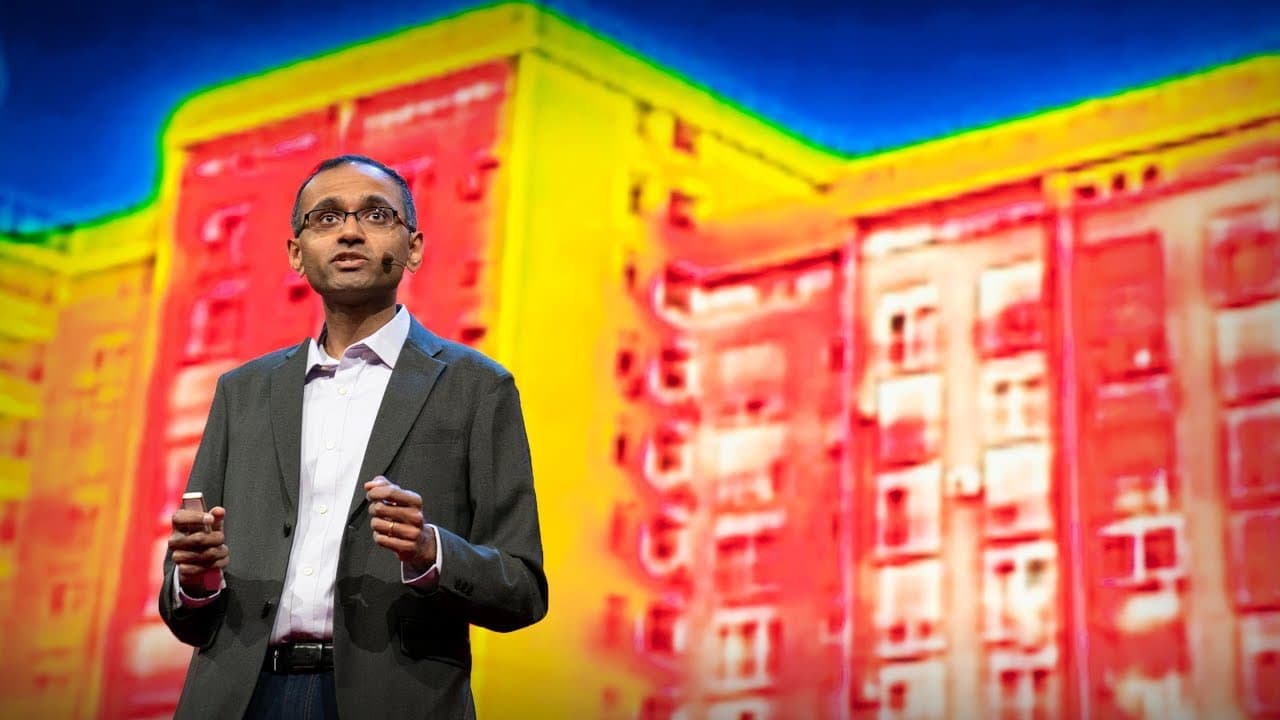
How we can turn the cold of outer space into a renewable resource | Aaswath Raman
TL;DR
This content discusses the potential of using radiative cooling, harnessing the cold darkness of space, to improve energy efficiency and address climate change.
Transcript
Every summer when I was growing up, I would fly from my home in Canada to visit my grandparents, who lived in Mumbai, India. Now, Canadian summers are pretty mild at best -- about 22 degrees Celsius or 72 degrees Fahrenheit is a typical summer's day, and not too hot. Mumbai, on the other hand, is a hot and humid place well into the 30s Celsius or 9... Read More
Key Insights
- 💡 The increasing demand for cooling systems, particularly in Asian and African countries, poses a significant challenge due to their high energy consumption and greenhouse gas emissions.
Install to Summarize YouTube Videos and Get Transcripts
Explore YouTube Video Summarizer or Get YouTube Transcript Extractor
Questions & Answers
Q: What percentage of global greenhouse gas emissions do cooling systems account for?
Cooling systems collectively account for eight percent of global greenhouse gas emissions.
Q: What is the projected growth of energy use for cooling by 2050?
Energy use for cooling is projected to grow sixfold by the year 2050.
Q: Why is the increase in energy use for cooling concerning?
The increase in energy use for cooling is concerning because cooling systems are large emitters of greenhouse gas emissions, and their growth could contribute to a feedback loop where they become one of the biggest sources of greenhouse gases.
Q: How much electricity might be needed for cooling by the year 2100?
It is projected that more than 10 trillion kilowatt-hours of electricity might be needed every year for cooling by the year 2100, which is half of our current electricity supply.
Q: How can a 10 or 20 percent improvement in the efficiency of cooling systems impact greenhouse gas emissions?
A 10 or 20 percent improvement in the efficiency of cooling systems can have an enormous impact on greenhouse gas emissions, both currently and in the future. It can help reduce the energy consumption and emissions associated with cooling, potentially averting the worst-case scenario of cooling systems becoming significant greenhouse gas emitters.
Summary & Key Takeaways
-
Cooling systems, such as air conditioners, account for 17% of global electricity usage and 8% of greenhouse gas emissions, and this demand is expected to increase significantly in the future.
-
The speaker and his team have developed a material that utilizes the phenomenon of radiative cooling, where heat is emitted to the coldness of space, to create more efficient cooling systems.
-
This technology has the potential to significantly improve the energy efficiency of air conditioning and refrigeration systems, and could even lead to the development of cooling systems that require no electricity input.
Read in Other Languages (beta)
Share This Summary 📚
Summarize YouTube Videos and Get Video Transcripts with 1-Click
Try YouTube Summary with ChatGPT & Claude or YouTube Transcript Generator
Explore More Summaries from TED 📚




Summarize YouTube Videos and Get Video Transcripts with 1-Click
Try YouTube Summary with ChatGPT & Claude or YouTube Transcript Generator