Are Parenting Trends Making Kids More Anxious?
TL;DR
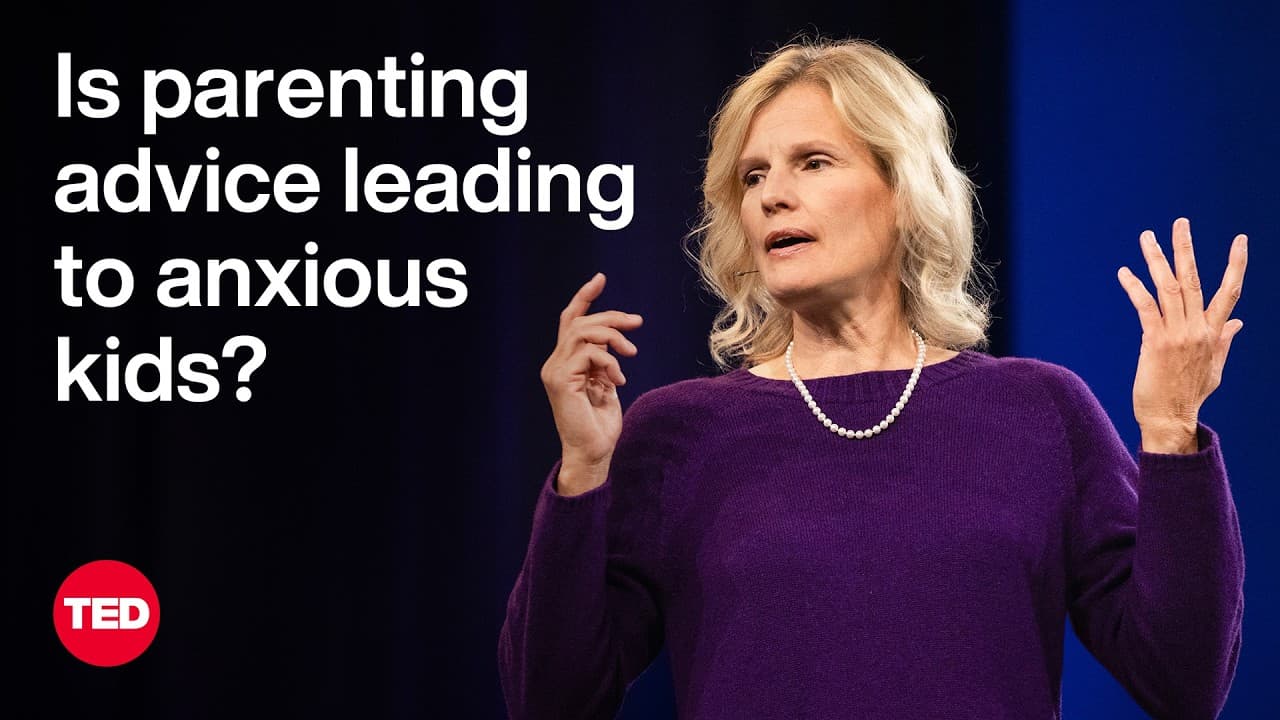
Parenting trends and expert advice may lead to increased anxiety in children by turning well-meaning parents into overly anxious ones. Instead of relying on external guidance, parents should trust their instincts to foster secure attachments and reduce anxiety. Ultimately, the best approach to parenting is often simpler and instinctual, akin to the guidance found in puppy manuals.
Transcript
It's not that there's anything wrong with parenting books, per se. It's just that they can be risky when they fall into the wrong hands. And when I say wrong hands, I mean parents. (Laughter) Specifically conscientious and dutiful parents, which is most parents. Here's the problem. If you're a parent, you're probably just fine the way you are. All ... Read More
Key Insights
- Parenting books and expert advice can lead conscientious parents to become anxious and obsessive, despite good intentions.
- The increase in parental involvement over recent decades has shifted from beneficial to potentially harmful, creating anxiety in children.
- Parents often face pressure from social media influencers, leading to unrealistic comparisons and heightened anxiety.
- Puppy manuals offer simple, effective advice for parenting, emphasizing love, consistency, and instinct over complex strategies.
- Trusting parental instincts and creating a secure attachment are crucial for healthy child development and exploration.
- Anxiety can be contagious, especially from parents to children, highlighting the importance of managing parental stress.
- Excessive monitoring and involvement by parents can hinder a child's independence and decision-making abilities.
- The presentation humorously suggests that parenting expertise is inherent and evolved, rather than learned from external sources.
Install to Summarize YouTube Videos and Get Transcripts
Explore YouTube Video Summarizer or Get YouTube Transcript Extractor
Questions & Answers
Q: How can parenting books contribute to parental anxiety?
Parenting books often present a plethora of expert advice that conscientious parents may feel pressured to follow. This can lead to an obsession with getting everything right, causing anxiety and stress. Instead of trusting their instincts, parents may become overly focused on meeting external standards, which can impact their mental well-being.
Q: What role does social media play in modern parenting challenges?
Social media can amplify parenting challenges by exposing parents to influencers who portray idealized versions of parenting. This can create unrealistic expectations and pressure parents to compare themselves and their methods to others. Such comparisons can increase anxiety and make parents feel inadequate, rather than trusting their natural instincts.
Q: Why does Mathilde H. Ross recommend puppy manuals for parenting?
Mathilde H. Ross humorously suggests puppy manuals because they offer simple, straightforward advice that emphasizes love, consistency, and instinct. These manuals focus on creating a safe and loving environment without overcomplicating the parenting process, aligning with her message that parents are naturally equipped to raise their children without excessive external guidance.
Q: How can excessive parental involvement affect children?
Excessive parental involvement can hinder a child's ability to develop independence and make decisions. When parents are overly involved, children may feel monitored and pressured, leading to anxiety and a lack of confidence in their own abilities. This involvement can prevent children from learning through natural exploration and experiences.
Q: What is the importance of secure attachment in child development?
Secure attachment is crucial for healthy child development as it provides a foundation for trust and confidence. Children with secure attachments feel safe to explore and learn, knowing they have a reliable support system. This attachment fosters independence and resilience, enabling children to navigate challenges and develop healthy relationships.
Q: How does anxiety transfer from parents to children?
Anxiety can be contagious, especially within family dynamics. When parents are anxious, their behavior and emotional state can influence their children, who may mirror these feelings. This transmission of anxiety can affect a child's emotional well-being, leading to increased stress and potentially impacting their mental health and development.
Q: What is the main message Mathilde H. Ross conveys in her talk?
The main message of Mathilde H. Ross's talk is that parents should trust their instincts and inherent abilities to raise their children. She argues that excessive reliance on expert advice and parenting trends can lead to anxiety and stress. Instead, parents should focus on creating a loving, supportive environment, much like the guidance found in puppy manuals.
Q: Why does Mathilde H. Ross believe parents are naturally equipped for parenting?
Mathilde H. Ross believes parents are naturally equipped for parenting because humans have evolved to care for their offspring successfully for millennia. She suggests that parents possess innate instincts and abilities that guide them in raising their children, and that trusting these instincts is often more effective than following external advice or trends.
Summary & Key Takeaways
-
Parenting books and expert advice, while well-intentioned, can lead parents to become overly anxious and obsessive, impacting their children's mental health. Mathilde H. Ross suggests that parents should trust their instincts and avoid over-reliance on external advice, which can increase anxiety in both parents and children.
-
The talk highlights how increased parental involvement, promoted by experts, has shifted from being beneficial to potentially harmful, creating anxiety in children. Ross humorously compares parenting advice to puppy manuals, which offer simple, instinct-driven guidance that can be more effective than complex strategies.
-
Ross emphasizes the importance of secure attachment and trust between parents and children for healthy development and exploration. She argues that anxiety is contagious and that managing parental stress is crucial to prevent it from affecting children, advocating for instinctual parenting over expert-driven methods.
Read in Other Languages (beta)
Share This Summary 📚
Summarize YouTube Videos and Get Video Transcripts with 1-Click
Try YouTube Summary with ChatGPT & Claude or YouTube Transcript Generator
Explore More Summaries from TED 📚




Summarize YouTube Videos and Get Video Transcripts with 1-Click
Try YouTube Summary with ChatGPT & Claude or YouTube Transcript Generator