Security - Cold War and Nuclear Policy
TL;DR
This video discusses the Cold War and nuclear politics, including the development of nuclear weapons, containment policy, and the strategies of massive retaliation and flexible response. It also highlights the risks and close calls associated with nuclear weapons during this period.
Transcript
Hey everyone. Noah Zerbe here. This is one in a series of short videos on topics in international relations. This video deals with the Cold War and nuclear politics during that period. Other videos in this series address theoretical and historical topics in international relations. So let's get started. The nuclear arms race began during World War ... Read More
Key Insights
- 🇺🇸 The nuclear arms race was a defining feature of the Cold War and heightened tensions between the United States and the Soviet Union.
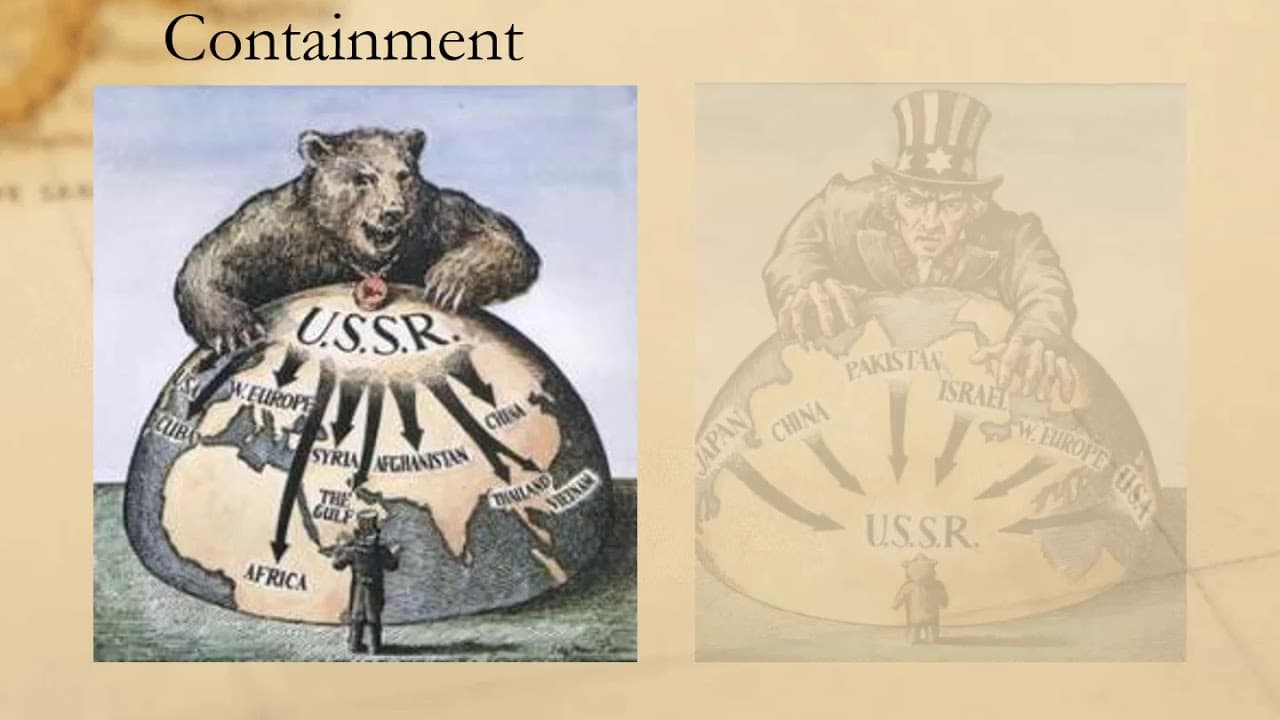
- ✊ The concept of containment, advocated by George Kennan, aimed to counter Soviet expansion through a balance of power and support for independent power centers.
- 🇺🇸 Nuclear strategies evolved from massive retaliation to flexible response, as the United States realized the limitations of a nuclear monopoly and sought to maintain a credible deterrent.
Install to Summarize YouTube Videos and Get Transcripts
Explore YouTube Video Summarizer or Get YouTube Transcript Extractor
Questions & Answers
Q: How did the development of nuclear weapons during World War II contribute to the Cold War?
The development of nuclear weapons by the United States and the USSR during World War II set the stage for the arms race and heightened tensions between the two superpowers. It created a nuclear monopoly for the United States, which was soon challenged by the Soviet Union, leading to a reevaluation of American foreign policy and the adoption of containment.
Q: What was the doctrine of massive retaliation?
The doctrine of massive retaliation, introduced by Secretary of State John Foster Dulles, emphasized the threat of a massive nuclear response to deter communist aggression. It aimed to reduce reliance on conventional forces and relied on the idea that the US would respond to military provocation at its own choosing, regardless of the scale of the attack.
Q: How did the concept of deterrence shape nuclear strategies during the Cold War?
Deterrence, particularly in the form of mutually assured destruction (MAD), played a significant role in shaping nuclear strategies. The idea was that the possession of a large nuclear arsenal would dissuade the other side from launching a first strike, as both countries would sustain devastating losses. This led to a balance of terror and a hair-trigger alert posture.
Q: What were some of the close calls and risks associated with nuclear weapons during the Cold War?
There were numerous close calls that almost resulted in nuclear war, such as the misinterpretation of missile launches and technical failures. For example, a solar flare interfered with radar systems, leading to the mistaken belief of a Soviet first strike. Close calls highlighted the risks of a hair-trigger alert posture and the potential for accidental nuclear war.
Summary & Key Takeaways
-
The video provides an overview of the nuclear arms race during World War II, with the Manhattan Project leading to the development of two bomb technologies: gun type fission and implosion-based devices.
-
The concept of containment, as advocated by George Kennan, aimed to establish a balance of power and promote independent centers of power to counter Soviet expansion.
-
The video explores the evolution of nuclear strategies, from massive retaliation to flexible response, and highlights the dangers and close calls associated with nuclear weapons.
Read in Other Languages (beta)
Share This Summary 📚
Summarize YouTube Videos and Get Video Transcripts with 1-Click
Try YouTube Summary with ChatGPT & Claude or YouTube Transcript Generator
Explore More Summaries from Noah Zerbe 📚

Summarize YouTube Videos and Get Video Transcripts with 1-Click
Try YouTube Summary with ChatGPT & Claude or YouTube Transcript Generator