How Do Hackers Crack Weak Passwords?
TL;DR
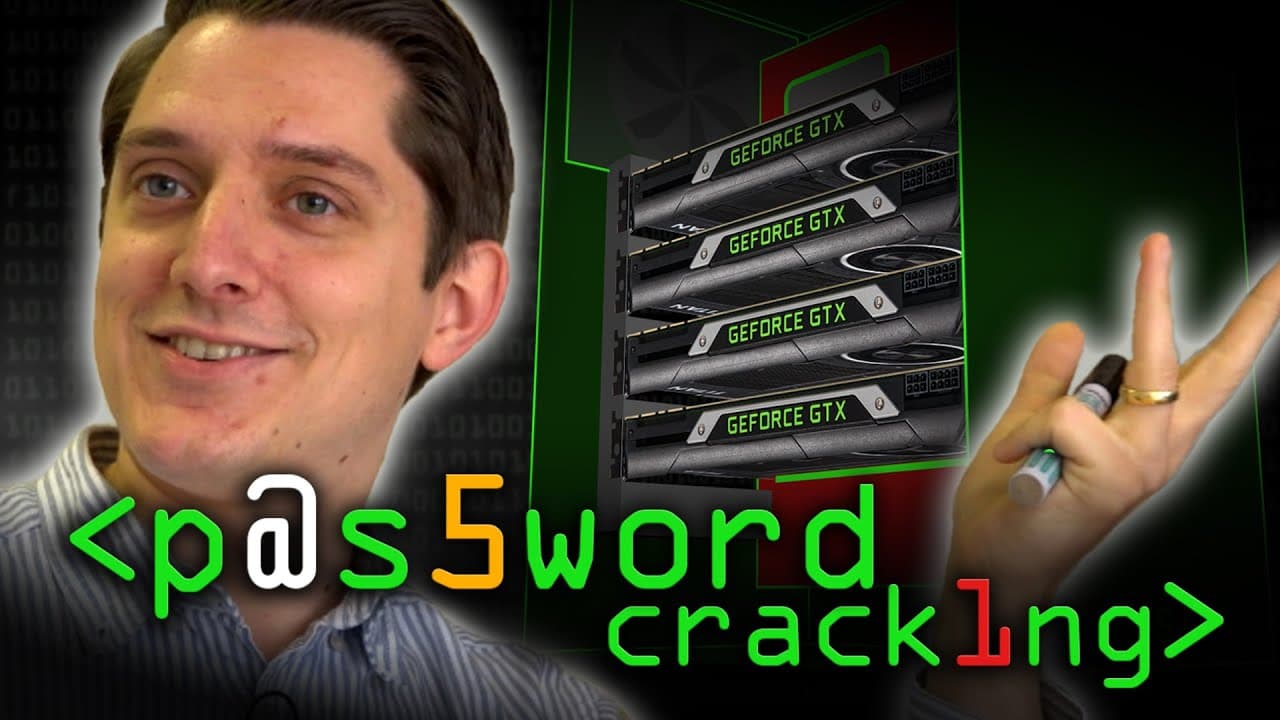
Weak passwords pose severe security risks, as many users fail to create robust protections. Hackers can quickly exploit these vulnerabilities through brute force or dictionary attacks, often cracking passwords within hours. Strengthening your passwords and prioritising their uniqueness is essential for safeguarding your online accounts.
Transcript
Everyone's passwords are terrible and they should change their passwords right now. Let's just get that right out in the open, OK, you all have bad passwords and you know you should feel bad. Probably not necessarily people who watch Computerphile, but the majority of the public don't have good passwords, and it's a real problem. It's a problem bec... Read More
Key Insights
- 🔒 Weak passwords are a significant security risk that can be exploited by hackers.
- 🔑 Hashing passwords using pseudorandom functions adds a layer of protection against unauthorized access.
- 👊 Brute force attacks and dictionary attacks are commonly used methods for cracking passwords.
- 🔑 The use of strong, unique passwords and avoiding password reuse can significantly enhance password security.
- 🥡 Password security is a shared responsibility between individuals and companies that should be taken seriously.
- 🔑 The availability of leaked password databases, such as RockYou, makes it easier for hackers to crack passwords.
- 🐎 Ongoing advancements in technology, such as deep learning, have increased the speed and efficiency of password cracking.
Install to Summarize YouTube Videos and Get Transcripts
Explore YouTube Video Summarizer or Get YouTube Transcript Extractor
Questions & Answers
Q: Why are weak passwords a problem?
Weak passwords make it easier for hackers to access user accounts, leading to potential identity theft, financial loss, and unauthorized access to personal information.
Q: How are passwords stored to protect user data?
Passwords are hashed using one-way pseudorandom functions, which turn plain text passwords into gibberish. This allows for easy verification without storing the actual password.
Q: What is the difference between brute force and dictionary attacks?
Brute force attacks involve trying every possible combination of characters to crack passwords, while dictionary attacks use a list of commonly used words and apply various rules and substitutions to guess passwords more efficiently.
Q: How can users improve their password security?
Users should create strong passwords that are unique and not easily guessable. It is also important to avoid reusing passwords across multiple accounts and regularly update them.
Summary & Key Takeaways
-
Weak passwords are a widespread problem that can lead to security breaches, as popular websites often get hacked and passwords are cracked within hours.
-
Storing passwords in unencrypted form is a terrible idea, which is why they are hashed using one-way pseudorandom functions to protect user data.
-
Password cracking can be done through brute force attacks or dictionary attacks, where common words and variations are tested against hashed passwords.
Read in Other Languages (beta)
Share This Summary 📚
Summarize YouTube Videos and Get Video Transcripts with 1-Click
Try YouTube Summary with ChatGPT & Claude or YouTube Transcript Generator
Explore More Summaries from Computerphile 📚




Summarize YouTube Videos and Get Video Transcripts with 1-Click
Try YouTube Summary with ChatGPT & Claude or YouTube Transcript Generator