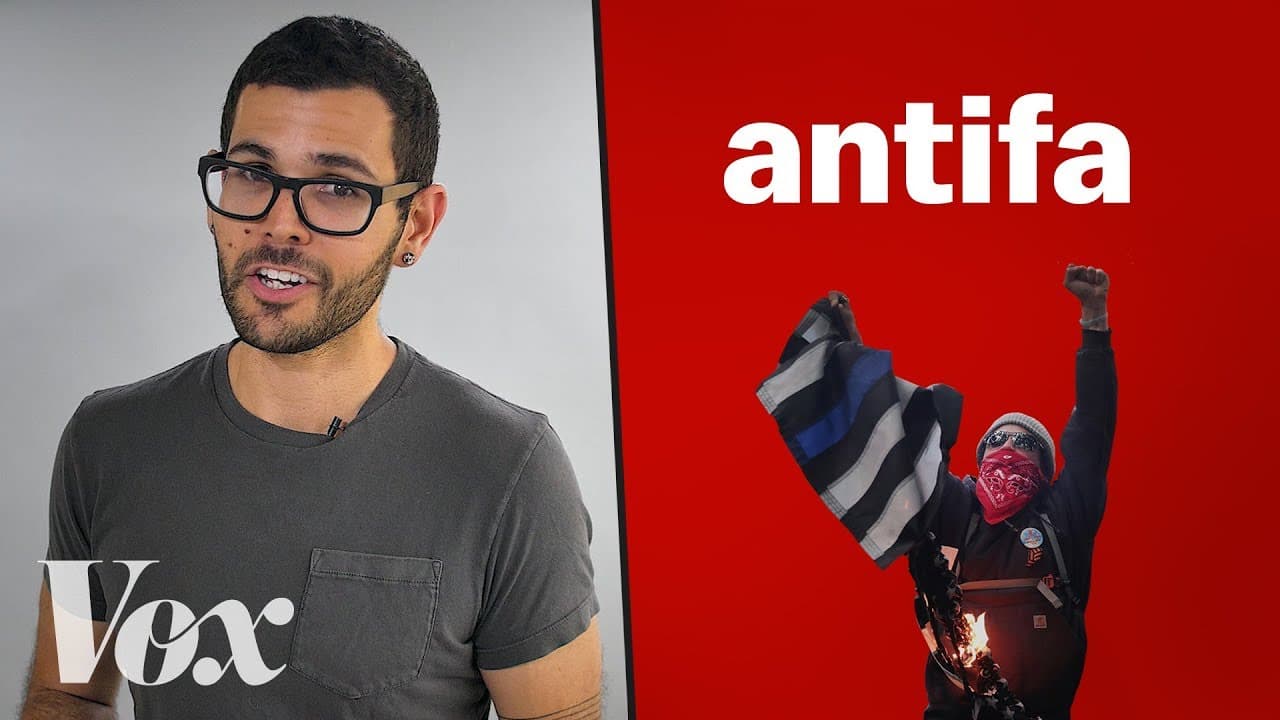
Don't fall for the antifa trap
TL;DR
Media exaggerates antifa's role in protests, creating bias.
Transcript
I’m going to botch how it’s pronounced: antifa? Antfee? Antifa? Antifa? Yeah, antifa. Antifa, short for anti-fascist. It’s an umbrella term for a group that shows up at protests to confront neo-Nazis and white supremacists. They dress in all black, they wear masks, and they occasionally engage in violence. Once again, antifa members attack peaceful... Read More
Key Insights
- Antifa is a small group often highlighted in media coverage of protests despite their limited presence and impact compared to the overall protest crowd.
- Media coverage tends to focus on violent outliers like antifa, overshadowing the peaceful majority and the actual issues being protested.
- Historical examples show a pattern of media fixation on radical elements in protests, such as during the WTO protests and Occupy Wall Street.
- The media's focus on violence and property damage is largely driven by the need for compelling visuals and quick soundbites, which often come from official sources like law enforcement.
- This biased coverage can lead to public misperceptions about the nature of protests, portraying them as more violent and chaotic than they are.
- Such portrayals can foster public support for aggressive police responses and delegitimize the protest movements' underlying causes.
- The emphasis on antifa and similar groups distracts from addressing substantial issues like police brutality, racism, and globalization.
- The cycle of focusing on violent outliers perpetuates a narrative that detracts from meaningful discussions and solutions to societal problems.
Install to Summarize YouTube Videos and Get Transcripts
Explore YouTube Video Summarizer or Get YouTube Transcript Extractor
Questions & Answers
Q: Why does the media focus on antifa during protests?
The media focuses on antifa because their violent tactics and striking visuals make for compelling news coverage. This focus is driven by the need for quick soundbites and the convenience of relying on official sources like law enforcement, which often highlight lawbreaking and arrests. This creates a skewed representation of protests.
Q: What effect does media coverage of antifa have on public perception?
Media coverage that emphasizes antifa's violent actions can lead to public misperceptions about protests, portraying them as more violent and chaotic than they are. This can delegitimize the protest movements' causes and increase public support for aggressive police crackdowns, detracting from the actual issues being protested.
Q: How does historical media bias compare to current coverage of antifa?
Historical media bias shows a consistent pattern of focusing on radical elements in protests, such as anarchists during the WTO protests and Occupy Wall Street. This pattern continues with antifa, where the media's emphasis on violence overshadows the peaceful majority and the substantive issues being protested.
Q: What challenges do journalists face when covering protests?
Journalists face challenges like disorganization, the leaderless nature of protests, and the complexity of big issues that are difficult to condense into soundbites. They often operate under time constraints, which leads them to rely on official sources, resulting in coverage that skews towards law enforcement perspectives and highlights outliers.
Q: Why is the focus on antifa considered a form of outlier bias?
The focus on antifa is considered outlier bias because it disproportionately highlights a small, radical faction within larger protests. This emphasis on violence and property damage misrepresents the overall protest movement, overshadowing the peaceful majority and distracting from the actual issues being addressed.
Q: How does media coverage impact the discussion of protest issues?
Media coverage that fixates on violent outliers like antifa shifts the focus away from the substantive issues being protested. Instead of addressing topics like police brutality or racism, the narrative becomes dominated by debates about protest tactics, detracting from meaningful discussions and potential solutions.
Q: What role do visuals play in media coverage of protests?
Visuals play a significant role in media coverage of protests as they create a spectacle that captures audience attention. Images of violence and property damage are more engaging than peaceful protests, leading to a focus on radical elements like antifa, which skews public perception and misrepresents the protest movement.
Q: How can media coverage influence police responses to protests?
Media coverage that emphasizes violence and lawlessness can build public support for aggressive police responses, as seen in places like Ferguson and Baltimore. This portrayal can embolden police to take more active roles in confronting protests, sometimes escalating conflicts and overshadowing the protestors' messages.
Summary & Key Takeaways
-
The media often exaggerates the role of antifa in protests, focusing on their violent tactics despite their minimal impact compared to the larger protest movements. This creates a biased portrayal that overshadows the peaceful majority and the real issues being protested.
-
Historically, media coverage has fixated on radical elements in protests, such as anarchists during the WTO protests and Occupy Wall Street. This pattern continues with antifa, where the focus on violence and property damage provides compelling visuals but misrepresents the protests.
-
This type of coverage can lead to public misperceptions, portraying protests as more violent and chaotic, which can increase support for aggressive police responses and distract from addressing the core issues like police brutality and racism.
Read in Other Languages (beta)
Share This Summary 📚
Summarize YouTube Videos and Get Video Transcripts with 1-Click
Try YouTube Summary with ChatGPT & Claude or YouTube Transcript Generator
Explore More Summaries from Vox 📚

Summarize YouTube Videos and Get Video Transcripts with 1-Click
Try YouTube Summary with ChatGPT & Claude or YouTube Transcript Generator