The United States, Japan, and the Rise of China
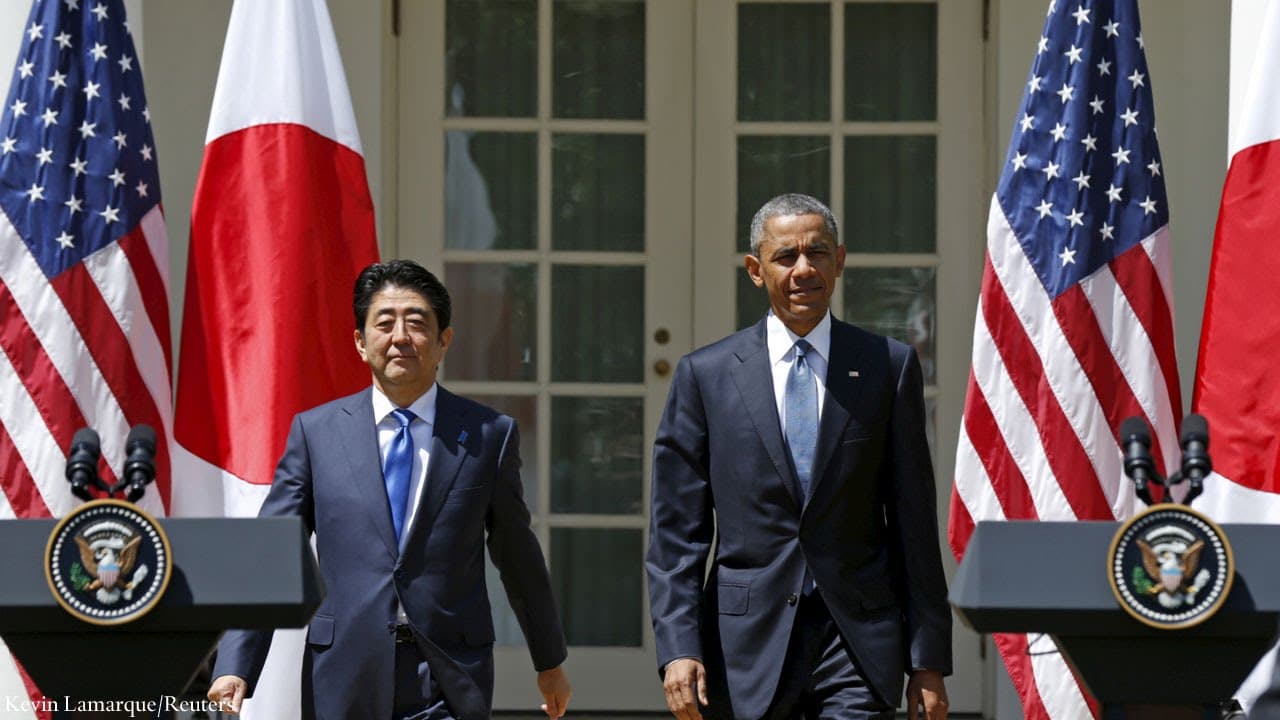
TL;DR
Discussion on U.S.-Japan alliance amid China's rise.
Transcript
SMITH: So welcome, ladies and gentlemen, to the second panel in our day-long discussion of the U.S. and Japan in Asia. I am delighted to preside over this panel with two experts that you know well. To my immediate left is Professor Shiraishi Takashi. He is the president of the National Graduate Institute for Policy Studies in Tokyo and also the pre... Read More
Key Insights
- The U.S. and Japan are navigating a shifting power dynamic in Asia due to China's economic and military growth.
- Japan-China relations have improved slightly, with increased diplomatic and economic engagement, despite ongoing historical tensions.
- The U.S. is seen as a stabilizing force in Asia, with its military presence and economic initiatives like the TPP being crucial.
- China's domestic policies under Xi Jinping reflect a focus on maintaining Communist Party legitimacy and economic control.
- The South China Sea remains a flashpoint, with the U.S. conducting freedom of navigation operations to counter China's territorial claims.
- Japan is increasing its defense capabilities and regional partnerships, including potential arms exports and cooperation in Southeast Asia.
- The U.S. and Japan are enhancing cooperation in infrastructure development and capacity building in Southeast Asia.
- China's ambitions for regional dominance pose challenges, but there are opportunities for cooperation on global issues like climate change.
Install to Summarize YouTube Videos and Get Transcripts
Explore YouTube Video Summarizer or Get YouTube Transcript Extractor
Questions & Answers
Q: How has the Japan-China relationship evolved recently?
The Japan-China relationship has seen improvements with increased diplomatic engagements and economic discussions. Meetings between leaders like Xi Jinping and Abe have facilitated dialogue, although historical issues remain a source of tension. The relationship is better than in previous years, but challenges persist.
Q: What was the significance of Xi Jinping's visit to the U.S.?
Xi Jinping's visit to the U.S. was overshadowed by the Pope's visit but was considered better than expected. It addressed issues like cyber economic espionage and climate change, despite underlying tensions over China's actions in the South China Sea and economic reforms.
Q: What are the key challenges in U.S.-China relations?
Key challenges include China's domestic political and economic reforms, its assertive regional policies, and ambitions for regional dominance. The U.S. must navigate these issues while maintaining a strong presence in Asia and fostering cooperation on global challenges.
Q: How does Japan view its defense capabilities in relation to China?
Japan recognizes the need to enhance its defense capabilities, especially in response to China's growing military presence. While budget constraints limit expansion, Japan is focusing on strengthening its U.S. alliance and regional partnerships, along with increasing its coast guard capabilities.
Q: What is the impact of China's actions in the South China Sea?
China's actions in the South China Sea, including building artificial islands, have heightened regional tensions. The U.S. has responded with freedom of navigation operations, emphasizing the importance of maintaining open sea lanes and countering China's territorial claims.
Q: How does the U.S.-Japan alliance address regional security challenges?
The U.S.-Japan alliance is crucial for regional security, with joint efforts in military presence, economic initiatives, and capacity building in Southeast Asia. The alliance aims to counterbalance China's influence while promoting stability and cooperation in the Asia-Pacific region.
Q: What role does multilateralism play in Asia's regional dynamics?
Multilateralism, particularly through ASEAN, plays a critical role in Asia's regional dynamics. The U.S. and Japan support ASEAN unity and integration as a counterbalance to China's influence, promoting regional stability and collaborative rule-making processes.
Q: How might future U.S. administrations approach Asia policy?
Future U.S. administrations are expected to maintain a strong focus on Asia, with potential for more assertive policies towards China. The emphasis will likely be on strengthening alliances, engaging in multilateral frameworks, and balancing economic and security interests in the region.
Summary & Key Takeaways
-
The panel discusses the evolving U.S.-Japan alliance in response to China's growing influence in Asia. They highlight recent improvements in Japan-China relations and the importance of U.S. economic and military presence in the region.
-
China's domestic policies under Xi Jinping are examined, focusing on his efforts to strengthen the Communist Party and manage economic reforms. The South China Sea remains a contentious issue, with the U.S. conducting operations to assert freedom of navigation.
-
The discussion explores Japan's defense strategy and regional partnerships, emphasizing cooperation with the U.S. in Southeast Asia. The panel also considers China's ambitions for regional dominance and potential areas for cooperation on global challenges.
Read in Other Languages (beta)
Share This Summary 📚
Summarize YouTube Videos and Get Video Transcripts with 1-Click
Try YouTube Summary with ChatGPT & Claude or YouTube Transcript Generator
Explore More Summaries from Council on Foreign Relations 📚


Summarize YouTube Videos and Get Video Transcripts with 1-Click
Try YouTube Summary with ChatGPT & Claude or YouTube Transcript Generator