The Bizarre Phenomenon of Mummy Unwrapping Parties
TL;DR
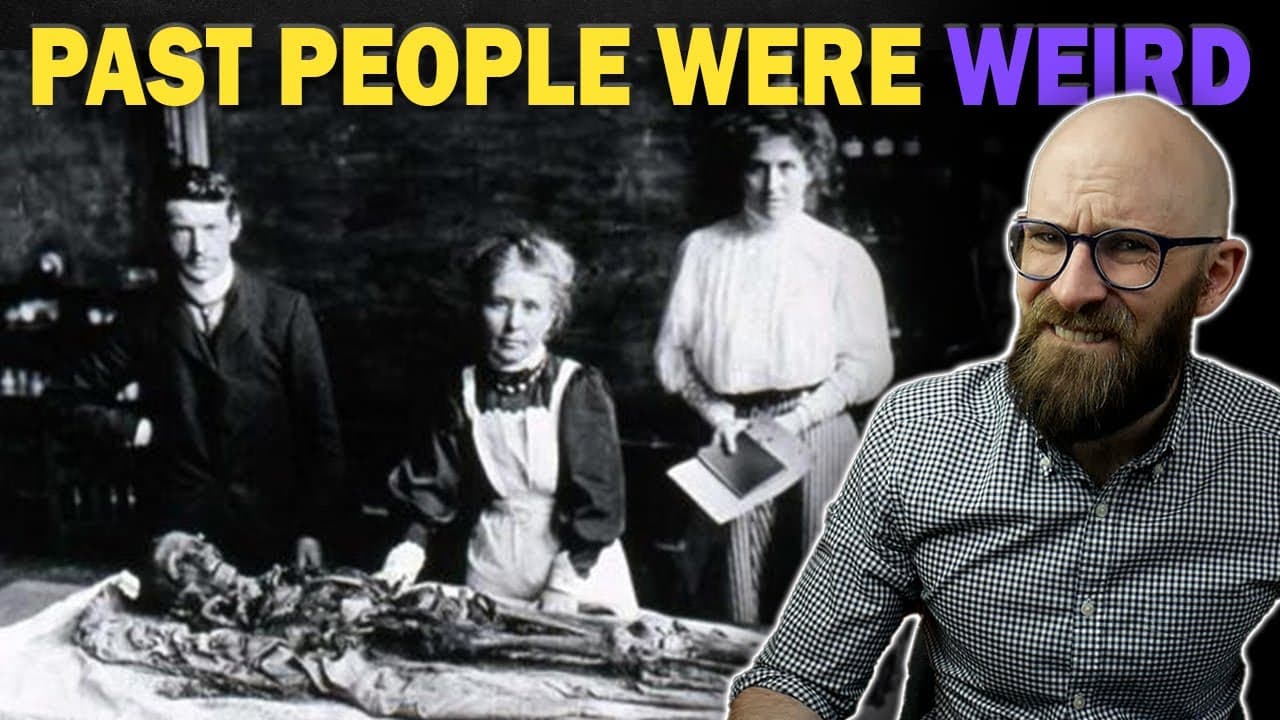
Victorian England had a fascination with ancient Egypt, leading to bizarre practices like mummy unwrapping parties and the use of mummy remains for medicine and paint.
Transcript
District of England is Rife with instances bizarre phenomenons that have left their mark on society shaping cultures and ideologies in unique ways one such phenomenon was the Victorian era fascination with ancient Egypt a period characterized by both curiosity and a penchant for the unusual Victorian England in particular was a time of adhering to ... Read More
Key Insights
- ⛽ Victorian England's fascination with ancient Egypt was fueled by its enigmatic nature and the allure of pyramids, hieroglyphics, and rituals.
- 😒 The Victorians had a paradoxical interest in the unusual and exotic, as seen in their use of mummy remains for medicine and paint.
- ⛽ Discoveries such as the Rosetta Stone and the Temple of Dendera further fueled Egyptomania in Victorian England.
- 🥳 Mummy unwrapping parties emerged as a popular trend among the elite in Victorian England, providing a spectacle and entertainment rather than scientific progress.
- 🎮 Modern scientific practices prioritize non-destructive methods of studying mummies, but there have been a few instances where carefully controlled unwrappings have occurred.
Install to Summarize YouTube Videos and Get Transcripts
Explore YouTube Video Summarizer or Get YouTube Transcript Extractor
Questions & Answers
Q: Why was Victorian England so fascinated with ancient Egypt?
Victorian England was drawn to ancient Egypt's enigmatic nature and the allure of its pyramids, hieroglyphics, and rituals. It was seen as a civilization shrouded in mystery.
Q: How did the Victorians use mummy remains for medicine?
The Victorians believed that consuming powdered mummy flesh, which was believed to contain natural minerals from the Dead Sea, would provide health benefits. However, the effectiveness of this treatment remains uncertain.
Q: What was the significance of mummy brown paint?
Mummy brown paint, made from both human and feline mummies, was popular among artists for adding shadows and flesh tones to their paintings. It was made from mummy remains, which were readily available during that time.
Q: How did the decipherment of the Rosetta Stone contribute to Egyptomania?
The Rosetta Stone, discovered in 1799, contained a decree inscribed in three different scripts, including hieroglyphics. Deciphering the stone opened the door for further translation of hieroglyphics and fueled interest in ancient Egypt.
Summary & Key Takeaways
-
Victorian England was known for its adherence to propriety and social order, but it was also fascinated by the unusual and otherworldly.
-
The Victorian era saw the rise of egyptology, with a particular interest in ancient Egypt's pyramids, hieroglyphics, and rituals.
-
The use of mummy remains for medicine and paint became popular, reflecting Victorian high society's affinity for the exotic and unusual.
Read in Other Languages (beta)
Share This Summary 📚
Summarize YouTube Videos and Get Video Transcripts with 1-Click
Try YouTube Summary with ChatGPT & Claude or YouTube Transcript Generator
Explore More Summaries from Today I Found Out 📚






Summarize YouTube Videos and Get Video Transcripts with 1-Click
Try YouTube Summary with ChatGPT & Claude or YouTube Transcript Generator