Open House 2017 - Breast Cancer's Dark Matter
TL;DR
Research on non-coding RNAs offers hope for metastatic breast cancer treatment.
Transcript
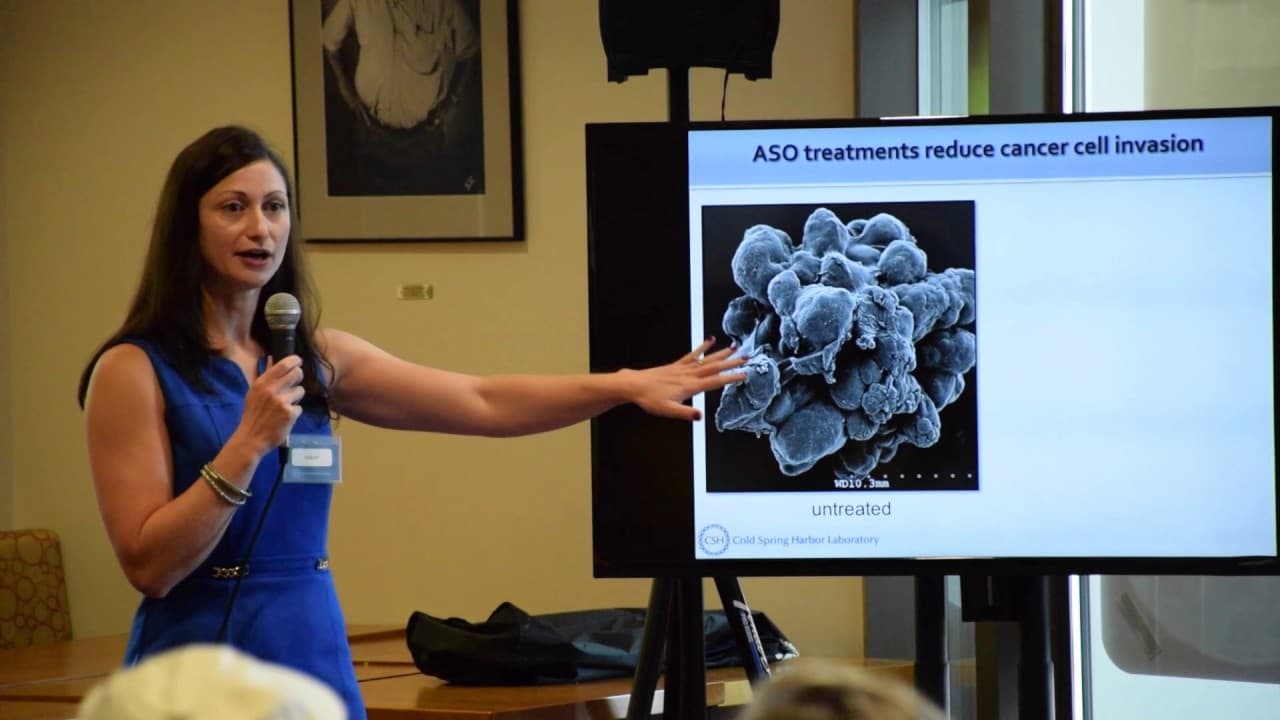
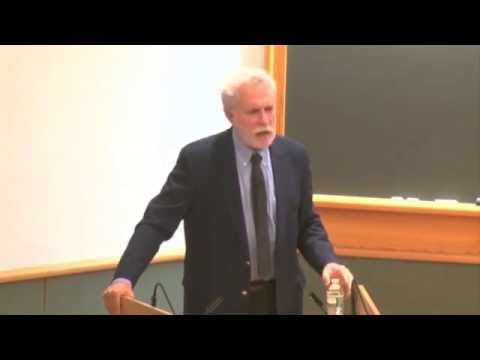
- Thanks everyone for coming to our open house today, and for interest in our research. I will be talking about breast cancer, and more specifically, how we have progressed in recent years towards a better treatment for metastatic breast cancer. And I'll start off with a short introduction into breast cancer in general. You may have heard that in h... Read More
Key Insights
- Breast cancer affects one in eight women, with metastatic cases being particularly severe as they spread to vital organs like the brain and liver.
- Early detection of breast cancer significantly improves survival rates, with a 100% survival rate for stage zero and one after five years.
- Metastatic breast cancer has a low five-year survival rate of 20%, highlighting the need for advanced treatment options.
- Research at Cold Spring Harbor focuses on non-coding RNAs, which make up two-thirds of the human genome and could hold keys to treating metastatic breast cancer.
- Non-coding RNAs, unlike traditional genes, do not code for proteins but still play crucial roles in cellular functions.
- The research involves developing drugs called antisense oligonucleotides that target and destroy specific non-coding RNAs linked to cancer.
- Initial tests in mice show promising results, with a 70-80% reduction in metastasis, paving the way for potential clinical trials.
- The approach aims to selectively target cancer cells, potentially reducing side effects compared to traditional chemotherapy.
Install to Summarize YouTube Videos and Get Transcripts
Explore YouTube Video Summarizer or Get YouTube Transcript Extractor
Questions & Answers
Q: What is metastatic breast cancer?
Metastatic breast cancer occurs when cancer cells spread from the original site in the breast to other parts of the body, such as the brain, liver, bones, or lungs. This spread significantly complicates treatment and worsens the prognosis for patients, as it involves vital organs.
Q: Why is early detection important in breast cancer?
Early detection of breast cancer is crucial because it significantly improves survival rates. For instance, stages zero and one have a 100% survival rate after five years. Early detection allows for timely treatment, preventing the cancer from spreading to other parts of the body and becoming more difficult to treat.
Q: What are non-coding RNAs and why are they important?
Non-coding RNAs are segments of RNA that do not code for proteins but still play essential roles in cellular functions. They make up two-thirds of the human genome and are involved in regulating gene expression and other critical processes. Their importance has been underestimated until recent advances in technology revealed their potential roles in diseases like cancer.
Q: How do antisense oligonucleotides work in cancer treatment?
Antisense oligonucleotides are designed to bind to specific non-coding RNAs associated with cancer, triggering cellular mechanisms that destroy these RNAs. This targeted approach aims to reduce the levels of these RNAs, potentially stopping the growth and spread of cancer cells without affecting healthy cells, thus reducing side effects.
Q: What were the results of the initial tests on mice?
Initial tests on mice showed promising results, with a 70-80% reduction in metastasis when treated with antisense oligonucleotides. This significant decrease in cancer spread suggests that the treatment has the potential to be effective in managing metastatic breast cancer, paving the way for future clinical trials.
Q: Can this treatment be used for other types of cancer?
While the focus of the research is on metastatic breast cancer, the approach has potential applications for other types of cancer as well. Initial tests have shown promising results in prostate cancer, indicating that the targeting of non-coding RNAs could be a viable treatment strategy for various cancers.
Q: What are the potential side effects of this treatment?
The treatment is designed to selectively target cancer cells, potentially reducing the side effects commonly associated with traditional chemotherapy, which affects both cancerous and healthy cells. The specificity of antisense oligonucleotides aims to minimize damage to healthy cells, thereby reducing adverse effects.
Q: Why weren't non-coding RNAs discovered earlier?
Non-coding RNAs were not discovered earlier due to limitations in technology and understanding of the genome. The Human Genome Project, completed only a few decades ago, provided the sequence of the genome, but further advancements were needed to identify which parts are transcribed into RNA. Recent technological developments have enabled the discovery and study of these previously overlooked genomic elements.
Summary & Key Takeaways
-
Breast cancer is a common disease affecting one in eight women, with metastatic cases being particularly dangerous due to their spread to vital organs. Early detection through mammograms significantly improves survival rates, but metastatic breast cancer remains a significant challenge with low survival rates.
-
Research at Cold Spring Harbor is exploring the 'dark matter' of the genome, focusing on non-coding RNAs, which make up a significant portion of the human genome. These RNAs do not code for proteins but are crucial for cellular functions and could hold keys to treating metastatic breast cancer.
-
The research involves developing drugs called antisense oligonucleotides that target and destroy specific non-coding RNAs linked to cancer. Initial tests in mice show promising results, with significant reductions in metastasis, offering hope for future clinical trials and improved treatments.
Read in Other Languages (beta)
Share This Summary 📚
Summarize YouTube Videos and Get Video Transcripts with 1-Click
Try YouTube Summary with ChatGPT & Claude or YouTube Transcript Generator
Explore More Summaries from Cold Spring Harbor Laboratory 📚
Summarize YouTube Videos and Get Video Transcripts with 1-Click
Try YouTube Summary with ChatGPT & Claude or YouTube Transcript Generator