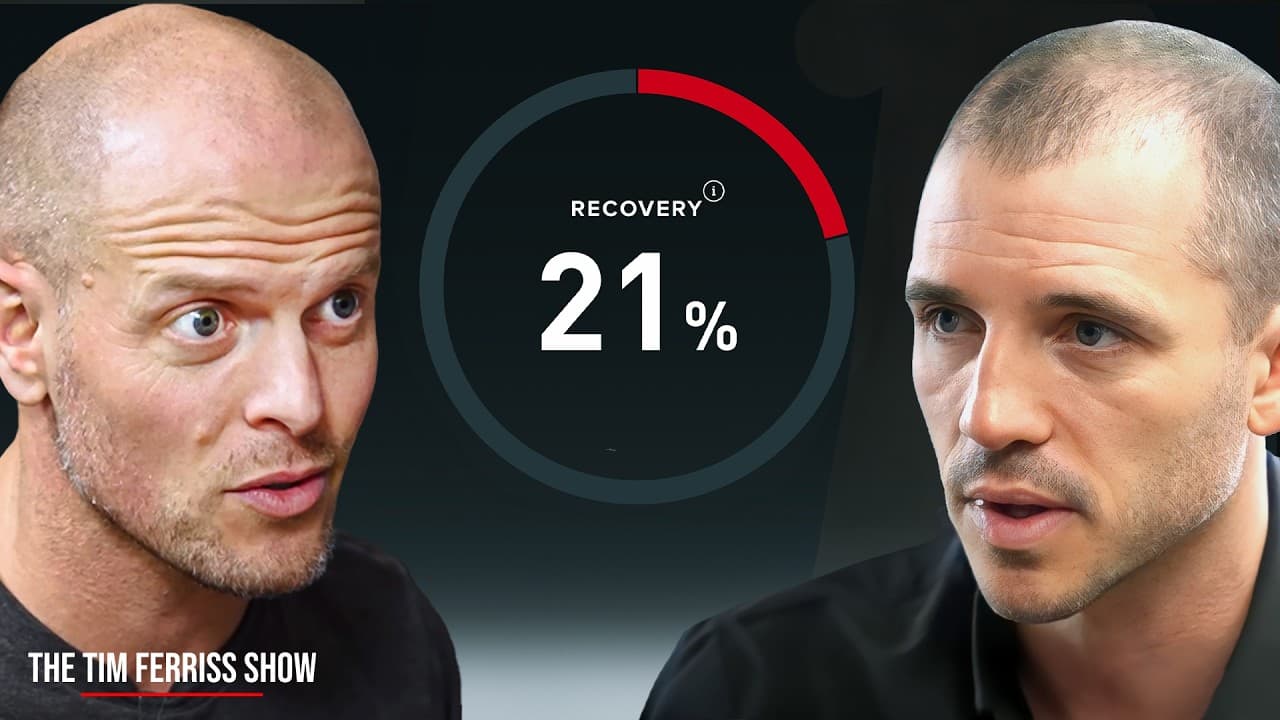
Why You Shouldn't Trust Your Sleep Tracker Score
TL;DR
Sleep tracker scores are often unreliable because they rely on subjective grading and outdated definitions of sleep stages. Instead of focusing on these scores, prioritize overall sleep quality by monitoring indicators like heart rate variability and how you feel upon waking. Remember that sleep patterns can differ based on daily activities and goals, and consistent quality rest is more valuable than aiming for perfect scores.
Transcript
I would caution you against two major things here one worrying about as sleep score yeah do not pay attention to that right that is in part almost all those are calibrated against polysomnography and that is somewhat arbitrary right even in 2007 they actually changed I think it's like the American sleep Society or something yeah changed their defin... Read More
Key Insights
- 😪 Sleep scores provided by trackers should not be relied upon as accurate measures of sleep quality.
- 😪 Sleep stages can vary depending on activities and goals, so it's not necessary to aim for the same sleep stages every night.
- 😪 Assessing sleep quality using indicators such as heart rate variability and how you feel upon waking up can provide a better understanding of overall sleep quality.
- 😪 Perception of sleep can impact performance, so it's important to be cautious with how you interpret sleep scores and avoid using them to anticipate waking up or adjust your sleep patterns.
- 😪 Napping can be beneficial for some people, but it should not reduce sleep pressure or negatively impact sleep latency.
- 😪 Focusing on sleep quality, timing of activities, and implementing down-regulation practices can help improve sleep without increasing duration.
- 😪 Caffeine can be detrimental to sleep quality, and its effects vary among individuals, so it is advisable to limit or eliminate caffeine intake.
- 🎙️ More videos with Andy Galpin:
Install to Summarize YouTube Videos and Get Transcripts
Explore YouTube Video Summarizer or Get YouTube Transcript Extractor
Questions & Answers
Q: Should I rely on sleep scores provided by sleep trackers?
Sleep scores provided by sleep trackers are not reliable measurements of sleep quality, as they are calibrated against outdated definitions of sleep stages and based on subjective grading.
Q: How can I assess my sleep quality without relying on sleep scores?
You can assess your sleep quality by paying attention to indicators such as heart rate variability, respiratory rate, how you feel upon waking up, and whether you had a hard time sleeping or woke up frequently during the night.
Q: Do sleep stages need to be the same every night?
No, sleep stages can vary depending on your activities and goals. It doesn't make sense to expect the same sleep stages every night, just as you wouldn't expect your muscles or nutrition to be the same every day.
Q: Can the perception of sleep affect performance?
Yes, the perception of sleep can affect performance. Studies have shown that if you believe you had poor sleep, even if you actually slept well, your performance can still be affected. This phenomenon is known as orthosomnia, where sleep tracker scores can induce insomnia.
Summary & Key Takeaways
-
Sleep scores and trackers are not accurate indicators of sleep quality, as they are based on subjective grading and outdated definitions of sleep stages.
-
Different activities and goals require different sleep patterns, so it doesn't make sense to expect the same sleep stages every night.
-
Pay attention to other indicators of sleep quality, such as heart rate variability, respiratory rate, and how you feel upon waking up.
Read in Other Languages (beta)
Share This Summary 📚
Summarize YouTube Videos and Get Video Transcripts with 1-Click
Try YouTube Summary with ChatGPT & Claude or YouTube Transcript Generator
Explore More Summaries from Tim Ferriss 📚





Summarize YouTube Videos and Get Video Transcripts with 1-Click
Try YouTube Summary with ChatGPT & Claude or YouTube Transcript Generator