WWII Factions: The British Army
TL;DR
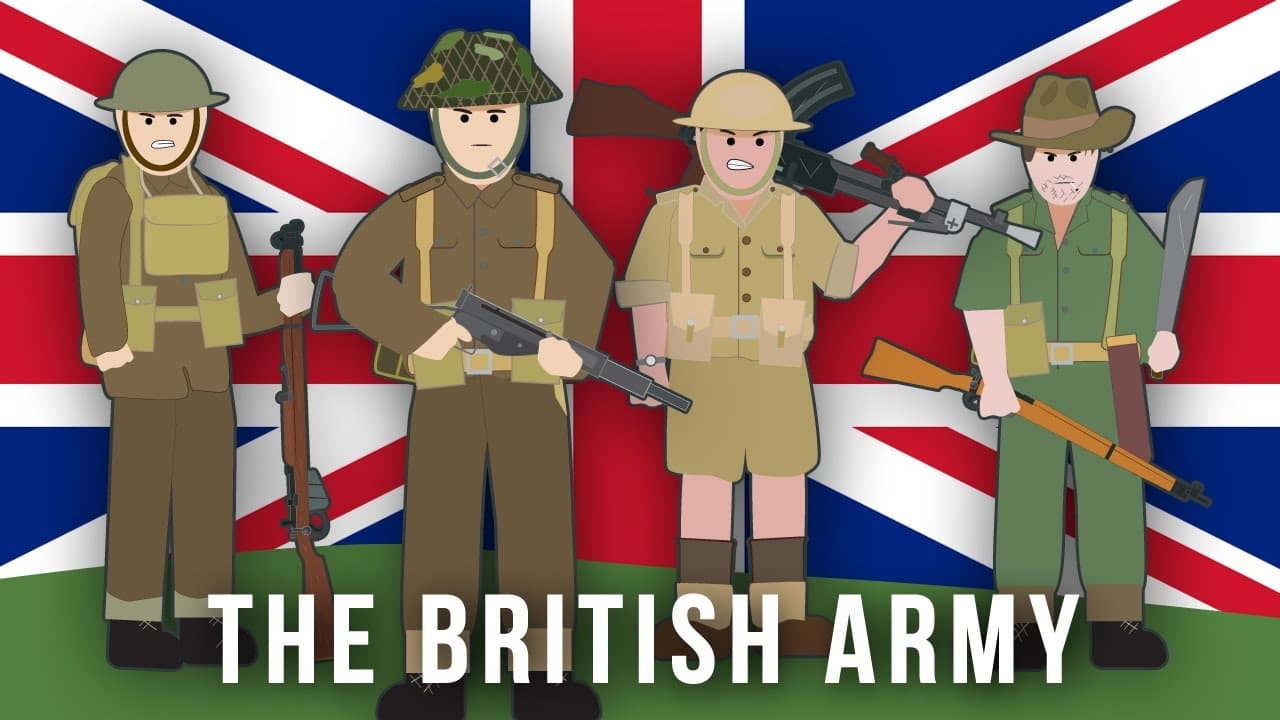
The British Army in World War Two had a small professional army before the war, but with the threat of Nazi Germany, conscription was introduced and the army fought in various theaters, eventually achieving victory.
Transcript
Faction the British Army World War Two. Before the War had started, Britain had a small professional army Sacrificing manpower for superior mobility and technology over the enemy there was also a territorial army which was poorly trained and supplied. Such doctrine came about from the memory of the first world war and the massive loss of life of Br... Read More
Key Insights
- 🛩️ The British Army had a small professional army, prioritizing mobility and technology.
- 📞 The Royal Navy received more defense budget due to its perceived importance.
- ❓ The Dunkirk evacuation was a significant event where the army had to abandon much of its equipment.
- 🧑🚒 The British Army fought in various theaters, including the Mediterranean, Middle East, and Burma.
- 💋 Victories in the Tunisian campaign, Sicily, and Italy marked the mid-war success for the British Army.
- 🥳 The army participated in the D-Day invasion under General Bernard Montgomery's leadership.
- 🇩🇪 British forces pushed into Germany and helped in the surrender of Northwest Germany.
Install to Summarize YouTube Videos and Get Transcripts
Explore YouTube Video Summarizer or Get YouTube Transcript Extractor
Questions & Answers
Q: Why did the British Army have a small professional army before World War Two?
The British Army had a small professional army due to the memory of the massive loss of life in the First World War. They valued mobility and technology over sheer manpower.
Q: Why did the Royal Navy receive a larger defense budget than the army?
The Royal Navy was considered the first line of defense and was seen as more important than the army. As a result, it received a larger share of the defense budget.
Q: What happened during the Dunkirk evacuation?
The British Expeditionary Force was forced to retreat to Dunkirk due to the rapid German advancement. Operation Dynamo successfully evacuated over 330,000 troops, but they had to leave behind most of their weapons and equipment.
Q: Where did the British Army fight besides France and Dunkirk?
The British Army fought in the Mediterranean and Middle East theaters, as well as the Burma campaign. They achieved victories in the Tunisian campaign, invasions of Sicily and Italy, and played a significant role in D-Day.
Summary & Key Takeaways
-
Before the war, Britain had a small professional army focused on mobility and technology.
-
The Royal Navy was considered more important than the army and received a larger defense budget.
-
The British Army fought in France, Dunkirk evacuation, Mediterranean and Middle East theaters, D-Day, and East Asia.
Read in Other Languages (beta)
Share This Summary 📚
Summarize YouTube Videos and Get Video Transcripts with 1-Click
Try YouTube Summary with ChatGPT & Claude or YouTube Transcript Generator
Explore More Summaries from Simple History 📚


Summarize YouTube Videos and Get Video Transcripts with 1-Click
Try YouTube Summary with ChatGPT & Claude or YouTube Transcript Generator