How to Build Strong, Sculpted Legs
TL;DR
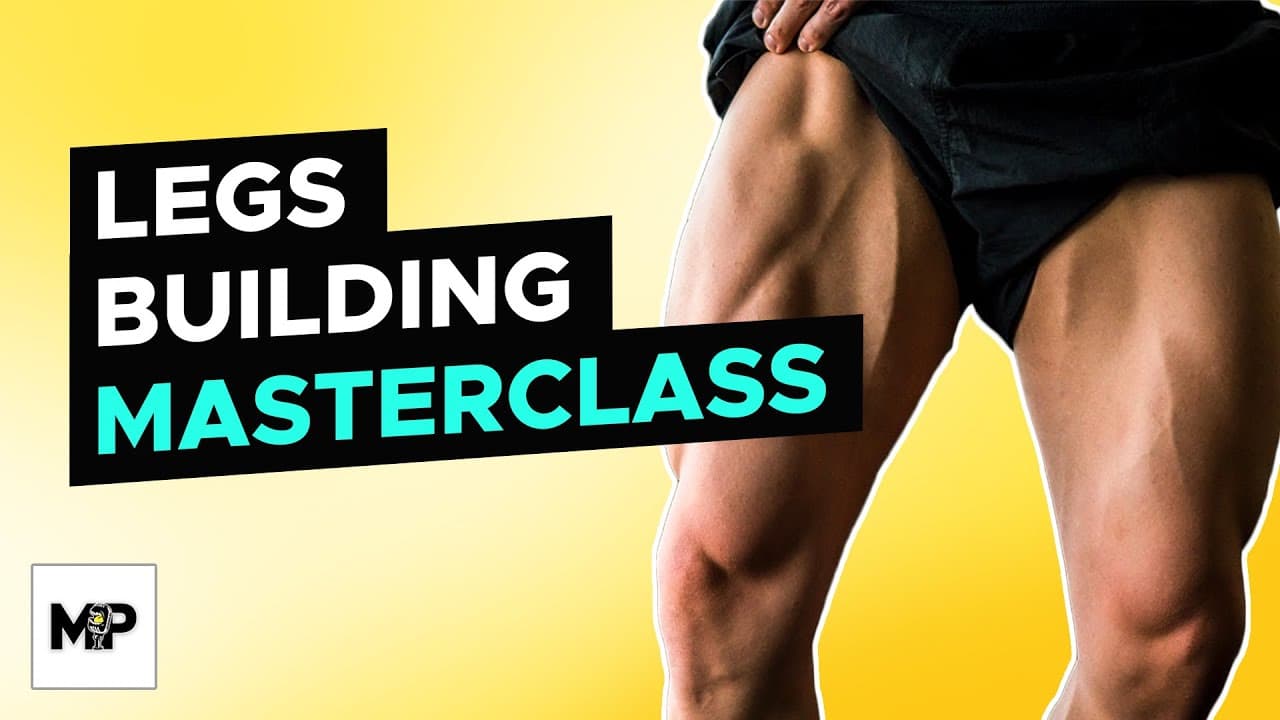
The key to developing strong legs lies in understanding and effectively training the quads and hamstrings. Exercises like barbell squats and deadlifts are essential for building muscle and enhancing athletic performance. Proper form, skill acquisition, and a balanced approach to volume and intensity are crucial for maximizing leg strength and aesthetics.
Transcript
foreign today we're going to talk about developing the muscles of the upper legs specifically the quads and the hamstrings very big muscles very important muscles for lots of different reasons today we're going to talk about their function we're going to talk about best exercises we're going to talk about reps sets all that great stuff if you're lo... Read More
Key Insights
- Strong legs are crucial for athletic performance and can prevent back pain.
- Squats are the king of leg exercises, benefiting both quads and hamstrings.
- Lunges and Bulgarian split squats are excellent for functional leg strength.
- Deadlifts and good mornings are top exercises for hamstring development.
- Leg training should include a mix of compound and isolation exercises.
- Volume should be balanced with exercise intensity for optimal results.
- Skill acquisition and maintenance are vital for effective leg exercises.
- Training frequency should prioritize practice over sheer volume for better outcomes.
Install to Summarize YouTube Videos and Get Transcripts
Explore YouTube Video Summarizer or Get YouTube Transcript Extractor
Questions & Answers
Q: How to build strong leg muscles effectively?
Building strong leg muscles effectively requires a combination of compound exercises like barbell squats and deadlifts, which target multiple muscle groups. Incorporating exercises such as lunges and Bulgarian split squats can enhance functional strength. Focus on proper form, skill acquisition, and balance your training volume with intensity for optimal results.
Q: What are the best exercises for the quads?
The best exercises for the quads include barbell squats, which are highly effective for overall leg development. Other valuable exercises are lunges, Bulgarian split squats, and sissy squats, which target the quads with varying degrees of intensity and skill requirements. Leg extensions can be used as an isolation exercise to complement compound movements.
Q: Why are strong legs important for athletic performance?
Strong legs are crucial for athletic performance as they generate the power needed for explosive movements like jumping, sprinting, and changing direction. Well-developed leg muscles also support the body's overall function, contribute to balance and stability, and reduce the risk of injuries, particularly in the lower back and knees.
Q: How does leg strength impact back health?
Leg strength significantly impacts back health because strong leg muscles reduce the load on the lower back during activities like lifting or bending. Weak legs often lead to overcompensation by the lower back, increasing the risk of pain and injury. Exercises like squats and deadlifts help build leg strength and support spinal health.
Q: What is the role of hamstrings in leg training?
The hamstrings play a vital role in leg training as they are responsible for knee flexion and hip extension. Effective hamstring exercises include deadlifts, good mornings, and leg curls. Balanced hamstring development is essential for preventing injuries, particularly in athletes, and contributes to overall leg aesthetics and strength.
Q: How should training volume be managed for leg exercises?
Training volume for leg exercises should be managed by focusing on compound movements for the majority of sets, typically 9 to 12 sets per week. Additional volume can be added with isolation exercises if recovery allows. The goal is to find the optimal volume that yields the best results without overtraining or risking injury.
Q: What are common mistakes in leg training?
Common mistakes in leg training include neglecting essential exercises like squats, focusing too much on isolation movements, and not treating exercises as skills to be mastered. Other errors involve imbalanced training between quads and hamstrings and not varying rep ranges to stimulate different muscle fibers effectively.
Q: Why is frequent practice important in leg training?
Frequent practice in leg training is important because it allows for better skill acquisition and maintenance, leading to improved exercise form and efficiency. By spreading out sets across multiple sessions, trainees can reduce fatigue-related form breakdowns and enhance overall muscle development and strength gains.
Summary & Key Takeaways
-
Strong and well-developed legs are essential for athletic performance and preventing back pain. Key exercises include barbell squats, lunges, and deadlifts, which target both quads and hamstrings. Proper form and skill acquisition are crucial for effectiveness.
-
Training volume should be balanced with intensity, focusing on compound exercises for the majority of sets. Isolation exercises like leg extensions can complement the routine, but the foundation should be built on squats and deadlifts.
-
Frequent practice of leg exercises, rather than high volume in single sessions, leads to better results. This approach allows for skill development and reduces the risk of fatigue impacting exercise form.
Read in Other Languages (beta)
Share This Summary 📚
Summarize YouTube Videos and Get Video Transcripts with 1-Click
Try YouTube Summary with ChatGPT & Claude or YouTube Transcript Generator
Explore More Summaries from Mind Pump Show 📚





Summarize YouTube Videos and Get Video Transcripts with 1-Click
Try YouTube Summary with ChatGPT & Claude or YouTube Transcript Generator