Time value of money | Interest and debt | Finance & Capital Markets | Khan Academy
TL;DR
The time value of money refers to the concept that the timing of when you receive or give money can impact its value.
Transcript
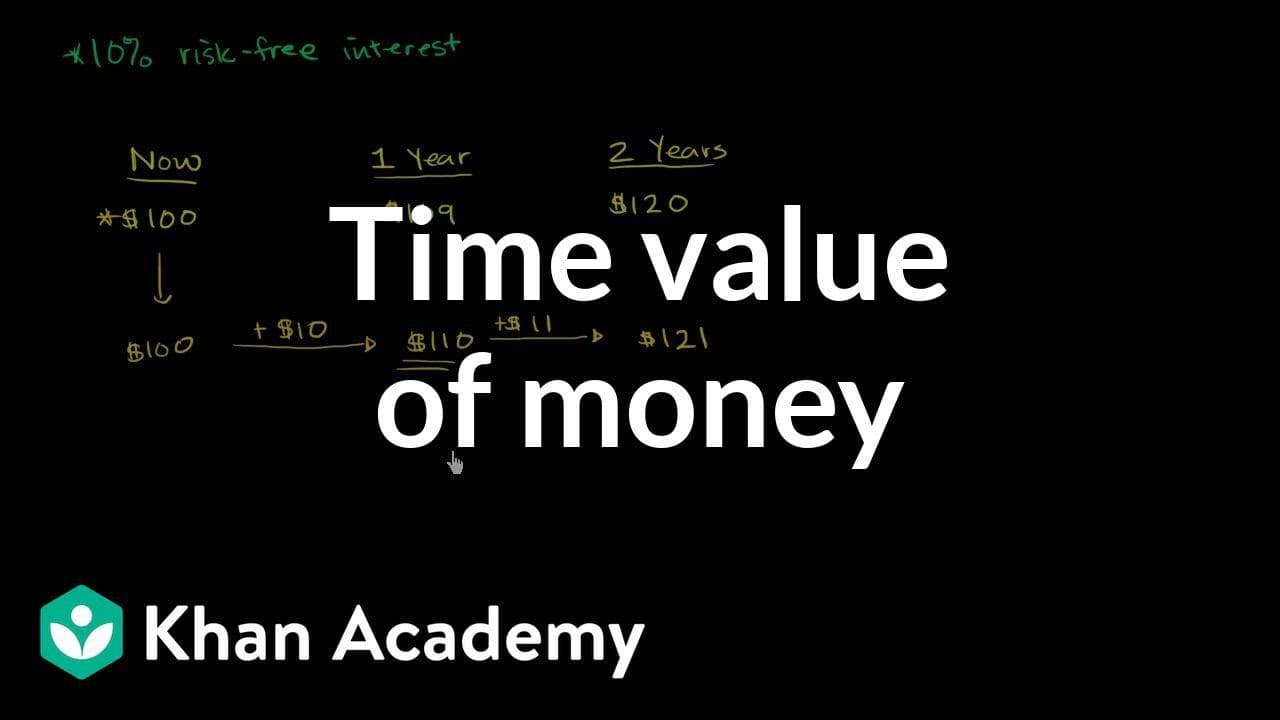
Narrator: Whenever we talk about money, the amount of money is not the only thing that matters. What also matters is when you have to get or when you have to give the money. So, to think about this or to make it a little bit more concrete, let's assume that we live in a world that if you put money in a bank, you are guaranteed 10% interest, 10% ris... Read More
Key Insights
- 🤑 The time value of money takes into account both the amount and timing of money.
- 💵 Investing money in a bank at a risk-free interest rate can result in higher future value compared to receiving larger amounts later.
- 🍹 Present value represents the current worth of future sums, while future value calculates the value of investments or amounts over time.
Install to Summarize YouTube Videos and Get Transcripts
Explore YouTube Video Summarizer or Get YouTube Transcript Extractor
Questions & Answers
Q: What is the time value of money?
The time value of money refers to the idea that the timing of when money is received or given can affect its value. It takes into account the potential for earning interest or the opportunity cost of not investing the funds.
Q: How does the time value of money impact decision-making?
The time value of money affects decision-making by making individuals consider the opportunity cost of receiving money later rather than sooner. They need to evaluate whether the potential earnings from investing the money outweigh the immediate benefits of receiving a larger sum later.
Q: What are present value and future value?
Present value is the current worth of a future amount of money, considering a certain interest rate. Future value, on the other hand, calculates the value of an investment or an amount over a specific period in the future.
Q: How does interest rate impact the time value of money?
The interest rate plays a significant role in the time value of money. Higher interest rates can increase the future value of money and make receiving funds sooner more desirable, while lower interest rates may decrease the difference between present and future values.
Summary & Key Takeaways
-
Money's value is not solely determined by its amount, but also by when it is received or given.
-
An example scenario demonstrates that receiving $100 now and investing it at a 10% risk-free interest rate will yield better results than receiving larger amounts later.
-
The concepts of present value and future value are introduced, explaining how they relate to the time value of money.
Read in Other Languages (beta)
Share This Summary 📚
Summarize YouTube Videos and Get Video Transcripts with 1-Click
Try YouTube Summary with ChatGPT & Claude or YouTube Transcript Generator
Explore More Summaries from Khan Academy 📚



Summarize YouTube Videos and Get Video Transcripts with 1-Click
Try YouTube Summary with ChatGPT & Claude or YouTube Transcript Generator