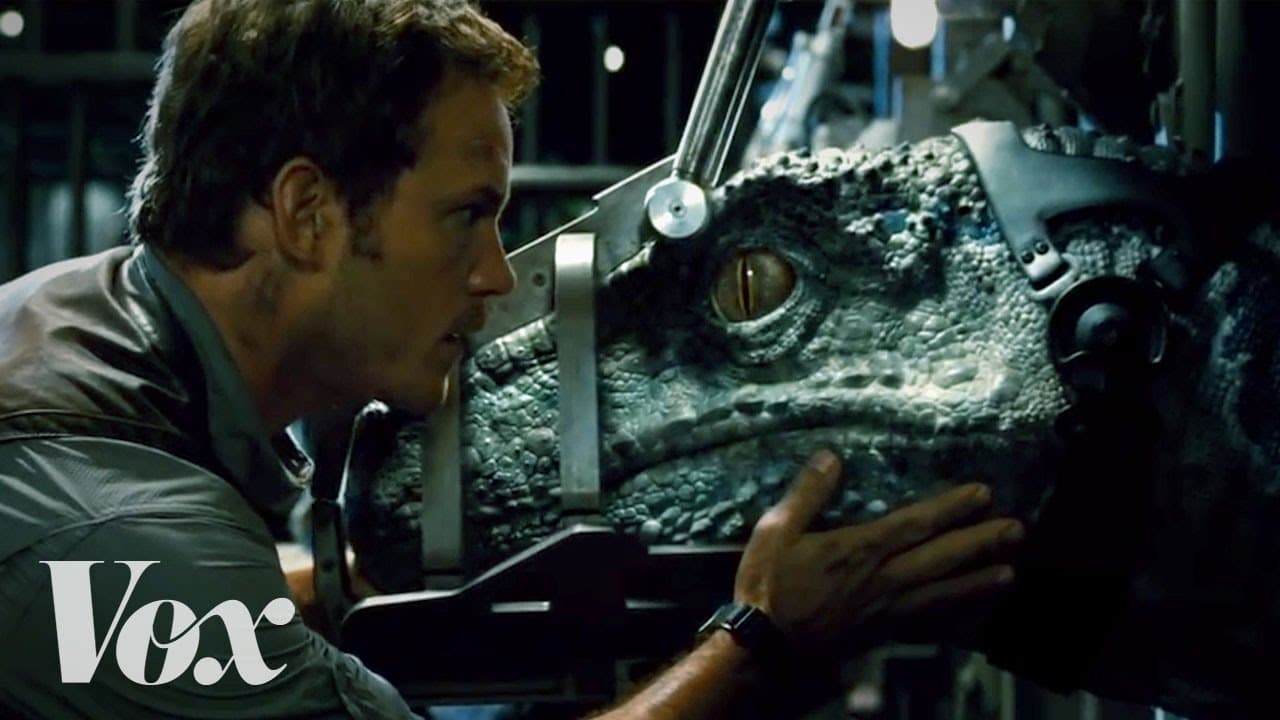
Jurassic Park was ahead of its time. Jurassic World is not.
TL;DR
Jurassic Park was groundbreaking, but Jurassic World lags behind scientific advances.
Transcript
When Jurassic Park first came out in 1993, it was a pretty groundbreaking depiction of dinosaurs. Steven Spielberg certainly took plenty of artistic liberties, but overall, the movie was so much better than what had come before, in terms of recreating what scientists knew about how dinosaurs looked and how they moved. The character Alan Grant was a... Read More
Key Insights
- Jurassic Park was revolutionary for its time, accurately depicting dinosaurs based on 1993 scientific knowledge, despite some artistic liberties.
- The character Alan Grant highlighted the then-controversial idea that birds evolved from dinosaurs, a now widely accepted theory.
- Since the late 1990s, paleontological discoveries, such as feathered dinosaurs, have advanced significantly, outpacing the Jurassic Park films.
- The discovery of Sinosauropteryx in China marked the first feathered dinosaur, revealing that some dinosaurs had primitive feathers.
- Feathered dinosaurs, mostly two-legged meat eaters, are closely related to birds and include many dinosaurs featured in Jurassic Park.
- Research indicates that raptors likely had wings, as evidenced by fossilized bumps similar to modern bird wing attachments.
- Yutyrannus, a large feathered dinosaur related to T-Rex, suggests that the iconic T-Rex might have had feathers.
- Jurassic World chose not to depict feathered dinosaurs to maintain consistency with earlier films, despite new scientific evidence.
Install to Summarize YouTube Videos and Get Transcripts
Explore YouTube Video Summarizer or Get YouTube Transcript Extractor
Questions & Answers
Q: Why was Jurassic Park considered groundbreaking when it was released?
Jurassic Park was groundbreaking upon its release in 1993 due to its depiction of dinosaurs based on the scientific understanding of the time. The film used state-of-the-art special effects and animatronics to bring these creatures to life, reflecting accurate details about their appearance and movements. It also introduced the then-controversial idea that birds evolved from dinosaurs, which is now widely accepted.
Q: What significant paleontological discovery occurred in the late 1990s?
In the late 1990s, a significant paleontological discovery was made in China with the unearthing of Sinosauropteryx, the first feathered dinosaur. This discovery provided evidence that some dinosaurs had primitive feathers, challenging previous assumptions about their appearance and suggesting a closer evolutionary relationship between dinosaurs and birds. This finding has since been supported by numerous other feathered dinosaur discoveries.
Q: How did the discovery of feathered dinosaurs impact our understanding of their evolution?
The discovery of feathered dinosaurs has significantly impacted our understanding of their evolution, revealing that many dinosaurs were more bird-like than previously thought. These findings suggest that feathers were common among theropods, a group closely related to birds, and may have been used for insulation, display, or even flight. This has led to a reevaluation of the dinosaur family tree and the evolutionary link between dinosaurs and modern birds.
Q: Why did Jurassic World not include feathered dinosaurs?
Jurassic World did not include feathered dinosaurs primarily for the sake of consistency with earlier films. According to Jack Horner, a paleontologist who worked on the films, the decision was made to maintain the established visual style of the franchise. Additionally, there may have been concerns about the challenge of making feathered dinosaurs appear menacing, as feathers are not traditionally associated with fearsome creatures.
Q: What evidence suggests that raptors had wings?
Evidence suggesting that raptors had wings comes from fossilized bumps found on the forearms of velociraptor fossils, similar to the wing attachments seen in modern birds. These bumps indicate that raptors likely had feathers and wings, supporting the idea that they were more bird-like than previously depicted. This aligns with the broader understanding of the evolutionary connection between theropod dinosaurs and birds.
Q: What is the significance of the Yutyrannus discovery?
The discovery of Yutyrannus, a large feathered dinosaur closely related to T-Rex, is significant because it suggests that even some of the largest and most iconic dinosaurs may have had feathers. This challenges the traditional image of dinosaurs as solely scaly reptiles and supports the idea that feathers were more widespread among dinosaurs than previously thought. It also raises the possibility that T-Rex itself might have been feathered.
Q: How have recent discoveries changed the depiction of dinosaurs in media?
Recent discoveries of feathered dinosaurs have challenged traditional depictions of these creatures in media, prompting a shift towards more scientifically accurate portrayals. While earlier films like Jurassic Park focused on scaly, reptilian dinosaurs, new evidence suggests that many were feathered and more bird-like. This has led to a reevaluation of how dinosaurs are represented in documentaries, films, and other media, though some franchises, like Jurassic World, have resisted these changes for consistency.
Q: What role did volcanic eruptions play in the preservation of feathered dinosaur fossils?
Volcanic eruptions played a crucial role in the preservation of feathered dinosaur fossils by creating the perfect conditions for fossilization. In Liaoning Province, China, major volcanic eruptions around 120 million years ago buried animals quickly in fine-grained sediment, preserving soft tissues like feathers. This has allowed paleontologists to uncover detailed evidence of feathered dinosaurs, significantly advancing our understanding of their appearance and evolution.
Summary & Key Takeaways
-
Jurassic Park, released in 1993, was groundbreaking for its portrayal of dinosaurs, reflecting the scientific understanding of the time. The film suggested that birds evolved from dinosaurs, a theory now widely accepted. However, scientific advancements since then have outpaced the films, with discoveries of feathered dinosaurs that challenge earlier depictions.
-
The discovery of Sinosauropteryx in China in the late 1990s marked a significant step in paleontology, revealing that some dinosaurs had primitive feathers. These findings, along with others, suggest that many dinosaurs, including those featured in Jurassic Park, were more bird-like than previously thought, with feathers for insulation or decoration.
-
Despite these scientific advancements, the Jurassic World films have not incorporated feathered dinosaurs, opting for consistency with earlier movies. This decision, influenced by paleontologist Jack Horner, highlights the challenge of balancing scientific accuracy with cinematic appeal, as feathers are not traditionally seen as menacing.
Read in Other Languages (beta)
Share This Summary 📚
Summarize YouTube Videos and Get Video Transcripts with 1-Click
Try YouTube Summary with ChatGPT & Claude or YouTube Transcript Generator
Explore More Summaries from Vox 📚




Summarize YouTube Videos and Get Video Transcripts with 1-Click
Try YouTube Summary with ChatGPT & Claude or YouTube Transcript Generator