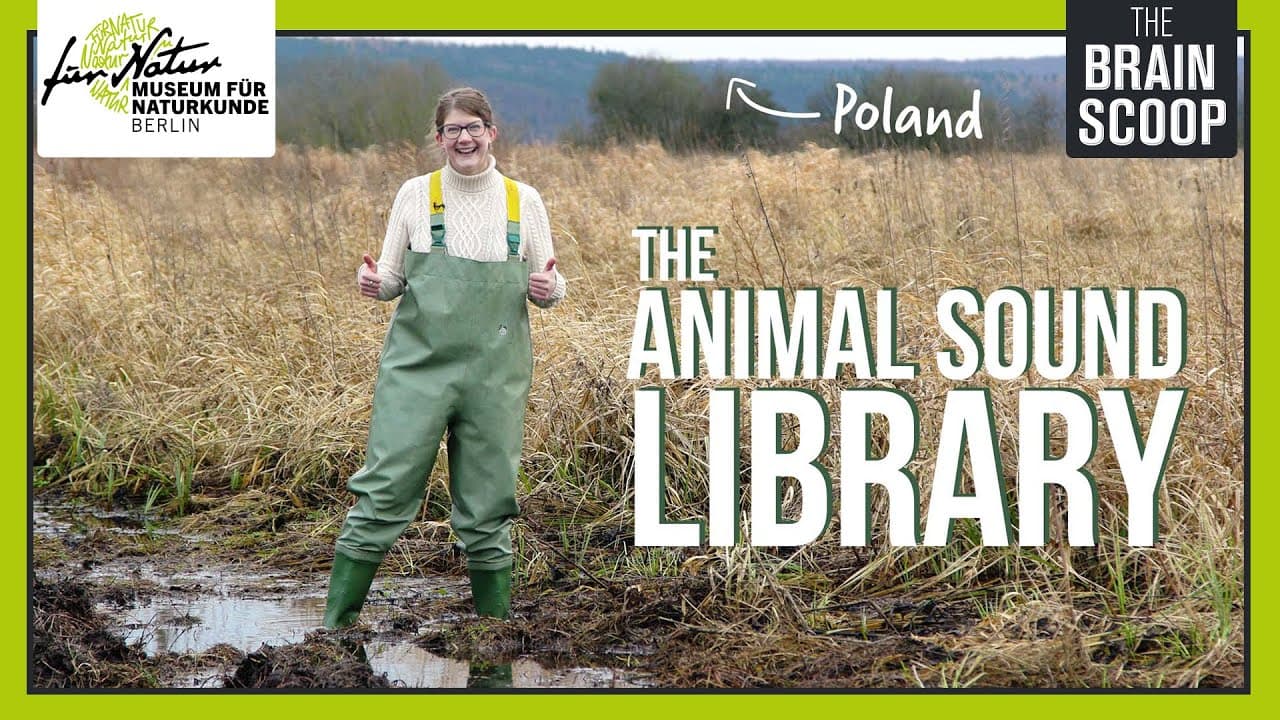
The Animal Sound Library
TL;DR
Scientists collect field recordings in wetlands to study animal behavior and biodiversity, using advanced recording technology and analysis methods.
Transcript
This episode is brought to you by the Field Museum in Chicago, Illinois and the Museum für Naturkunde in Berlin, Germany. Hey, we are here in the National Park Unteres Odertal, and Poland is right there! We can see it! Also, my feet are freezing. Let's go! People have been cultivating grain and farming cattle in the Oder Valley for more than seven ... Read More
Key Insights
- 🤑 The Lower Oder Valley National Park has a rich history of agricultural practices and industrialization, which have transformed the landscape.
- 🧑🤝🧑 The Museum für Naturkunde in Berlin holds a vast collection of animal sound recordings, dating back to 1951.
- 👨🔬 Field recordings and bioacoustic monitoring provide valuable data for biodiversity research and conservation efforts.
- 🦻 Advanced technology, such as digital recorders and pattern recognition algorithms, aid in the collection and analysis of field recordings.
- 👻 The digitization of tape recordings allows for easier preservation and accessibility of the animal sound archive.
- 👂 Citizen science projects, like Nightingale City Berlin, collaborate with the animal sound library to engage the public in monitoring and analyzing animal sounds.
- 🏑 Analysis of field recordings in wetland environments helps identify the presence and behavior of rare or endangered species.
Install to Summarize YouTube Videos and Get Transcripts
Explore YouTube Video Summarizer or Get YouTube Transcript Extractor
Questions & Answers
Q: How has the establishment of the Lower Oder Valley National Park affected the region?
The park has protected the area from agriculture and industrialization, allowing the ecosystem to develop naturally and preserving biodiversity.
Q: How do scientists collect field recordings in wetlands?
Scientists use specialized equipment, such as digital recorders, to capture animal sounds. Some recording devices can record up to 48 hours of continuous sound.
Q: What is the purpose of bioacoustic monitoring in wetland environments?
Bioacoustic monitoring helps scientists understand the presence and behavior of animal species, particularly rare or endangered ones. It also provides valuable data for biodiversity research and conservation efforts.
Q: How do scientists analyze the vast amount of information from field recordings?
Analyzing the recordings is a challenge, and scientists currently rely on both manual listening and automated algorithms for analysis. They are continuously working on improving these algorithms to accurately identify species compositions.
Summary & Key Takeaways
-
The Lower Oder Valley National Park in Germany has been protected since 1995, allowing the ecosystem to develop naturally after decades of industrialization and agricultural practices.
-
The Museum für Naturkunde in Berlin has established an animal sound archive, containing over 120,000 recordings made by scientists over the last seventy years.
-
Scientists use field recordings and advanced technology to monitor and analyze animal sounds in wetland environments, providing valuable data on biodiversity and species compositions.
Read in Other Languages (beta)
Share This Summary 📚
Summarize YouTube Videos and Get Video Transcripts with 1-Click
Try YouTube Summary with ChatGPT & Claude or YouTube Transcript Generator
Explore More Summaries from thebrainscoop 📚


Summarize YouTube Videos and Get Video Transcripts with 1-Click
Try YouTube Summary with ChatGPT & Claude or YouTube Transcript Generator