Fujifilm X100VI vs Ricoh GR III: Which Camera Should You Buy?
TL;DR
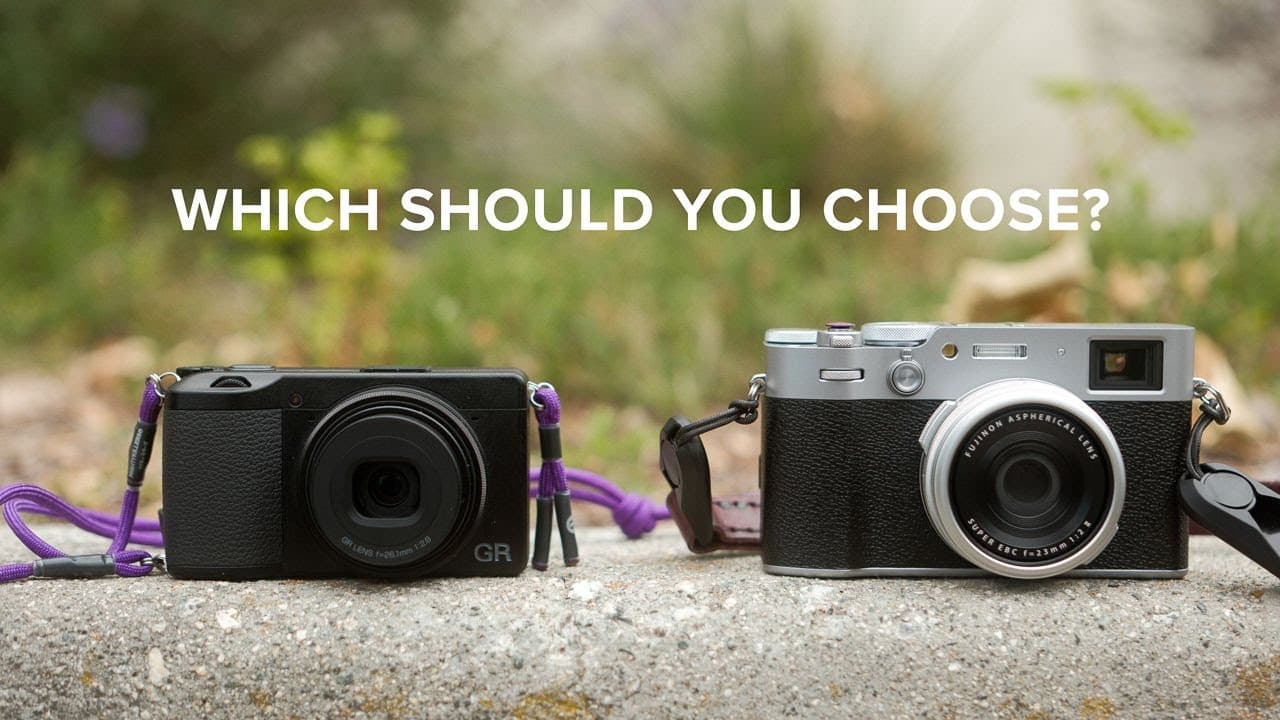
The Fujifilm X100VI is ideal for hybrid photographers seeking advanced features like video capability and tactile controls, while the Ricoh GR III excels in portability and discreet street photography. Choose the X100VI for a classic feel with built-in ND filter and flash versatility, or the Ricoh for sharp images in a compact, easy-to-carry design.
Transcript
(upbeat music) - The Ricoh III, the Fujifilm X100VI. (upbeat music) Both of these cameras are fixed focal length, they have JPEG film simulations, and they're fairly compact. These cameras are both super popular, and because of all these commonalities, they actually get compared quite a bit. I actually think these cameras are very different, and ar... Read More
Key Insights
- 🎮 The Fujifilm X100VI is ideal for hybrid photographers who need both photo and video capabilities along with enhanced ergonomics.
- 🧍 The Ricoh GR III stands out for its portability, easily fitting in pockets, which suits photographers needing discretion or casual shooting.
- 🔦 The X100VI offers a rich set of features including an ND filter and flash compatibility, appealing to event and low-light photographers.
- ❤️🩹 The Ricoh GR III's lens sharpness rivals that of high-end Fujifilm lenses, making it a top choice for those prioritizing image fidelity.
- 🗺️ Both cameras serve distinct niches, with the X100VI excellent for those who want a classic feel and the Ricoh appealing to street and travel photographers.
- 😄 The increasing popularity of the Ricoh GR III is driven by its ease of use and versatile focal lengths for varied photography styles.
- 🧑🏭 Availability is a critical factor when choosing between these cameras, notably with the X100VI being harder to find at present.
Install to Summarize YouTube Videos and Get Transcripts
Explore YouTube Video Summarizer or Get YouTube Transcript Extractor
Questions & Answers
Q: What are the main differences between the Fujifilm X100VI and the Ricoh GR III?
The primary differences lie in their functionalities and ergonomics. The X100VI is better suited for video, with features like a built-in ND filter and tactile dials as opposed to the minimalistic design of the Ricoh GR III, which prioritizes portability and sharpness in photography.
Q: Why might someone prefer the Fujifilm X100VI for their photography needs?
The Fujifilm X100VI offers ergonomic control with dedicated dials, a built-in viewfinder, and flash capabilities that allow for high-speed photography. It integrates video functions and has appealing film simulations, making it versatile for both stills and photography.
Q: How does the portability of the Ricoh GR III compare to the X100VI?
The Ricoh GR III is highly portable, easily fitting into pockets, which suits photographers who prefer to carry a camera without bulk. In contrast, the X100VI, while compact, is bulkier and doesn’t fit comfortably in standard pockets, making it less convenient for everyday carrying.
Q: What kind of photography is best suited for the Ricoh GR III?
The Ricoh GR III is tailored for candid and street photography due to its small size, low-profile design, and sharp lens. Its 28mm equivalent focal length allows for wide capture and intimate close-ups, making it versatile for various everyday scenes.
Q: Can you explain the flash capabilities of the X100VI?
The X100VI offers advanced flash features, including a leaf shutter that allows high-speed sync with the built-in or external flash. This lets photographers control ambient light exposure without an ND filter, enhancing versatility for flash photography.
Q: Are there any significant availability issues with these cameras?
Yes, the Fujifilm X100VI currently faces significant availability challenges and long wait times for pre-orders. In comparison, the Ricoh GR III is more accessible and generally easier to locate in stores, appealing to those looking for a quick purchase.
Q: How do image qualities compare between the two cameras?
The Ricoh GR III is known for producing exquisite sharp images, often sharper than the X100VI. The latter, however, benefits from its film simulations, creating beautiful JPEGs that appeal to photographers who prefer a certain aesthetic in their images.
Q: Why is tactile control important for photographers?
Tactile control enhances the user experience by allowing photographers to adjust exposure settings without diving into menus, leading to faster reactions in dynamic shooting situations. For many, this makes the process of photography more intuitive and enjoyable, as seen with the X100VI’s design.
Summary & Key Takeaways
-
The Fujifilm X100VI and Ricoh GR III are popular fixed lens cameras, each designed for different user needs and preferences. The X100VI excels in video and tactile controls, while the Ricoh emphasizes portability and minimalism.
-
The X100VI features a built-in ND filter, flash versatility, and an ergonomic design, making it ideal for those who prioritize high-quality ergonomics and video capabilities.
-
The Ricoh GR III, though compact and discreet, shines with its sharp images and portability, making it perfect for discreet street photography and casual use.
Read in Other Languages (beta)
Share This Summary 📚
Summarize YouTube Videos and Get Video Transcripts with 1-Click
Try YouTube Summary with ChatGPT & Claude or YouTube Transcript Generator
Explore More Summaries from Reggie Ballesteros 📚


Summarize YouTube Videos and Get Video Transcripts with 1-Click
Try YouTube Summary with ChatGPT & Claude or YouTube Transcript Generator