Are the "Extreme" Economic Systems Totally Pointless?
TL;DR
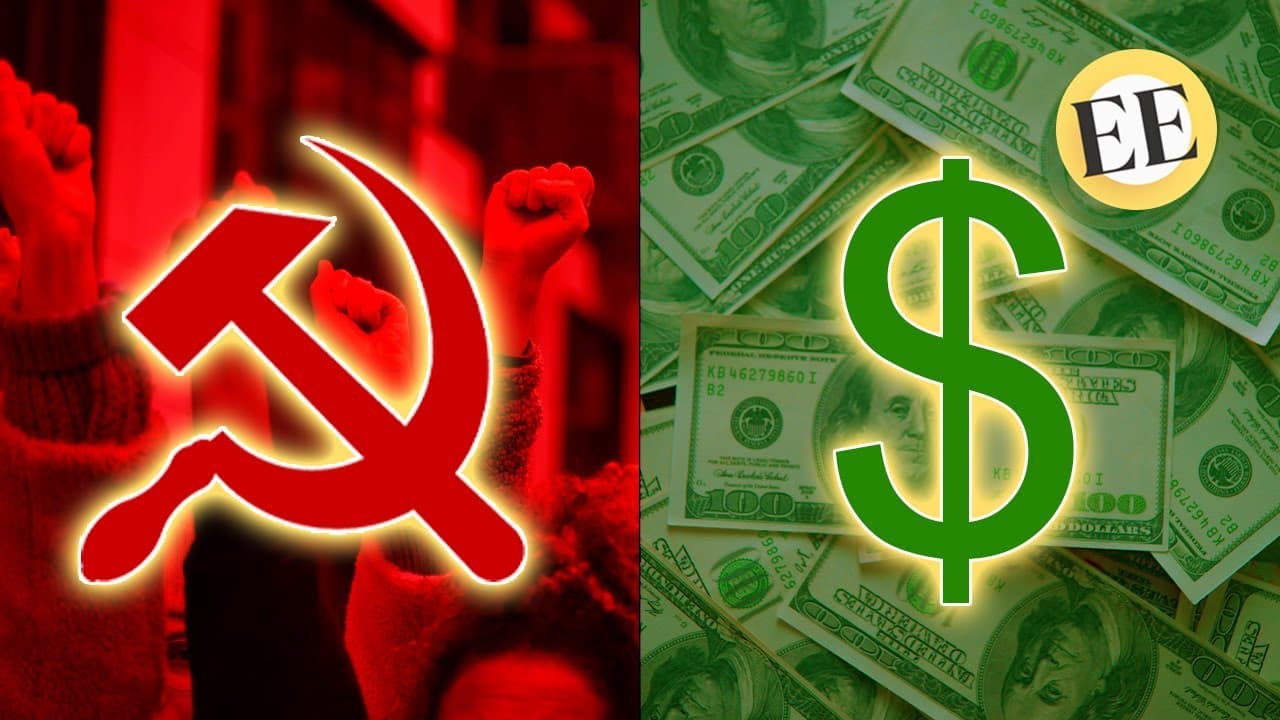
Communism and capitalism represent economic extremes with valuable insights.
Transcript
If we have chosen the position in life in which we can most of all work for mankind, no burdens can bow us down, because they are sacrifices for the benefit of all; then we shall experience no petty, limited, selfish joy, but our happiness will belong to millions, our deeds will live on quietly but perpetually at work, and over our ashes will be sh... Read More
Key Insights
- Karl Marx and Frederick Engels introduced communism as a system where work fulfills community needs, contrasting with laissez-faire capitalism which advocates minimal government intervention.
- Communism and laissez-faire capitalism are extreme economic theories that do not exist in pure form in modern economies but offer valuable insights.
- The central economic problem is the unlimited human desires versus limited resources, leading to questions about production and distribution.
- Communism seeks to distribute goods based on need, while capitalism relies on market forces to determine production and allocation.
- Worker motivation in communist systems can be driven by non-monetary benefits, but central planning often fails to respond to consumer demands effectively.
- Laissez-faire capitalism argues for minimal government interference, believing that the free market is the most efficient means of resource allocation.
- Anarcho-capitalism, the extreme form of capitalism, proposes a stateless society where markets govern all aspects of life, though it faces criticism for potential instability.
- Successful economies today balance government intervention and market freedom, avoiding the extremes of both communism and laissez-faire capitalism.
Install to Summarize YouTube Videos and Get Transcripts
Explore YouTube Video Summarizer or Get YouTube Transcript Extractor
Questions & Answers
Q: What is the main economic problem discussed in the content?
The main economic problem discussed is the conflict between unlimited human desires and limited resources. This dilemma raises critical questions about what to produce, how to produce it, and for whom it should be produced. The content explores how different economic systems, like communism and capitalism, attempt to address these questions.
Q: How does communism propose to solve the economic problem?
Communism proposes to solve the economic problem by distributing goods and services based on need rather than market forces. It emphasizes collective ownership of the means of production and aims to eliminate class distinctions by ensuring that resources are allocated according to individual needs, rather than wealth or status.
Q: What is laissez-faire capitalism and its core principle?
Laissez-faire capitalism is an economic system that advocates minimal government intervention in the economy. Its core principle is that the free market, driven by supply and demand, is the most efficient way to allocate resources. The system relies on individual decision-making and competition to drive economic growth and innovation.
Q: Why do pure forms of communism and laissez-faire capitalism not exist today?
Pure forms of communism and laissez-faire capitalism do not exist today because both systems have inherent limitations. Communism often struggles with effective resource allocation and worker motivation, while laissez-faire capitalism can lead to inequality and insufficient public goods. Modern economies typically incorporate elements of both systems to balance efficiency and equity.
Q: What role does worker motivation play in a communist system?
In a communist system, worker motivation is often driven by non-monetary benefits, such as social recognition and a sense of contributing to the greater good. While monetary incentives are minimized, the system relies on 'psychic profits' or intrinsic rewards to encourage productivity. However, this approach can be challenging to sustain without effective central planning.
Q: How do supply and demand affect economic systems?
Supply and demand are fundamental to determining prices and resource allocation in economic systems. In capitalist economies, they guide production decisions by signaling consumer preferences. In contrast, communist systems often lack these market signals, leading to potential mismatches in supply and demand, which can result in surpluses or shortages.
Q: What is anarcho-capitalism and its potential challenges?
Anarcho-capitalism is an extreme form of capitalism that advocates for a stateless society governed entirely by free markets. Its potential challenges include ensuring security and order without a centralized authority, as well as managing conflicts and cooperation in a system where individuals are entirely independent agents. Critics argue it could lead to instability and inequality.
Q: How do modern economies balance government intervention and market freedom?
Modern economies balance government intervention and market freedom by adopting a mixed approach that incorporates elements of both communism and capitalism. Governments provide public goods, regulate markets, and ensure social welfare, while allowing the private sector to drive innovation and efficiency. This balance seeks to optimize resource allocation and address social needs.
Summary & Key Takeaways
-
Karl Marx and Frederick Engels proposed communism as an economic system focused on fulfilling community needs rather than personal desires. This stands in contrast to laissez-faire capitalism, which advocates for minimal government intervention, allowing the free market to allocate resources efficiently.
-
Both communism and laissez-faire capitalism represent extreme economic theories that, while not existing in pure form today, offer valuable insights. The central economic problem involves balancing unlimited human desires with limited resources, leading to questions about what to produce, how to produce it, and for whom.
-
Communism aims to distribute goods based on need, with worker motivation driven by non-monetary benefits. However, central planning often fails to respond to consumer demands effectively. Conversely, laissez-faire capitalism relies on market forces for resource allocation, advocating minimal government interference.
Read in Other Languages (beta)
Share This Summary 📚
Summarize YouTube Videos and Get Video Transcripts with 1-Click
Try YouTube Summary with ChatGPT & Claude or YouTube Transcript Generator
Explore More Summaries from Economics Explained 📚




Summarize YouTube Videos and Get Video Transcripts with 1-Click
Try YouTube Summary with ChatGPT & Claude or YouTube Transcript Generator