How Do Plants Transport Water and Nutrients?
TL;DR
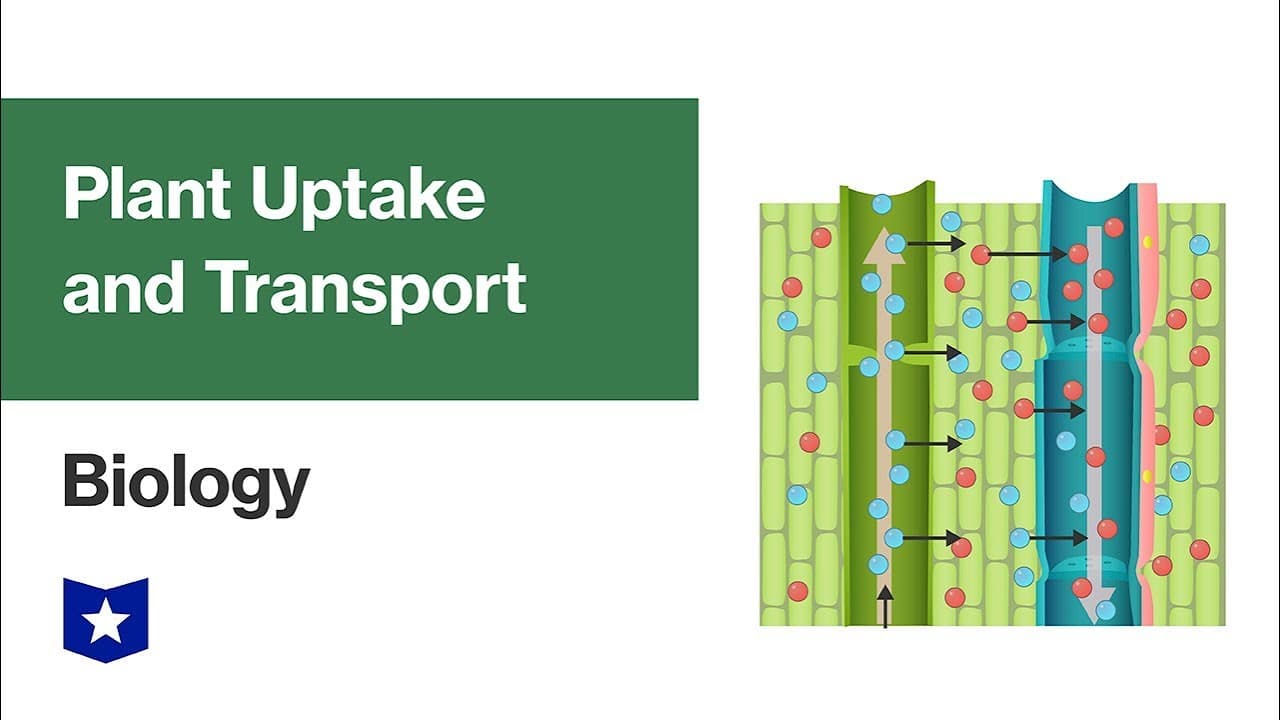
Plants transport water and nutrients through specialized tissues called xylem and phloem. Water is absorbed by roots and travels upwards via the transpiration cohesion tension model, while sugars produced in leaves are distributed to other parts of the plant through phloem. This efficient system is vital for their growth and overall functioning.
Transcript
like all species plants are subject to the mechanisms of evolution plants have evolved vascular tissues to help them transport materials among various structures and this has resulted in some very tall plants in fact plants include the tallest species on earth sequoia sempervirens commonly called the coast fredward can reach up to 379 feet in heigh... Read More
Key Insights
- 💦 Plants have evolved vascular tissues, including xylem and phloem, to transport water, minerals, and sugars.
- 🫚 Root hairs significantly increase the surface area of roots for efficient water and mineral absorption.
- 💦 The transpiration cohesion tension model explains how water moves against gravity through the xylem, driven by transpiration and cohesion between water molecules.
- 🥳 Phloem is responsible for transporting sugars synthesized in the leaves to other parts of the plant, such as the roots.
Install to Summarize YouTube Videos and Get Transcripts
Explore YouTube Video Summarizer or Get YouTube Transcript Extractor
Questions & Answers
Q: How do roots anchor plants and absorb water and minerals?
Roots anchor plants into the ground and absorb water and minerals near the tips. Root hairs greatly increase the surface area of the root for efficient absorption.
Q: How do plants transport water and minerals from the roots to the leaves?
Plants use xylem tubes to transport water and minerals. Water moves through the xylem via two pathways: apoplast and symplast, allowing it to reach different areas of the plant.
Q: How does the transpiration cohesion tension model explain water movement in plants?
The transpiration cohesion tension model states that water loss through transpiration creates negative pressure at the top of the plant, leading to tension. Cohesion between water molecules allows them to move up through the xylem, pulled by tension.
Q: How are sugars transported from the leaves to the roots in plants?
Sugars synthesized in the leaves during photosynthesis are transported through the phloem, a different vascular tissue. Phloem carries the sugars to their destination, such as the roots, where they are stored.
Summary & Key Takeaways
-
Plants have evolved tall structures and vascular tissues, such as xylem and roots, to transport materials within their bodies.
-
Roots anchor plants into the ground and absorb water and minerals near the root tips.
-
Water and minerals are transported through xylem tubes to different parts of the plant, like the leaves.
-
The transpiration cohesion tension model explains how water moves against gravity through the xylem.
Read in Other Languages (beta)
Share This Summary 📚
Summarize YouTube Videos and Get Video Transcripts with 1-Click
Try YouTube Summary with ChatGPT & Claude or YouTube Transcript Generator
Explore More Summaries from Course Hero 📚


Summarize YouTube Videos and Get Video Transcripts with 1-Click
Try YouTube Summary with ChatGPT & Claude or YouTube Transcript Generator