Emergency medicine for our climate fever | Kelly Wanser
TL;DR
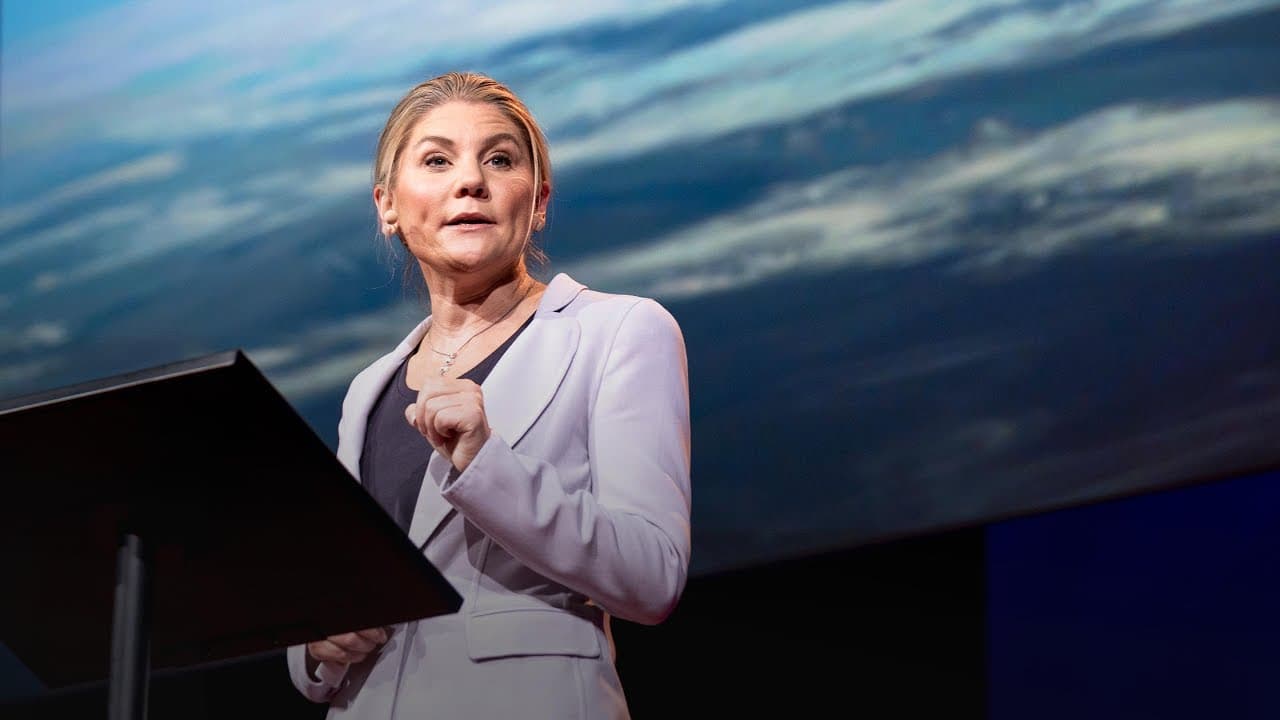
In this content, the speaker discusses the unintentional experiment on the climate due to new regulations on ship emissions and explores the potential of intentional interventions to cool the planet.
Transcript
I'm here to talk to you about something important that may be new to you. The governments of the world are about to conduct an unintentional experiment on our climate. In 2020, new rules will require ships to lower their sulfur emissions by scrubbing their dirty exhaust or switching to cleaner fuels. For human health, this is really good, but sulfu... Read More
Key Insights
- 🚢 Lowering sulfur emissions from ships in 2020 will have positive impacts on human health but may contribute to global warming as sulfur particles in ship exhaust have a cooling effect on clouds.
- 💡 Humans are unintentionally running two experiments on the climate: increasing greenhouse gas concentration and removing particles that cool the climate.
- 🌤️ Aerosols, such as sulfates from emissions, contribute to cooling the planet but we have uncertainty around their effect, making climate prediction difficult.
- 🌊 Marine cloud brightening, a technique that involves spraying sea-salt mist into clouds, may be a fast-acting way to reduce global warming.
- 🌋 Volcanic eruptions that release sulfates into the stratosphere have led scientists to consider controlled dispersal of particles as a possible way to mitigate global warming, although the risks are not yet fully understood.
- 🔬 Experimental research programs like SCoPEx and marine cloud brightening are proposing small-scale interventions to study the effects of introducing particles into the stratosphere or spraying saltwater into clouds.
- 💰 Funding for research and understanding the feasibility, risks, and impacts of these interventions is currently lacking, but urgent attention is needed to address climate change.
- 🌍 We need major investments in climate models, observations, and basic science to better predict and manage accidental and intentional climate interventions, as the effects of climate change are predicted to be devastating in the next few decades.
Install to Summarize YouTube Videos and Get Transcripts
Explore YouTube Video Summarizer or Get YouTube Transcript Extractor
Questions & Answers
Q: What unintentional experiment are governments conducting on the climate?
Governments are unintentionally conducting an experiment on the climate by implementing new rules in 2020 that require ships to lower their sulfur emissions. While this is good for human health, the reduction of sulfur emissions from ships can impact clouds and contribute to global warming.
Q: How do ships' emissions affect clouds?
Ships' emissions contain particulates like sulfates that mix with clouds, temporarily making them brighter. Brighter clouds reflect more sunlight back to space, which has a cooling effect on the climate. However, as sulfur emissions are reduced from ships, this cooling effect will be lost.
Q: What is the current impact of emission particles on the climate?
According to scientists, the total cooling effect from emission particles, known as aerosols, may be equal to all of the warming experienced up until now. However, there is still a lot of uncertainty around this effect, making it difficult to predict future climate changes.
Q: How can we potentially offset global warming?
One potential approach to offset global warming is through a method called marine cloud brightening. By spraying sea-salt mist from ships into susceptible ocean clouds, it may be possible to increase their reflectivity and cool the climate. This method could offset as much as two degrees Celsius of warming.
Q: What are some other ways to increase atmospheric reflectivity?
Another method to increase atmospheric reflectivity involves dispersing particles into the stratosphere. Large volcanic eruptions have shown that the release of sulfates into the stratosphere can cool the climate. Controlled experiments are being proposed to study the feasibility and risks of implementing this method on a larger scale.
Summary & Key Takeaways
-
The government is implementing new rules in 2020 to lower ships' sulfur emissions, which will have positive effects on human health, but may lead to an increase in global warming due to the reduction of particles that brighten clouds.
-
Humans are unintentionally conducting two climate experiments: increasing greenhouse gas concentration, which gradually warms the Earth, and planning to remove particles that cool the climate.
-
Research programs are proposing experiments on introducing particles into the stratosphere and spraying salt water into clouds to increase atmospheric reflectivity and potentially offset global warming. Funding and further research are needed to understand the feasibility and risks of these interventions.
Read in Other Languages (beta)
Share This Summary 📚
Summarize YouTube Videos and Get Video Transcripts with 1-Click
Try YouTube Summary with ChatGPT & Claude or YouTube Transcript Generator
Explore More Summaries from TED 📚



Summarize YouTube Videos and Get Video Transcripts with 1-Click
Try YouTube Summary with ChatGPT & Claude or YouTube Transcript Generator