How Climate Change Threatens Global Coffee Supply
TL;DR
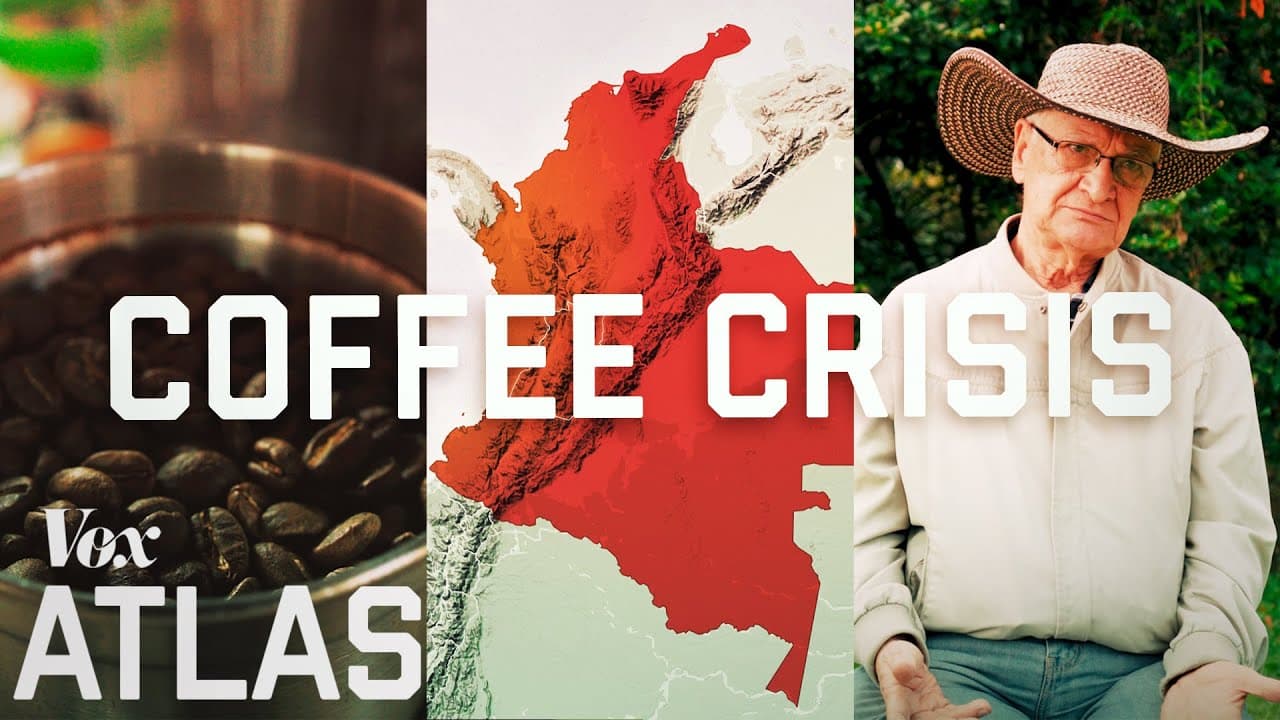
Climate change is reducing the land suitable for coffee cultivation, with projections indicating a 50% decrease by 2050. This threatens both the coffee supply and the livelihoods of millions of smallholder farmers worldwide. In Colombia, rising temperatures are already impacting coffee quality and production, forcing farmers to adapt or switch crops.
Transcript
This is one of the most popular plants in the world. It takes about 3-4 years to grow before producing berries which are picked, washed, pulped, dried, and roasted to make coffee. The world consumes about 500 billion cups of it every year. It’s grown by millions of farmers across Latin America, Africa and Asia. But there’s a crisis on the horizon. ... Read More
Key Insights
- Coffee is one of the most popular plants globally, requiring specific growing conditions.
- Climate change is shrinking the areas suitable for coffee cultivation, particularly affecting Arabica coffee.
- Colombia, a major coffee producer, is experiencing rising temperatures, impacting coffee quality.
- The optimal elevation for coffee is shifting upwards due to climate warming.
- Pests and fungi thrive in warmer climates, further threatening coffee plants.
- By 2050, land suitable for coffee cultivation could decrease by 50%.
- 60% of wild coffee species are at risk of extinction due to climate change.
- Smallholder farmers, who produce 80% of the world’s coffee, face economic challenges adapting to these changes.
Install to Summarize YouTube Videos and Get Transcripts
Explore YouTube Video Summarizer or Get YouTube Transcript Extractor
Questions & Answers
Q: How does climate change affect coffee production?
Climate change affects coffee production by altering temperature and rainfall patterns, which are critical for coffee plant growth. In regions like Colombia, rising temperatures are pushing the optimal growing conditions to higher elevations, reducing land availability. Warmer climates also promote the spread of pests and diseases, further threatening coffee crops and reducing yields.
Q: Why is Arabica coffee more vulnerable to climate change?
Arabica coffee is more vulnerable to climate change because it requires specific growing conditions, including temperatures between 18–21°C, a certain amount of rainfall, and warm days with cool nights. Climate change disrupts these conditions, making it difficult for Arabica plants to thrive, which can lead to reduced quality and yield.
Q: What are the economic impacts of climate change on coffee farmers?
The economic impacts of climate change on coffee farmers include reduced crop yields and quality, leading to lower income. Smallholder farmers, who produce 80% of the world's coffee, often lack the financial resources to adapt to changing conditions, such as moving crops to higher elevations or investing in more resilient plant varieties. This financial strain can threaten their livelihoods and local economies.
Q: How has Colombia's coffee industry adapted historically?
Historically, Colombia's coffee industry adapted through government intervention, such as purchasing large plantations and redistributing them to smallholder farmers. The government also established Fedecafe to support farmers through price negotiations and international agreements like the International Coffee Agreement, which set price minimums. These measures helped stabilize the industry and support smallholder farmers.
Q: What are some adaptation strategies for coffee farmers facing climate change?
Adaptation strategies for coffee farmers include planting shade trees to cool plants and stabilize soil, moving crops to higher elevations, and switching to more resilient coffee varieties. However, these strategies often require significant financial investment, which can be challenging for smallholder farmers with limited resources.
Q: What is the significance of the Zona Cafetera in Colombia?
The Zona Cafetera is Colombia's primary coffee-growing region, historically known for producing high-quality Arabica coffee. It has the ideal climate and elevation for coffee cultivation. However, climate change is affecting this region, with rising temperatures pushing coffee cultivation to higher elevations and impacting the quality and yield of coffee crops.
Q: Why are wild coffee species important for coffee production?
Wild coffee species are important for coffee production because they provide genetic diversity, which can be used to breed more resilient coffee varieties. This genetic diversity is crucial for developing plants that can withstand changing climates, pests, and diseases. However, 60% of wild coffee species are at risk of extinction due to climate change, threatening this vital resource.
Q: How has the global coffee market changed since the 1980s?
Since the 1980s, the global coffee market has seen increased competition from new coffee-producing countries, particularly in Asia, leading to a surplus of cheap coffee. The collapse of the International Coffee Agreement and its price minimums has resulted in fluctuating coffee prices, making it difficult for smallholder farmers to sustain their livelihoods and invest in necessary adaptations to climate change.
Summary & Key Takeaways
-
Climate change is significantly impacting global coffee production by altering the climates of traditional coffee-growing regions. In Colombia, rising temperatures are pushing coffee cultivation to higher elevations, affecting quality and yield. Additionally, warmer climates favor pests and diseases, further threatening coffee crops.
-
The reduction in suitable coffee-growing land is projected to be 50% by 2050, posing a risk not only to coffee supply but also to the livelihoods of millions of smallholder farmers. These farmers, who produce the majority of the world’s coffee, are struggling financially to adapt to climate changes.
-
Colombia's coffee industry, historically supported by government interventions and international agreements, is now facing new challenges as climate change disrupts traditional farming practices. Without significant financial support and adaptation strategies, the future of coffee farming is uncertain, threatening cultural and economic stability.
Read in Other Languages (beta)
Share This Summary 📚
Summarize YouTube Videos and Get Video Transcripts with 1-Click
Try YouTube Summary with ChatGPT & Claude or YouTube Transcript Generator
Explore More Summaries from Vox 📚



Summarize YouTube Videos and Get Video Transcripts with 1-Click
Try YouTube Summary with ChatGPT & Claude or YouTube Transcript Generator