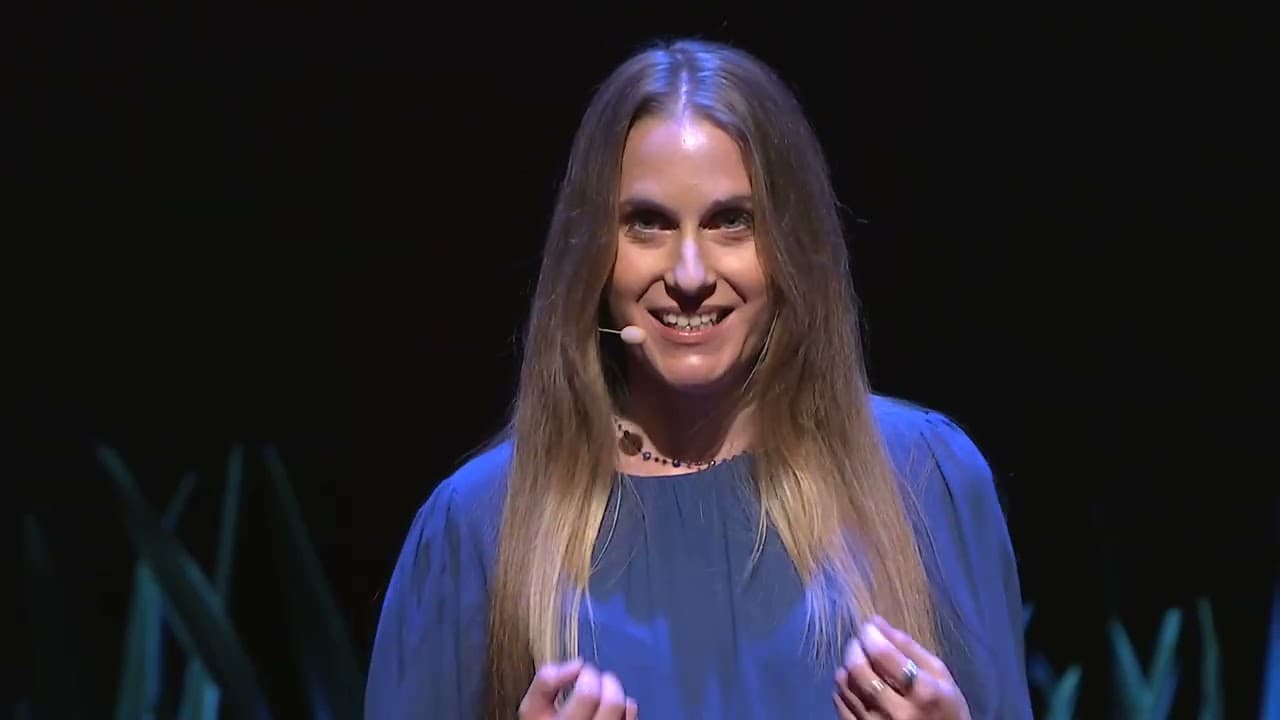
When AI reveals Wastewater’s hidden treasures | Francesca Casagli | TEDxCannes
TL;DR
Researchers are exploring new biotechnologies, such as using microalgae and bacteria, to treat wastewater and recover valuable resources, with the help of artificial intelligence.
Transcript
so we all like natural aquatic environments like a river for example with transparent water green vegetation birds singing or a wild Beach Washed by blue Waves or the ocean full of fishes and corals or the crystal clear ground water don't worry I'm not asking you to imagine the holidays of your dreams in fact the scenario is going to change drastic... Read More
Key Insights
- 💦 Wastewater treatment is essential for preserving natural aquatic environments and ensuring clean water supply.
- ❓ Biotechnologies using microalgae and bacteria offer a more efficient and sustainable approach to wastewater treatment while recovering valuable resources.
- 😃 Artificial intelligence has the potential to enhance wastewater treatment processes by analyzing big data sets and optimizing system performance.
- 🏍️ Reshaping the wastewater cycle through biotechnologies and artificial intelligence contributes to climate change mitigation, reduced energy consumption, and environmental sustainability.
Install to Summarize YouTube Videos and Get Transcripts
Explore YouTube Video Summarizer or Get YouTube Transcript Extractor
Questions & Answers
Q: Why are human beings inefficient in waste management when it comes to wastewater?
Human beings only assimilate a portion of the food they consume, resulting in waste in the form of solid and liquid excreta. This, along with industrial processes, leads to the production of large amounts of wastewater.
Q: What are the challenges associated with wastewater treatment plants?
Wastewater treatment plants are responsible for significant greenhouse gas emissions and the loss of valuable elements, such as nitrogen and phosphorus, which could be reused. Additionally, the cost and energy required for treating contaminated water are significant.
Q: How can microalgae and bacteria contribute to wastewater treatment?
Microalgae can accumulate nitrogen and phosphorus from wastewater and convert them into valuable molecules, such as biofuels and bioplastics. Bacteria can provide vitamins and break down complex molecules, benefiting microalgae. Together, they create a micro world with countless interactions.
Q: How can artificial intelligence aid in wastewater treatment?
Artificial intelligence, specifically artificial neural networks, can analyze data collected from wastewater treatment processes. It can identify patterns and reasons behind inhibition or limitation in microorganism activity, providing insights for optimization and efficiency.
Summary & Key Takeaways
-
Human beings produce a significant amount of wastewater through various activities, resulting in contamination and waste of valuable resources.
-
Wastewater treatment plants are expensive, energy-consuming, and contribute to greenhouse gas emissions.
-
Microalgae and bacteria can be utilized to treat wastewater, recover precious elements and chemical energy, and promote a circular economy.
Read in Other Languages (beta)
Share This Summary 📚
Summarize YouTube Videos and Get Video Transcripts with 1-Click
Try YouTube Summary with ChatGPT & Claude or YouTube Transcript Generator
Explore More Summaries from TEDx Talks 📚




Summarize YouTube Videos and Get Video Transcripts with 1-Click
Try YouTube Summary with ChatGPT & Claude or YouTube Transcript Generator