Writing a Journal Article - Responding to Peer Reviews
TL;DR
Understanding the peer review outcomes in academic publishing.
Transcript
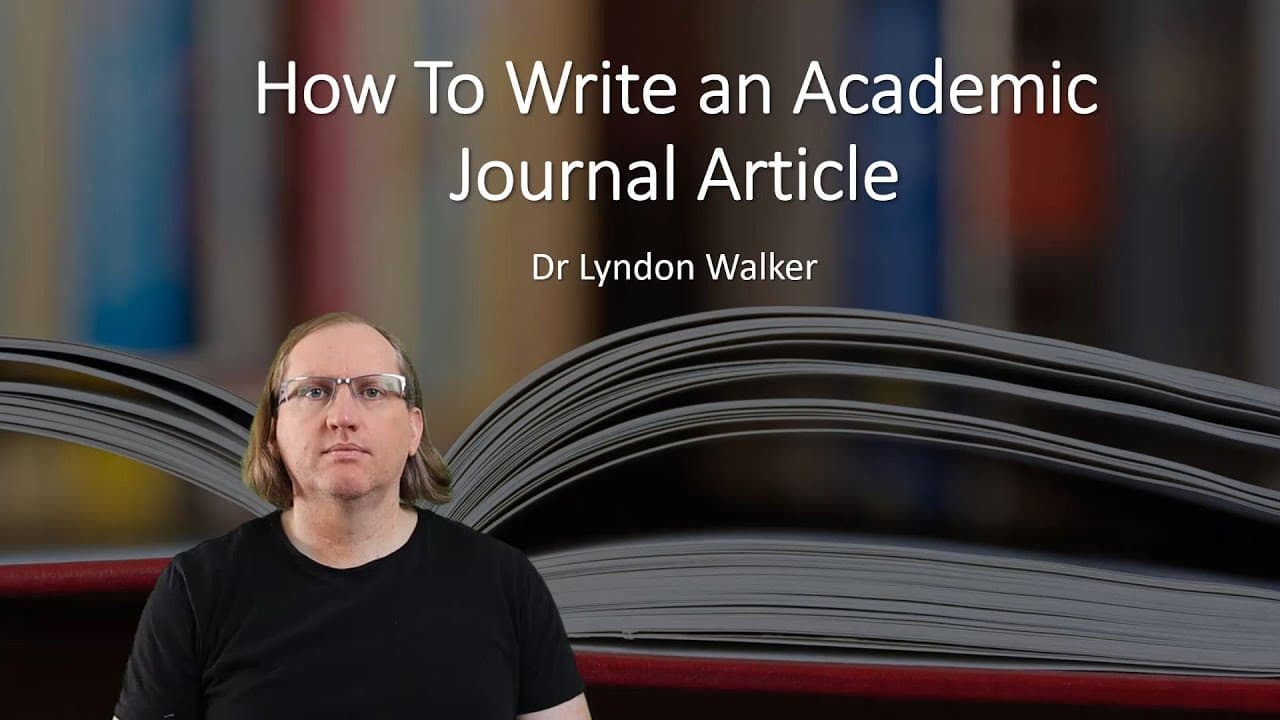
hi friends the following video is part of my skillshare course how to write an academic journal article i hope that you find this video useful in isolation but if you would like to have access to all of the videos listed behind me the entire skillshare course you can click on the link below this link will also give you one month free premium access... Read More
Key Insights
- ❓ The peer review process is a pivotal stage in academic publishing, demanding patience and resilience from authors.
- 💱 Acceptance with minor changes is more common than outright acceptance, indicating a collaborative process between authors and reviewers.
- 💁 Rejections often stem from formatting issues or failure to follow submission guidelines, highlighting the importance of attention to detail.
- 🥌 Maintaining a respectful and polite tone in correspondence with editors and reviewers is essential for nurturing professional relationships in academia.
- 👨🔬 Authors must weigh the effort required for revisions against potential benefits, considering whether the feedback aligns with their research goals.
- 💬 Documenting responses to reviewer comments enhances transparency and demonstrates conscientiousness in addressing feedback.
- 💦 The peer review outcome is not solely dictated by the quality of the work but also by its alignment with the journal's editorial focus.
Install to Summarize YouTube Videos and Get Transcripts
Explore YouTube Video Summarizer or Get YouTube Transcript Extractor
Questions & Answers
Q: What are the possible outcomes of the peer review process?
There are four main outcomes in the peer review process: outright acceptance, acceptance with minor changes, major changes that require resubmission, or outright rejection. Each has implications for the author, ranging from excitement about publication to disappointment and the need to revise or change journals. Understanding these outcomes and their significance allows authors to navigate the publication process effectively.
Q: Why do some articles get rejected without review?
Rejections can occur before the review stage, especially for top-tier journals. Editors may reject submissions that do not align with the journal's focus or standards. This process helps maintain quality and relevance, and a rejection does not necessarily reflect the article's quality, but rather its fit with the journal's scope.
Q: What should authors do if they receive requests for changes from reviewers?
Authors should carefully consider the feedback provided by reviewers and respond to each comment methodically. Creating a spreadsheet to track comments and responses is advisable. It's important to incorporate feedback while also justifying any areas where an author disagrees, always maintaining a respectful tone in communications.
Q: How can an author effectively communicate disagreement with reviewer feedback?
If authors disagree with reviewer feedback, they should do so politely and with evidence. This involves clearly outlining their rationale, supported by citations or data, and explaining why certain changes may not be necessary. Such respectful dialogue can strengthen the author's position and improve their chances of publication.
Summary & Key Takeaways
-
The peer review process is crucial in academic publishing, involving evaluations that can lead to acceptance, revisions, or rejections. Patience is important as reviewers can take time.
-
Common outcomes include acceptance with minor changes, major revisions requiring resubmission, or outright rejection, often due to non-compliance with submission guidelines.
-
Feedback from reviewers should be incorporated, and responses should be well-documented and respectful. Disagreements with reviewers' comments must be supported with evidence.
Read in Other Languages (beta)
Share This Summary 📚
Summarize YouTube Videos and Get Video Transcripts with 1-Click
Try YouTube Summary with ChatGPT & Claude or YouTube Transcript Generator
Explore More Summaries from Dr Lyndon Walker 📚
Summarize YouTube Videos and Get Video Transcripts with 1-Click
Try YouTube Summary with ChatGPT & Claude or YouTube Transcript Generator