1.2. Three models of how to translate
TL;DR
Translation can be approached linguistically, functionally, or with the help of technology, and understanding these approaches is key to effective translation.
Transcript
When people start to learn about translation, the basic question is, how do I translate? And there's not really a simple answer to that question, which is why translation is worth studying. We can, however, present a few models that are simplifications of what is inherently a very complex process. Now, the first model I want to present of three tha... Read More
Key Insights
- 🔂 Translation cannot be simplified into a single method or approach.
- 🔑 Linguistic models focus on word-for-word translation and syntactic transformations between languages.
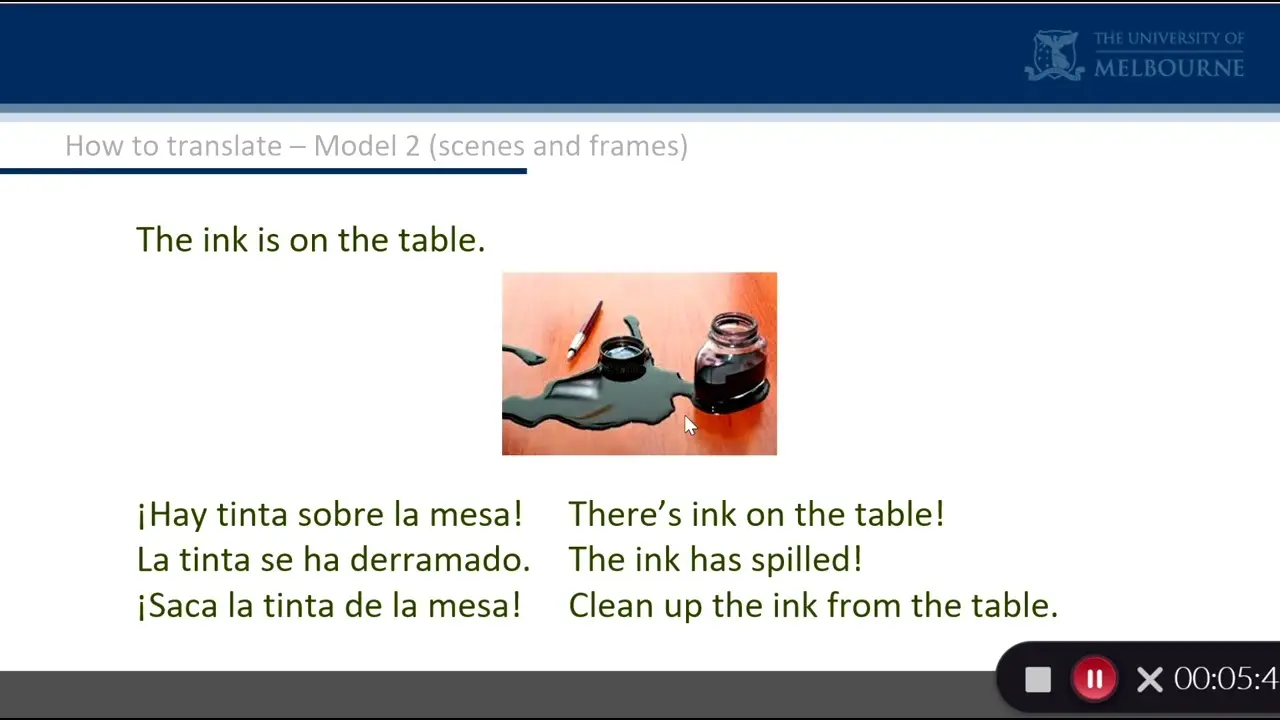
- 👻 Functional translation considers the purpose and situation of the text, allowing for more interpretation and adaptation.
- 🎰 Technology, like online machine translation, combines linguistic and functional approaches and provides alternative options for translators.
- 😑 Translators often employ reformulation techniques to find the best way to express a text in the target language.
- ❓ Different languages have their own grammatical and syntactic structures, requiring different translation strategies.
- ❓ The choice of translation approach depends on the specific context and purpose of the text.
Install to Summarize YouTube Videos and Get Transcripts
Explore YouTube Video Summarizer or Get YouTube Transcript Extractor
Questions & Answers
Q: What is the linguistic approach to translation?
The linguistic approach focuses on word-for-word translation, matching up words and their grammatical structures between languages. It involves looking up each word in the source language and, if necessary, making syntactic transformations to match the target language.
Q: How does the functional approach differ from the linguistic approach?
The functional approach takes into account the purpose and context of the text. It considers the specific situation, scenes, and frames, and aims to convey the intended meaning or achieve a particular function rather than sticking strictly to words and syntax.
Q: How does technology play a role in translation?
Technology, such as online machine translation, offers a combination of linguistic and functional approaches. These tools generate translations mathematically, but also provide multiple alternative options that require the translator to select the most suitable based on the intended function and context.
Q: Can the linguistic and functional approaches be separated?
In practice, the linguistic and functional approaches are difficult to separate. There is often a combination of both, as translators may start with a linguistic analysis and then consider the function and context to make adjustments or adaptations.
Summary & Key Takeaways
-
Translation is a complex process with no simple answer, but it can be simplified through linguistic models that focus on word-for-word translation.
-
Functional translation takes into account the purpose and situation of the text, allowing for different interpretations and adaptations.
-
Technology, such as online machine translation, combines both linguistic and functional approaches, offering multiple options that need to be selected based on the specific context.
Read in Other Languages (beta)
Share This Summary 📚
Summarize YouTube Videos and Get Video Transcripts with 1-Click
Try YouTube Summary with ChatGPT & Claude or YouTube Transcript Generator
Explore More Summaries from Anthony Pym 📚
Summarize YouTube Videos and Get Video Transcripts with 1-Click
Try YouTube Summary with ChatGPT & Claude or YouTube Transcript Generator