How to Calculate Book Value Per Share and P/B Ratio
TL;DR
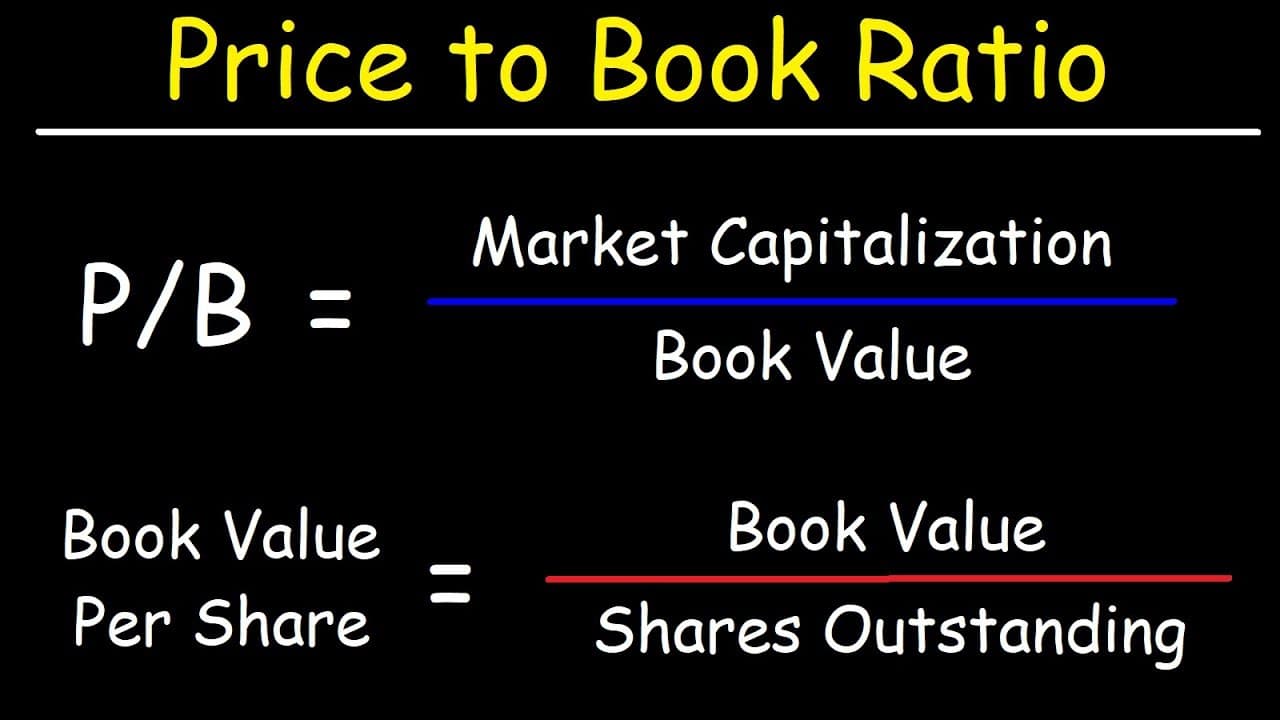
To calculate the price-to-book (P/B) ratio, divide a company's market capitalization by its book value. To find the book value per share, divide the book value by the number of shares outstanding. If the P/B ratio is less than one or the stock price is below the book value per share, the company may be undervalued.
Transcript
in this video we're going to talk about how to calculate the price to book ratio and also the book value per share and how to use that to calculate other stuff as well so let's start with this problem number one a certain company has a market capitalization of 800 million dollars and a book value of 200 million it has 100 million shares outstanding... Read More
Key Insights
- 🥳 The PB ratio is obtained by dividing the market capitalization by the book value and helps determine if a company is undervalued or overvalued.
- 📔 The book value per share is calculated by dividing the book value of the company by the number of shares outstanding.
- 📔 An undervalued company may have a low PB ratio, a stock price below the book value per share, or a market capitalization less than the book value.
- 📔 An overvalued company may have a high PB ratio, a stock price exceeding the book value per share, or a market capitalization surpassing the book value.
- 📔 Comparing the price and book value per share can provide insights into a stock's valuation.
- 📔 The market capitalization can be considered in relation to the book value to assess the value assigned to a company by the market.
- 🥳 Other factors should also be considered when evaluating a company's worth, as the PB ratio and book value per share are just indicators.
Install to Summarize YouTube Videos and Get Transcripts
Explore YouTube Video Summarizer or Get YouTube Transcript Extractor
Questions & Answers
Q: What is the formula for calculating the price to book (PB) ratio?
The formula for the PB ratio is the market capitalization divided by the book value of the company. It helps determine the valuation of a company relative to its assets.
Q: How is the book value per share calculated?
The book value per share is derived by dividing the book value of the company by the number of shares outstanding. It provides insight into how much each share of the company is worth.
Q: Can the PB ratio and book value per share help identify undervalued companies?
Yes, an undervalued company typically has a PB ratio less than 1, a stock price lower than the book value per share, or a market capitalization lower than the book value of the company. These indicators suggest that the market may not be fully recognizing the company's value.
Q: What are some potential indicators of an overvalued company?
An overvalued company often exhibits a significantly higher PB ratio than 1, a stock price exceeding the book value per share, or a market capitalization surpassing the book value of the company. These signs suggest that the market may be inflating the company's value.
Summary & Key Takeaways
-
The price to book (PB) ratio is calculated by dividing the market capitalization by the book value of a company. For example, a company with a market cap of $800 million and a book value of $200 million would have a PB ratio of 4.
-
The book value per share is calculated by dividing the book value of the company by the number of shares outstanding. For instance, a company with a book value of $200 million and 100 million shares outstanding would have a book value per share of $2.
-
The relationship between the market cap, book value, and shares outstanding can be used to calculate the price of a stock. By dividing the market cap by the shares outstanding, you can determine the price per share.
Read in Other Languages (beta)
Share This Summary 📚
Summarize YouTube Videos and Get Video Transcripts with 1-Click
Try YouTube Summary with ChatGPT & Claude or YouTube Transcript Generator
Explore More Summaries from The Organic Chemistry Tutor 📚


Summarize YouTube Videos and Get Video Transcripts with 1-Click
Try YouTube Summary with ChatGPT & Claude or YouTube Transcript Generator