Nancy Kanwisher: A neural portrait of the human mind
TL;DR
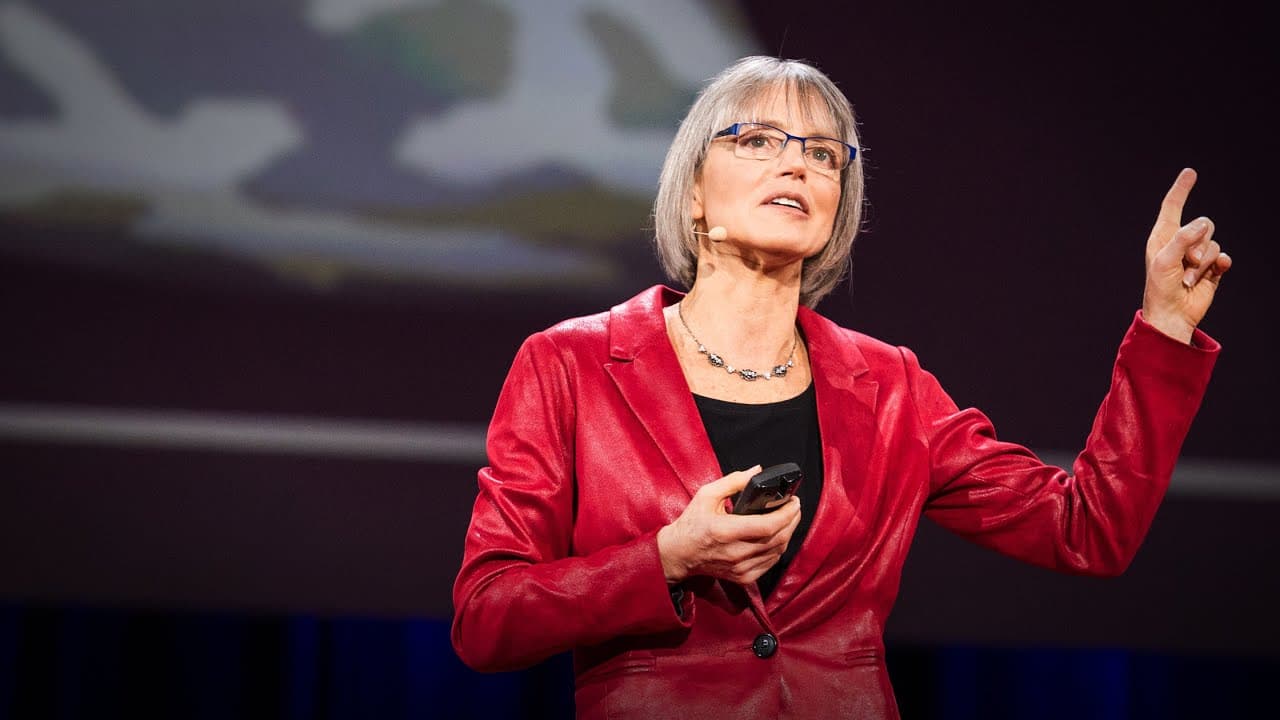
In this TED Talk, Nancy Kanwisher discusses the project to paint a neural portrait of the human mind through brain imaging technology.
Transcript
Transcriber: Joseph Geni Reviewer: Madeleine Aronson Today I want to tell you about a project being carried out by scientists all over the world to paint a neural portrait of the human mind. And the central idea of this work is that the human mind and brain is not a single, general-purpose processor, but a collection of highly specialized component... Read More
Key Insights
- 🧠 The human mind is composed of highly specialized components, each solving a different specific problem, collectively making up who we are as human beings and thinkers.
- 👥 Prosopagnosia, or the inability to recognize faces, is one of many specific mental deficits that can occur after brain damage, providing evidence for the existence of distinct components in the mind.
- 🔬 Brain imaging technology, such as MRI, has enabled scientists to explore and map the specialized regions of the brain.
- 🧩 Functional MRI shows not just the anatomy of the brain but also its activity, indicating where neurons are firing.
- 🔎 The specialized region for face recognition, known as the face area, has been identified in multiple individuals and is involved in higher neural activity when processing faces compared to objects.
- 🌟 Brain imaging can provide insight into brain functions, but to determine if a region is necessary for a mental function, manipulation of that region is needed.
- 💡 Specialized brain regions have been discovered for various aspects of visual perception, hearing, language processing, and even understanding other people's thoughts.
- ❓ Questions remain about the exact functions of these specialized brain regions, how they are connected in the brain, and how they develop over time and across different species.
Install to Summarize YouTube Videos and Get Transcripts
Explore YouTube Video Summarizer or Get YouTube Transcript Extractor
Questions & Answers
Q: What is the central idea of the project being carried out by scientists all over the world?
The central idea of the project is that the human mind and brain is not a single, general-purpose processor, but a collection of highly specialized components, each solving a different specific problem, and yet collectively making up who we are as human beings and thinkers.
Q: What is prosopagnosia and what causes it?
Prosopagnosia is the sudden loss of the ability to recognize faces, which happens to people due to damage to a particular part of the brain. It impairs only face recognition, while everything else functions normally.
Q: How does functional MRI work?
Functional MRI (fMRI) picks up on blood flow increase in the brain, which occurs when neurons get active and require increased blood flow. It produces a higher MRI response where neural activity goes up, allowing researchers to see not just brain anatomy, but also brain activity.
Q: What was the main focus of one of the first studies described in the video?
The main focus of the study was to find a special part of the brain for recognizing faces, building upon the phenomenon of prosopagnosia. The researcher conducted MRI scans while looking at faces and objects to identify the region in the brain responsible for face recognition.
Q: Can brain imaging alone determine if a region is necessary for a mental function?
No, brain imaging cannot determine if a region is necessary for a mental function. Brain imaging can only show which regions are active during different thoughts and mental processes. To determine if a part of the brain is necessary for a mental function, one would need to perform manipulative experiments, which are rarely feasible.
Summary & Key Takeaways
-
The human mind and brain is not a single, general-purpose processor, but a collection of specialized components that make up human identity and cognition.
-
Brain imaging technology, such as MRI, has helped scientists discover and study specific regions of the brain that are involved in processes like face recognition, color perception, and understanding language.
-
There are still many unanswered questions about how these specialized brain regions function, how they are connected, and how they develop over time, but the pursuit of understanding the human mind is a meaningful and important scientific endeavor.
Read in Other Languages (beta)
Share This Summary 📚
Summarize YouTube Videos and Get Video Transcripts with 1-Click
Try YouTube Summary with ChatGPT & Claude or YouTube Transcript Generator
Explore More Summaries from TED 📚




Summarize YouTube Videos and Get Video Transcripts with 1-Click
Try YouTube Summary with ChatGPT & Claude or YouTube Transcript Generator