What Is Environmental Folklore and How Does It Impact Choices?
TL;DR
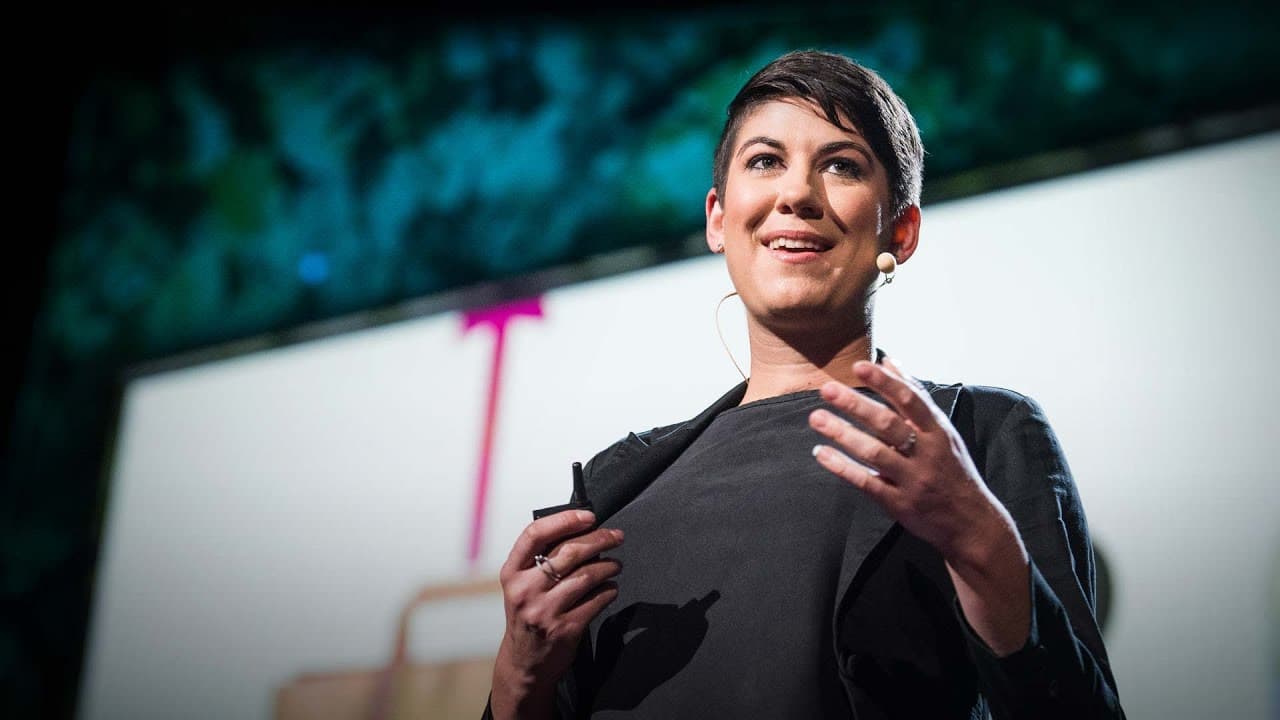
Environmental folklore refers to the intuitive beliefs people have about sustainable choices, often leading to decisions that aren't scientifically supported. This can result in negative environmental impacts, such as choosing paper bags over plastic without considering their life cycle effects. A systems-based approach, including life cycle thinking, is necessary to develop better products and sustainable practices.
Transcript
So imagine, you're in the supermarket, you're buying some groceries, and you get given the option for a plastic or a paper shopping bag. Which one do you choose if you want to do the right thing by the environment? Most people do pick the paper. Okay, let's think of why. It's brown to start with. Therefore, it must be good for the environment. It's... Read More
Key Insights
- 🛒 People often choose paper bags over plastic bags because they believe it is better for the environment, but the environmental impacts of materials go beyond their appearance and biodegradability.
- 🌿 Our intuitive framework for making sustainable choices, or environmental folklore, is often based on our experiences and what we've heard from others, rather than scientific frameworks.
- 🌍 Our choices and actions, whether as individuals or professionals, impact complex systems such as human systems, industrial systems, and ecosystems.
- 💡 Life cycle thinking and life cycle assessment can provide a clearer understanding of how our actions and choices affect the environment throughout the entire life cycle of a product.
- ♻️ Biodegradability is a material property, not a definition of environmental benefits. Biodegradable materials can contribute to climate change if they end up in landfills.
- 🍎 The design of everyday products can have a significant impact on sustainability. For example, refrigerators and crisper drawers contribute to food waste, and electric tea kettles are often used inefficiently, wasting energy.
- 📱 The high rate of consumption and disposal of products like mobile phones creates significant environmental problems, including e-waste and the loss of valuable materials. Designing for disassembly and closed-loop systems can address these issues.
- 🏭 Consumption is a major challenge for sustainability, but design can be a powerful solution. Designing products and systems that consider the entire life cycle and functionality can lead to innovative and sustainable solutions.
Install to Summarize YouTube Videos and Get Transcripts
Explore YouTube Video Summarizer or Get YouTube Transcript Extractor
Questions & Answers
Q: What are some of the reasons why people generally choose paper over plastic shopping bags?
People often choose paper bags because they believe they are better for the environment. They perceive them as being biodegradable, reusable, and recyclable.
Q: Can intuitive frameworks like environmental folklore be reliable when making decisions that impact the environment?
Intuitive frameworks like environmental folklore are not always reliable as they are based on personal experiences and what we have heard from others. They are not backed by scientific frameworks and may overlook important factors in complex systems.
Q: What is life cycle thinking and how does it help us understand the environmental impacts of our choices?
Life cycle thinking involves considering the entire life cycle of a product or material, from extraction to end of life. It uses life cycle assessment, or life cycle analysis, to examine how each stage of the life cycle interacts with the natural environment and affects sustainability.
Q: What is the problem with relying solely on biodegradable materials?
Biodegradability is a material property and does not automatically mean environmental benefits. When biodegradable materials end up in landfill, they degrade differently and contribute to methane emissions, a potent greenhouse gas. It is essential to consider how materials are used and disposed of for effective environmental impact reduction.
Q: How do consumer goods like refrigerators contribute to food waste?
Refrigerators play a role in food waste as their size and design often lead to over-buying and wasted food. The crisper drawers, specifically, are not designed to prevent degradation, leading to the wastage of lettuces and other perishable items.
Q: What impact does overfilling electric tea kettles have on the environment?
Overfilling electric tea kettles results in wasting energy, as the excess water needs to be boiled. The extra energy used in one day of overfilling kettles in the UK is enough to power streetlights for a night. Encouraging users to only fill the kettle with the necessary amount of water can significantly reduce energy waste.
Q: What are the consequences of the high production and disposal rates of mobile phones?
The high production and disposal rates of mobile phones contribute to complex issues like e-waste and resource depletion. Precious and valuable materials are locked inside these devices, and without proper disassembly and recycling processes, they often end up in landfills or informal recycling operations that harm both the environment and communities.
Q: How can design-led system change and closed-loop systems help tackle sustainability issues?
Design-led system change involves identifying problems within current systems and using innovative design solutions to address them. Closed-loop systems or product system services ensure products are designed with the entire life cycle in mind and aim to close the loop by encouraging disassembly, recycling, and reuse. These approaches can help create more sustainable and efficient systems.
Summary & Key Takeaways
-
People tend to make choices based on environmental folklore rather than scientific facts, which can lead to ineffective and even counterproductive environmental actions.
-
Designers should focus on creating behavior-changing products that address system failures and promote sustainable practices.
-
A systems-based approach is necessary to address the negative environmental impacts of consumption and find innovative solutions for sustainability.
Read in Other Languages (beta)
Share This Summary 📚
Summarize YouTube Videos and Get Video Transcripts with 1-Click
Try YouTube Summary with ChatGPT & Claude or YouTube Transcript Generator
Explore More Summaries from TED 📚

Summarize YouTube Videos and Get Video Transcripts with 1-Click
Try YouTube Summary with ChatGPT & Claude or YouTube Transcript Generator